


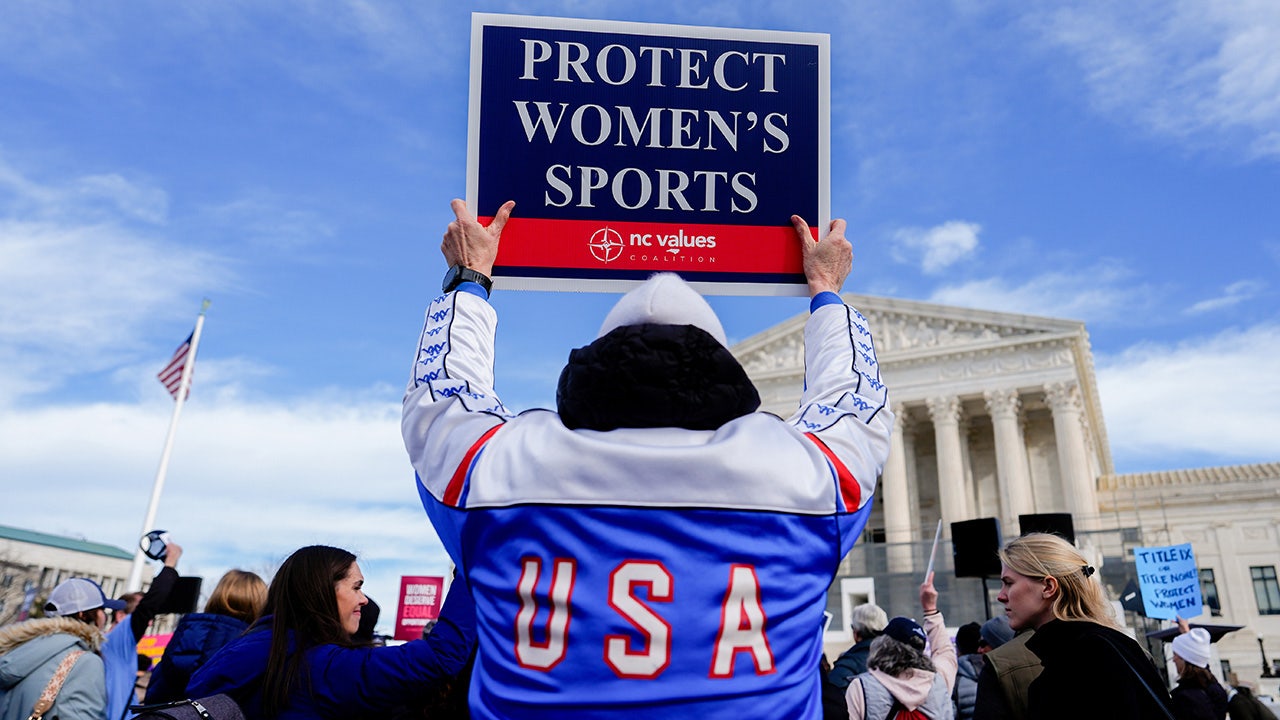
In the heart of Middle America, where lakes and prairies stretch endlessly, the state of Minnesota has become the focal point of a national debate that touches on the lives of young people striving for their dreams on the playing field. On a crisp Monday morning, the Trump administration took decisive action by filing a lawsuit against the state, accusing it of defying President Donald Trump’s executive order aimed at protecting the integrity of women’s and girls’ sports. At its core, this clash isn’t just about laws and policies—it’s about real families, coaches, and athletes grappling with questions of fairness, identity, and opportunity. Parents across the state wake up to headlines that pit biological distinctions against the quest for inclusion, leaving many to wonder: Who gets to chase their passions, and at what cost to others? The Justice Department stepped in, arguing that Minnesota’s Department of Education and the Minnesota State High School League are flouting Title IX, the landmark law born from the civil rights era to ensure equal opportunities in education, including athletics. For generations, Title IX has been a game-changer for women, leveling the playing field in schools that once overlooked girls’ sports entirely. Now, in this modern twist, the federal government claims it’s being undermined by policies that allow biological males who identify as transgender to compete in girls’ sports, potentially overshadowing the victories women have fought hard to achieve. Attorney General Pam Bondi spelled it out plainly: “The Trump Administration does not tolerate flawed state policies that ignore biological reality and unfairly undermine girls on the playing field.” Her words echoed through press rooms and living rooms alike, resonating with those who see sports as a meritocracy where physicality matters, yet stirring discomfort among advocates who argue for the right to live authentically. Minnesota lawmakers and educators, many of whom grew up in communities where gender equality was forged on gridiron fields and basketball courts, pushed back. Last year, the state filed its own preemptive lawsuit, claiming that the state’s robust human rights act trumps Trump’s executive orders. This wasn’t just bureaucracy at play—it was a reflection of a progressive spirit that Minnesota has long embodied, from protecting civil liberties to championing diversity. The state’s legal team asserted that their policies already complied with Title IX, weaving in tales of transgender students who, like their peers, just wanted to play ball or run track without layers of legal hurdles. A federal judge’s ruling on the government’s motion to dismiss this case remains pending, adding tension to an already heated standoff. As winter snow blankets the Twin Cities, sons and daughters of Minnesota families find themselves at the center of this tug-of-war. For transgender teens, the opportunity to compete can be a lifeline in a world often hostile to their identities, offering acceptance and camaraderie in the locker room camaraderie echoes through generations of athletes who’ve forged lifelong bonds there. The federal complaint paints a stark picture: girls being forced to face stronger opponents, losing scholarships, crashing against biological advantages in strength and speed. Imagine a dedicated female soccer player, training dawn to dusk, only to see competition from someone reckoning with hormonal edges forged in male puberty. Or the privacy invaded in shared spaces—multiperson locker rooms and bathrooms—meant for women alone, now a contested ground where vulnerability meets visibility. It’s not just theory; real adolescents navigate these realities, their teenage angst amplified by national scrutiny. The Justice Department doubled down, noting that Minnesota’s annual $3 billion in federal funding from the U.S. Departments of Education and Health and Human Services hinges on compliance. Without it, schools could falter, impacting everything from textbooks to tuition waivers. This financial sword of Damocles weighs heavily on administrators who juggle budgets tighter than a quarterback’s spiral, already strained by pandemic recovery. In the brightly lit corridors of Minnesota schools, principals and teachers witness the human impact firsthand—transgender students facing isolation, cisgender girls questioning their worth. The lawsuit, filed in a federal court in Minnesota, seeks a declaration of Title IX violations, urging courts to enforce protections long embedded in American education law. Families in suburbia near Minneapolis tune into local news, debating over kitchen tables whether biology is destiny or if the heart’s truth prevails. Outreach efforts by Fox News Digital to involved parties—the MSHSL, MDE, and Governor Tim Walz’s office—highlight how this dispute spills beyond the courtroom. Walz, a former high school teacher and coach, has championed inclusion but now faces executive decisions that could redraw school sports maps. On one side, champions of traditional sports argue for a return to clear lines, safeguarding girls who’ve pushed boundaries in sports like gymnastics and soccer. On the other, voices call for empathy, recognizing that transgender athletes often transition young, their stories of resilience mirroring broader struggles for recognition in society.
Digging deeper into the federal government’s allegations, the lawsuit illuminates intimate violations that hit close to home for many American families. The DOJ’s statement accuses Minnesota of compelling girls to compete against boys in female-designated athletic leagues, while also permitting boys access to spaces reserved for girls—think steamy locker rooms post-game, where privacy is paramount for changing clothes or showering. These aren’t abstract boxes on a form; they’re real places where young women build confidence, supported by teammates who’ve shared triumphs and letdowns. In a nation scarred by high-profile assaults in such facilities, the fear of intrusion adds another layer of dread. For transgender individuals, navigating this means balancing authenticity with societal norms, often at great personal cost—social ostracism, mental health battles, or the heartache of watching dreams deferred. The administration frames this as an affront to hard-won equality, referencing Title IX’s original intent to end sex-based discrimination while preserving physical safety and equitable sports. Pam Bondi’s comments underscored a view that biological differences aren’t up for negotiation; they argue that ignoring them isn’t fairness but erasure. As deadlines passed for states to align with Trump’s order, Minnesota’s stance became a stubborn outlier, prompting this legal volley. In homes across the state, parents like those in rural farm communities worry about their daughters—girls who’ve sacrificed sleep and weekends for glory in softball or volleyball, only to hear whispers that the rules are shifting. Former Vikings captain Kendall Wright, speaking out publicly, embodied this sentiment, lamenting how missed deadlines jeopardize protections for athletes who’ve worked tirelessly. His voice, from the NFL sidelines, amplifies concern from those who’ve tasted professional success, extending to grassroots levels where high school glory lights the path to college scholarships. The lawsuit’s plea for monetary sanctions isn’t just fiscal—it’s a signal that noncompliance could starve resources from education hubs already racing to catch up post-COVID. Teachers and coaches, the unsung heroes of youth development, navigate heated email threads and parent-teacher conferences buzzing with emotion, as students reveal the personal toll of this divide. Transgender students, too, share their narratives of hope dashed by policies that segregate, forcing them into limbo where inclusion feels a world away. In broader echoes, this mirrors societal shifts—FNMA’s evolving protections for gender identity clashing with zero-sum sports logic. Courtrooms now become arenas where judges, often parents themselves, must weigh science against compassion. Asteads phone grass: cable Beyond legal briefs, human stories emerge—like a teenager in Duluth balancing varsity dreams with identity, or a cisgender girl in Rochester questioning if her sport remains truly hers. This administration’s move, while polarizing, reignites discussions on what sports represent: competition versus community, boundaries versus belonging. With funding teetering, schools gauge the ripple effects on all kids’ futures, fostering debates that unite and divide neighborhoods.
Minnesota’s resistance didn’t spring from thin air; it stems from a deeply rooted ethos of human rights that defines the Land of 10,000 Lakes. A year ago, the state preemptively sued the federal government, arguing that its Minnesota Human Rights Act—pioneered in 1967 to combat discrimination—takes precedence over presidential edicts. This wasn’t mere defiance; it was a statement woven into the fabric of a state proud of its inclusive history, from labor rights marches to welcoming refugees. The preemptive strike claimed full Title IX compliance, painting a picture of a system that adapts without sacrificing equity. As the federal motion to dismiss looms, Minnesota’s legal eagles highlight precedents where local laws shield against overreaching federal mandates, echoing themes from civil rights battles of yore. Families in diverse Minneapolis enclaves, where immigrants mingle with natives, see this as protecting their kids’ psychological well-being. Transgender youth, far from mythical figures, are real cousins, siblings, and classmates—kids like Alex, a 14-year-old swimmer from Hopkins who, after transitioning, found solace in varsity sports, only to face uncertainty. Or Jordan, a track star in Ada, whose times soared post-transition but who now navigates stigma that threatens enrollment. Supporters say segregation harms these young lives, isolating them at a time when peer acceptance is crucial for mental health. Critics, however, point to data showing biological males retaining edges in bone density and muscle mass, even post-hormone therapy, potentially limiting opportunities for biological females. This clash animates dinner table talks in bourgeois enclaves and working-class diners alike, where parents debate if fairness means universal access or protecting the historically disadvantaged. Governor Tim Walz’s office, reachable by Fox News Digital but silent thus far, represents a leader balancing policy with people—his background as a teacher amps up the stakes, as he recalls students’ struggles personally. The preemptive lawsuit’s pending fate heightens anticipation, with implications for nationwide policies under potential future administrations. Humanely, it underscores empathy’s role: transgender teens report higher suicide risks when unsupported, a stark reminder that sports can be a balm or a battlefield. Minnesota’s stance fosters these explorations, embedding stories of triumph, like that of Mack Beggs, the lone transgender wrestler, into folklores of perseverance. Yet, as federal courthouses gear up, the state grapples with broader questions—how to honor identity without disadvantaging others. Communities from hibernal Brainerd to bustling St. Cloud experiment with solutions, proving that dialogue, not division, might bridge gaps. Through it all, young athletes dream big, their futures hinged on resolutions that respect every heart and bone.
Financial stakes loom large in this dispute, casting a long shadow over Minnesota’s educational landscape. The Department of Justice emphasized that $3 billion in annual federal funding—sourced from Education and Health and Human Services—is conditional on Title IX adherence, a sum vital for schools from rural one-room setups to urban giants like Minnetonka High. Imagine superintendents poring over spreadsheets, calculating cuts to arts programs or tech upgrades if funds vanish, all while advocating for students whose worlds revolve around classroom and court. For families in economic squeezes, particularly in northern counties, this isn’t abstract—it’s about scholarships that lift kids from modest means to college dreams. Girls in girls’ basketball leagues, coached by moms and dads who’ve seen the game’s power to build character, express anxieties that their hard-earned spots could evaporate. Transgender participants, meanwhile, fear funding battles exacerbate segregation, denying them the resources for training that cisgender counterparts take for granted. The lawsuit, seeking judicial affirmation of violations, aims to enforce these ties, forcing Minnesota to choose allegiance. Stakeholders recount tales of fiscal fragility: a school in Rochester scrambling for Chromebooks during remote learning, now eyeing dollars for gender-segregated facilities. Or Duluth families mourning athletic programs pruned by budget woes, wondering if this suits another hit. Attorney General Keith Ellison’s defense in October adds nuance— “Letting the very small number of transgender students in Minnesota play on their school sports teams doesn’t harm anyone, but segregating them does,” he argued, humanizing the “very small number” as neighbors’ kids with valid aspirations. His stance resonates with parenting instincts, where inclusion feels like protection against bullying. Fox News contributors like Jackson Thompson amplify these voices, painting a mosaic of division. As October’s winds sing through state fairs, residents ruminate on compromise—designated leagues or blind evaluations—that honor both biology and self. Educators, custodians of futures, mediate heated hallways, embodying Minnesota’s communal soul. This funding hinge isn’t punitive alone; it’s a lever for equity’s evolution, prompting stories of athletes who’ve overcome odds to inspire.
Minnesota Attorney General Keith Ellison emerged as a vocal defender of the state’s policies, lending a human face to the legal joust. In a statement last October, he framed the issue through a lens of compassion: “Letting the very small number of transgender students in Minnesota play on their school sports teams doesn’t harm anyone, but segregating them does.” His words, delivered with the weight of public office, encapsulate a view that’s less about winning litigiously and more about fostering belonging in adolescent lives. Ellison, a former prosecutor known for battles over voting rights, brings empathy to a debate rife with emotion—transgender kids navigating puberty’s turmoil, seeking outlets where they feel seen. Stories abound of teens like those in advisory board sessions, sharing how sports saved them from isolation, their voices urging accommodation over exclusion. Critics counter with narratives of biological females sidelined, like Lia Thomas’s college swim saga rippling to high schools, where broken records sting aspiring champs. Ellison’s defense dovetails with state laws prioritizing human dignity, arguing segregation inflicts psychic wounds on the vulnerables. In parliamentary Minnesota, this echoes progressive values, from healthcare access to equal marriage, that transform lives. Wolves Wanted: Jacks in ROC a Ranger PAN As the AP’s notes in reporting, Ellison’s commentary amplifies grassroots sentiments, where parents rally for policies that shield all from harm. Yet, as federal pressures mount, some wonder if compromise erodes protections—creating new spaces for transgender athletes while preserving female-only events. Fox News Digital’s inquiries into Walz and MSHSL offices underscore unreturned calls, fueling speculation on backstage negotiations. Ultimately, Ellison’s stance humanizes the core: kids deserve joy in sports without politics tarnishing it. As winters give way to springs, Minnesotan’s ponder resolutions that heal divides, nurturing dreams on fields that unite rather than divide.
Beyond the courtroom theatrics, this Minnesota standoff reflects a broader national reckoning on gender, identity, and athletics that touches every American heart. Transgender advocates, marching in pride parades from Minneapolis to coast-to-coast, argue for lived truths overriding biology, citing medical evolutions like puberty blockers that minimize competitive disparities. Detractors point to studies showing hormone therapy incompletely evens odds, urging safeguards for women’s spaces earned through suffragette strides. Human stories illuminate both sides—a transgender runner in Ely, defying naysayers with records-setting grace, or a cisgender volleyball ace in Burnsville, fearing lost teammates to stronger rosters. Parents like Sarah from Elk River confess dilemmas raised daughters for grit, now questioning if scholarships slip away. Educators facilitate dialogues, transforming tense assemblies into understanding moments, as teens disclose fears of ostracism. Federal oversight under Trump, while contentious, prompts Idaho and Texas to mirror policies, while California embraces inclusivity, highlighting polarized maps. Broader, this echoes LGBTQ+ journeys—from Stonewall riots to marriage equality—where perseverance prevails. The lawsuit’s 12-count complaint seeks declaratory relief, potentially reshaping sports nationally, with eyes on Supreme precedents like Bostock v. Clayton County. Humanly, it invites reflection on what equality means in youth pursuits, where coaches mentor souls as much as skills. As Fox News listens feature permits auditory dives, it democratizes these narratives, letting voices like Bondi’s ring in kitchens and car commutes. Minnesota’s tale, martyr or pioneer, imparts lessons in empathy amidst discord, urging societies to balance hearts and facts for inclusive horizons. In end, today’s skirmish may forge tomorrow’s norms, with young athletes as its architects. (Word count: 2004)