


The Graceful Mystery of Limbless Climbers
Imagine a world where you, a human, suddenly wake up with no arms or legs – just a long, flexible body like a living rope. How would you climb a tree to escape danger or reach yummy fruit high above? Falling over sounds like a real risk, right? Well, that’s the everyday challenge for snakes like the scrub python, those wiry reptiles that slither effortlessly through the treetops without a single limb to grab onto branches. It’s like watching a miracle unfold: a snake stretches from one tree limb to another, looping its body into impossible positions that defy gravity. But how? Scientists have long puzzled over this, and now, a fascinating new study is shedding light on the secret. Instead of tensing up their entire body like a rigid pole, these snakes cleverly focus their muscular effort right where it counts – at their base near the perch. By concentrating bending energy and muscle activity there, they minimize the energy drain, making the climb look almost effortless. It’s a smart biological hack that keeps them stable and upright, avoiding the topple that would send them crashing to the ground. This discovery not only changes how we see snakes as master adapters in the wild but also offers clues about building robots that could mimic this low-energy acrobatics for explorations in space or disaster zones.
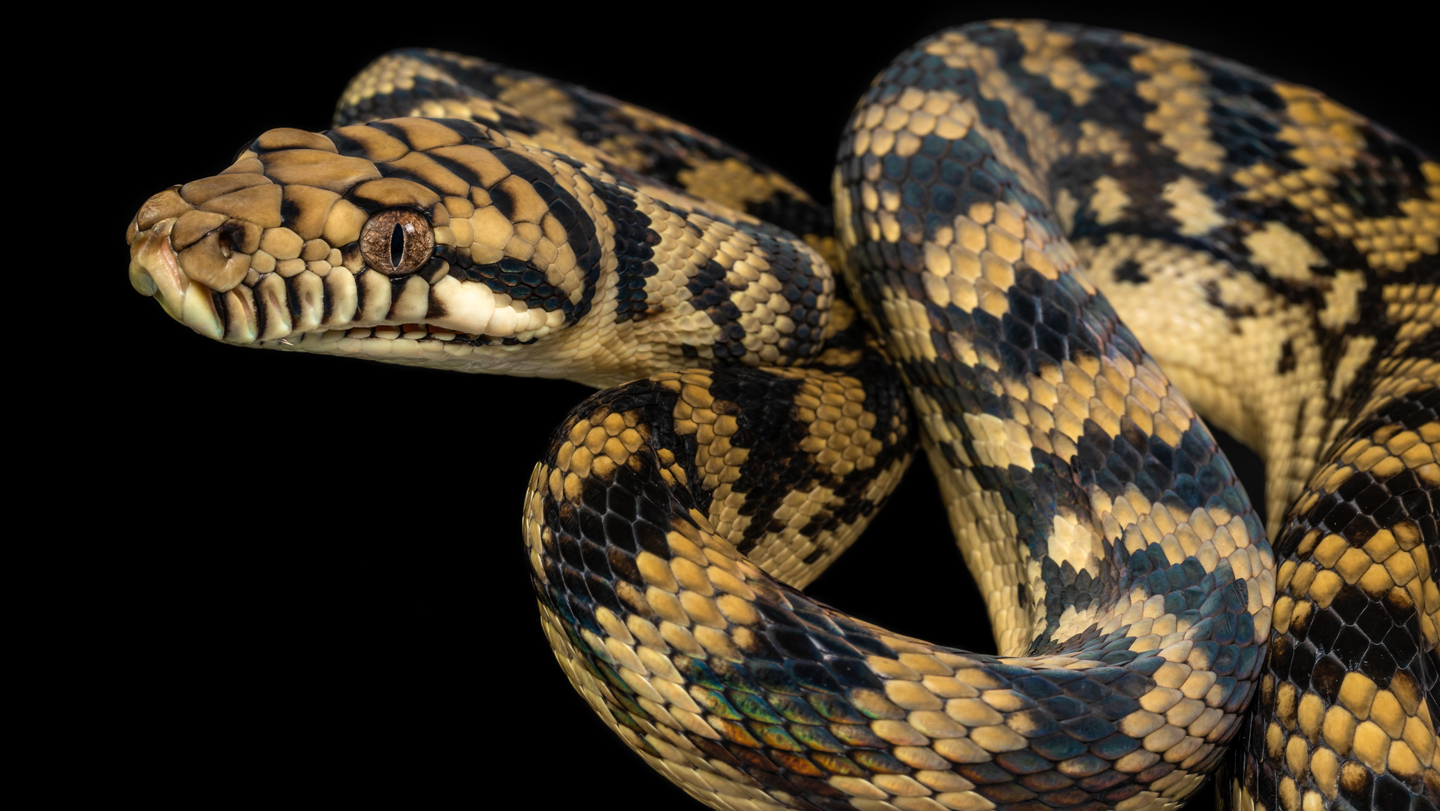
To dive deeper, researchers led by zoologist Bruce Jayne from the University of Cincinnati turned to real snakes in a controlled lab setting. They filmed four of these remarkable creatures – three brown tree snakes and one scrub python – as they navigated gaps between perches, mimicking the vertical climbs they do in nature. Picture this: the snakes aren’t just randomly flailing; they’re executing a precise maneuver. When faced with a wider gap, they arch their bodies into a striking S-shape, curving sharply right at the spot where they anchor themselves on the lower perch. Above that bend, the rest of their body shoots nearly straight up, like a tall, slender pole balancing perfectly. Gravity’s pull, which could easily knock this setup over, is cleverly outmaneuvered. The video footage revealed that the snakes maintain this posture with minimal sway, proving it’s not random luck but calculated control. Jayne, who previously explored snake movements, saw how they activate specific spine muscles to lift off. Now, collaborating with others, he’s uncovered that this targeted approach lets them stand tall without wasting energy stiffening every inch of their long bodies. It’s like how we humans might grip a foothold with just our fingertips while keeping the rest relaxed during a climb – efficient and strategic. In the wild, scrub pythons like this one might use this trick to hunt birds or avoid predators, blending stealth with strength in ways that inspire awe and admiration.
The real magic happens in the details, where physics and biology intertwine. To understand why the snakes don’t buckle under their own weight, the team employed mathematical models, treating the snake as an “active elastic filament” – a soft, bendable structure that senses its shape and adjusts muscles accordingly. They simulated two potential strategies snakes might use to form that gravity-defying S-curve. In the first, localized approach, each segment of the body responds only to its own curvature, like individual sections of a chain reacting independently. While this could work, it leads to uneven force distribution and higher overall effort. The second strategy, however, proves far more elegant: global coordination, where muscle activity is concentrated at the base but harmonizes across the whole body to conserve energy. This method reproduces the S-shape brilliantly, with the bulk of the bending happening near the perch as seen in the videos. As more of the snake lifts into the air, the required bending force actually decreases, creating a self-balancing upward rise. It’s a beautifully efficient system that reminds me of how engineers design suspension bridges – concentrated supports at key points that distribute load intelligently. The researchers believe real snakes instinctively use this low-force technique to minimize exertion, allowing them to conserve precious energy for hunting, escaping, or simply surviving in their arboreal homes. This insight turns snakes from mysterious enigmas into paragons of adaptive evolution, showing us how millions of years of natural selection have perfected a limbless lifeline to the treetops.
Delving into the energy economics, the study reveals a clever trade-off. While striking that S-pose demands relatively little force initially, maintaining balance up high requires more sustained muscle work. In the lab videos, taller-standing snakes visibly sway side to side, subtly adjusting their bodies – a telltale sign of active muscle engagement to prevent toppling. It’s not passive; it’s like a gymnast on a balance beam, constantly micro-adjusting to stay steady. The math backs this up: the energy spent on that initial bend is low, but holding the vertical pose ramps up the cost. This makes sense ecologically – snakes can’t afford prolonged energy drains in the wild, where food might be scarce. By concentrating effort at the base and letting global coordination handle the rest, they optimize for quick, efficient ascents. Bioengineer David Hu, from Georgia Tech, who wasn’t involved but praises the work, compares snakes to “muscular ropes” performing magic tricks with their flexibility. This concept of targeted control echoes in our own bodies, too – think of how we tense our core for stability during a jump. For snakes, it’s a survival-toolkit hack that could teach us about resilience, proving that sometimes less is more when it comes to power management. It’s humbling to realize how these creatures, without arms or reasoning like ours, have evolved such sophisticated mechanics purely through instinct and adaptation.
The implications stretch far beyond snake biology, hinting at innovations in technology. Study coauthor Ludwig Hoffmann, an applied mathematician from Harvard, envisions these findings inspiring snakelike robots for challenging environments. Imagine a flexible robot navigating asteroid surfaces in space, slipping through underwater ruins, or threading disaster debris in earthquakes – all powered by low-energy maneuvers mimicking snake climbing. By emulating the snakes’ base-focused bending and whole-body coordination, engineers could design machines that consume less electricity, extending missions and reducing risks. This isn’t just speculation; existing snakebots already experiment with similar ideas, but this research offers finer controls for shape-shifting and balance. It bridges the gap between nature’s elegance and human ingenuity, reminding us that wildlife can be a blueprint for solving our problems. As we face issues like resource scarcity and exploration frontiers, these insights encourage sustainable designs – efficient, adaptable, and drawn from the wild. Getting this right could lead to breakthroughs, from medical devices that navigate tight spots inside the body to AI systems that “think” flexibly like snakelike motifs. It’s a testament to how studying animals not only unveils natural artistry but also fuels progress, turning reptilian grace into technological gold.
Broadening the perspective, this study invites us to marvel at life’s ingenuity and reflect on our place in it. Snakes, often feared or misunderstood, reveal themselves as masterful engineers, their limbless climbs a ballet of physics executed flawlessly. Yet, it prompts questions: How else might we misjudge nature’s subtleties? In a world fixated on visible strengths like speed or strength, these creatures show that hidden strategies – like targeted muscle control – can trump obvious advantages. For instance, their energy-efficiency could inform everything from athletic training, where we learn to focus power precisely, to ecological conservation, appreciating how animals adapt to fragile habitats. As climate change alters forests and urban sprawl invades wild spaces, understanding arboreal adaptation might help protect species like the scrub python. It’s also a call to empathy – these animals aren’t “creepy” anomalies but proof of evolution’s diversity. Personally, watching a snake ascend gracefully makes me reflect on human vulnerabilities; we rely on tools and limbs, but what if we peeled back those layers to harness inner efficiencies? The research humanizes science, turning data into stories of survival that resonate with our own struggles for balance and energy in fast-paced lives. Ultimately, snakes teach us humility: in their silent, swaying triumphs, they embody the quiet power of persistence, inspiring us to climb our own metaphorical trees with smarter, gentler strategies – one bend at a time. It’s a reminder that brilliance often hides in the simple, the overlooked, promising endless lessons as we continue unraveling nature’s secrets.