



In the quiet, eerie glow of the Moon’s surface, humanity has long gazed upon its familiar face—the darkened patches that resemble a grinning man staring back at Earth. Those enigmatic features, known as maria or “seas,” are vast plains of solidified lava flows that dominate the Moon’s nearside, the side perpetually facing our planet. For centuries, people wove stories around these blotches, imagining faces or figures in the shadows. But beneath the poetic allure lies a scientific riddle: why is one side of the Moon so dramatically different from the other? The farside, shrouded in mystery and pocked with craters, lacks these expansive lava fields entirely. Recent findings from a pioneering private spacecraft might just flip the script on this ancient conundrum, prompting astronomers to rethink the fiery forces that shaped our celestial neighbor. It’s a tale that blends cutting-edge technology, cosmic history, and a dash of serendipity, reminding us how discoveries from faraway worlds can rewrite the stories we tell about Earth’s nearest companion.
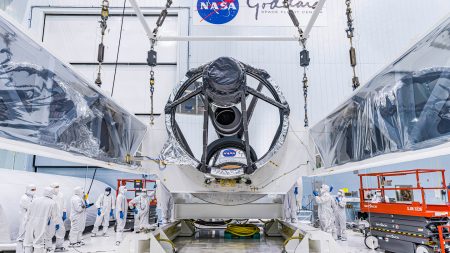
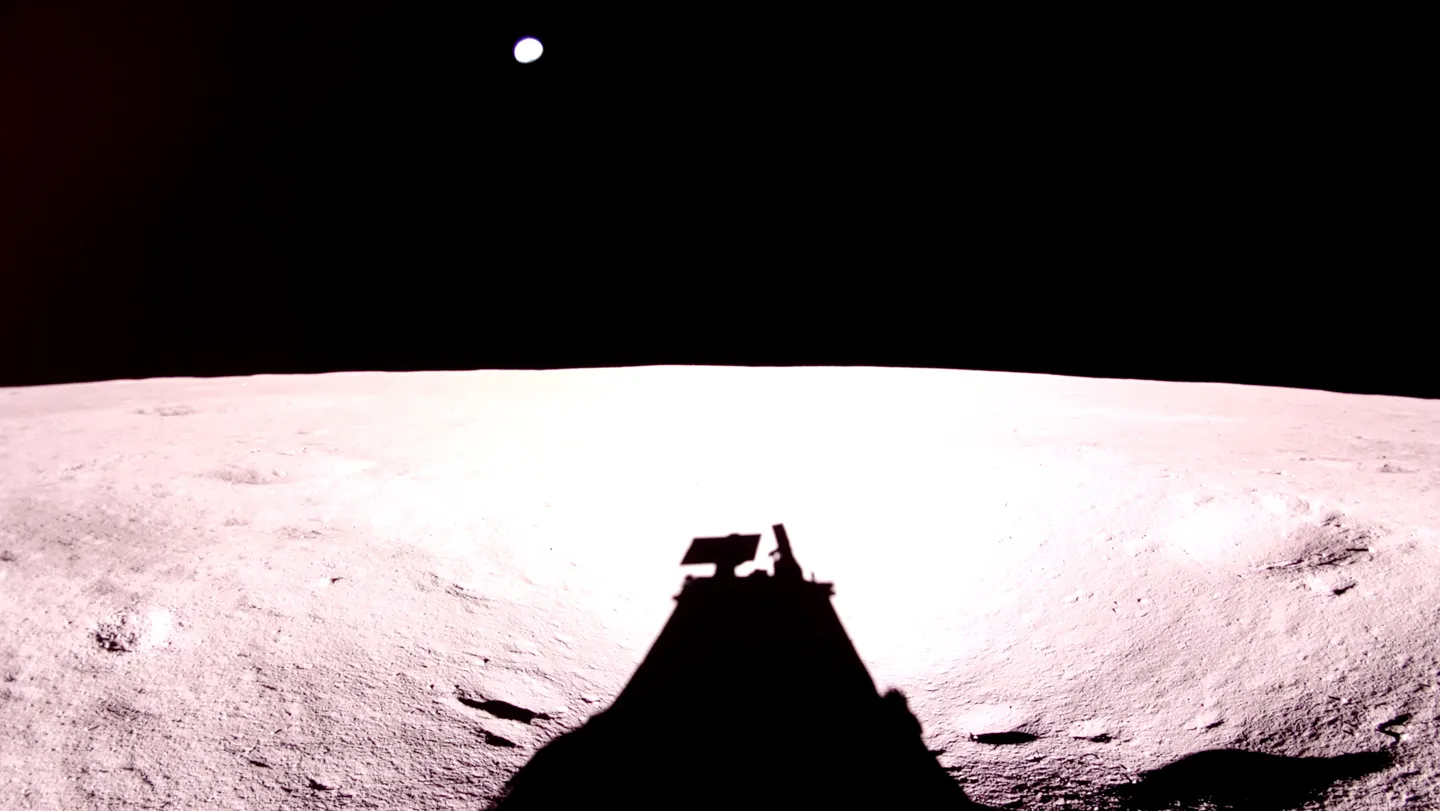
Picture the scene on March 2, 2025, as Firefly Aerospace’s Blue Ghost lander touched down in the desolate basin of Mare Crisium, a serene crater nestled far from the Moon’s wilder volcanic playground. This wasn’t just any landing; it was a deliberate foray into the unknown, orchestrated by scientists desperate for clarity on a decades-old debate. The Moon’s uneven volcanic activity has baffled experts since the Apollo missions in the 1960s and ’70s, which returned samples rich in curious elements collectively dubbed KREEP—an acronym for potassium, rare earth elements, and phosphorus. These heat-generating isotopes, scientists theorized, were concentrated in a specific region on the nearside, fueling magma that erupted into the vast, basalt-flooded maria we know as the Procellarum KREEP Terrane, or PKT for short. But without data from beyond this “hot spot,” the theory remained a hypothesis, like piecing together a puzzle with half the pieces missing. Blue Ghost’s mission? To drill outside the presumed boundaries of the PKT, in a place where the Moon’s interior should be cooler and more representative of the “average” lunar mantle. Geoscientists like Robert Grimm of the Southwest Research Institute saw it as a clean slate—a way to test if those maria really owed their existence to geothermal quirks or something else altogether.
Boarding the lander were sophisticated instruments designed to peek beneath the Moon’s dusty exterior, echoing the spirit of exploration that drove the Apollo astronauts. One tool, a heat flow probe, burrowed nearly a meter into the regolith, mimicking setups from past missions but adapted for modern sensibilities. Another device inferred temperatures deeper underground, reaching down about 200 kilometers with the precision of a cosmic thermometer. These gadgets weren’t born in a vacuum; they evolved from lessons learned during those iconic lunar landings, where astronauts dug, sampled, and measured while the world watched in awe. In Mare Crisium, far from the PKT’s influence, the team expected a stark contrast—a cooler core that would confirm the heat-cluster theory. Imagining the excitement aboard mission control as signals beamed back: the digital readouts ticking away, scientists huddled around screens, hearts racing like explorers stumbling upon a hidden treasure. It was a moment of pure anticipation, blending the thrill of discovery with the humbling vastness of space, where every data point could unravel the Moon’s secrets.
Yet, as the results poured in, the findings defied expectations, stirring a mix of surprise and exhilaration among the researchers. Presented at the Lunar and Planetary Science Conference on March 17, the data revealed that the underground heat at Mare Crisium wasn’t as distinct as predicted—measurements closely mirrored those from Apollo sites like Apollo 15 and 17. The drill’s thermal readings showed comparisons, while deeper probes indicated a temperature difference of less than 230 degrees Celsius from Apollo 12, far below the anticipated 700-degree gap. It was like peering into a mirror and seeing an uncanny resemblance, challenging the notion that KREEP elements were the sole architects of the Moon’s asymmetrical face. Robert Grimm, a key presenter, described it as a “straight up measurement” of the Moon’s unvarnished self, suggesting that Mare Crisium captured the elusive “background Moon.” This revelation felt electrifying, a reminder of how space exploration can upend our assumptions, turning what seemed certain into a vibrant conversation.
Of course, science rarely offers neat resolutions, and this discovery ignited fresh debates rather than quenching them. Grimm proposed an alternative narrative, drawing on insights from NASA’s GRAIL mission from 2013, which revealed a thinner crust beneath the PKT. Perhaps, he mused, the volcanism thrived not because of abundant heat-producing elements, but simply due to less geological resistance—magma bubbling up with greater ease through a slender barrier. This idea, reshaping a quarter-century of thought, tapped into the wonder of planetary geology: the Moon as a dynamic world shaped by layers upon layers of complexity. Critics like Mark Wieczorek of the Institut de Physique du Globe de Paris pointed out nuances— the 200-degree difference might still hint at subtle elemental gradients, and recent reevaluations suggested the PKT could be smaller than imagined, meaning Apollo 12 might have skirted its edges. It’s a testament to the human appetite for dialogue in science, where evidence sparks imagination and drives us to question, refine, and push boundaries further.
Looking ahead, this lunar saga is far from over, with another private mission slated for 2027 targeting the Schrödinger crater on the Moon’s rugged farside. There, instruments akin to those on Blue Ghost will probe a landscape devoid of both maria and those enigmatic heat elements, promising a clearer lens on the debate. As Wieczorek aptly noted, while interpretations may vary, the consensus is clear: more data means better understanding. These endeavors resonate on a deeply human level, echoing our innate curiosity about the cosmos— the same longing that drove ancient stargazers to weave myths from the Moon’s visage. In humanizing this scientific journey, we see not just rocks and readings, but stories of persistence, the thrill of the unknown, and humanity’s unyielding quest to understand our place in the universe. As we await the next chapter, the Moon’s “man” invites us to keep looking, wondering, and dreaming— a silent witness to the wonders of exploration.