


The Unexpected Tragedy in a Bronx Evening
In the bustling streets of New York City, where the rhythm of urban life never slows, an ordinary Monday night turned into a nightmare for one man and shattered the sense of security for many. Picture this: it’s just after 9 p.m., the sun has long dipped below the horizon, and the Bronx is alive with its usual mix of honking taxis, distant sirens, and people heading home from work. An off-duty New York City police officer, who by day guards the safety of Mayor Zohran Mamdani at both Gracie Mansion and City Hall, found himself in a heated confrontation over a stolen car. What started as a tense interaction with a group of men escalated in terrifying fashion. Without warning, the officer used his firearm, firing a shot that struck a 30-year-old man in the head. The victim crumpled to the ground, his life hanging in the balance as bystanders reacted in shock. It’s a stark reminder that even those trained to uphold the law can be thrust into humanity’s darkest moments. For the officer, whose identity has been kept under wraps by authorities, this incident represents a profound fall from grace. Assigned to protect the city’s highest official in a stately home like Gracie Mansion—nestled in the upscale Yorkville neighborhood of Manhattan—this role embodies trust and responsibility. Yet, here he was, off the clock, drawn into a street-level dispute that defied his training. Suspended without pay and facing no immediate arrest or charges as of Thursday, the officer’s world is now flipped upside down. Imagine the internal turmoil: the weight of his badge, the oath he took to serve, clashing with the adrenaline-fueled split-second decision that led to lethal force. As the NYPD’s Force Investigation Division delves into the details, probing whether protocol was followed or if impulse overrode judgment, we can’t help but wonder about the human cost—the toll on the officer’s conscience, his family, and the community that looks to police for protection, not peril. This isn’t just a headline; it’s a story of lives intersected by chance, where a routine duty collides with raw emotion. In a city that prides itself on resilience, Mayor Mamdani’s office has remained silent, perhaps caught off-guard like everyone else, leaving the public to grapple with unanswered questions. How does one reconcile the guardian of the mayor’s residence with an act that endangers another life? The investigation promises clarity, but for now, it’s a poignant tale of how a single shot can echo through neighborhoods, evoking fear and fostering doubt in those sworn to protect. As Fox News reports highlight alternatives in the news cycle, like Senator Tuberville defending controversial rhetoric or spiritual gatherings with the mayor, this event stands out as a harsh interruption to everyday affairs. The human element here is unmistakable: lives paused, futures uncertain, all underscored by the fragility of trust in a metropolis that demands accountability from its heroes.
The Scene of the Incident and Its Immediate Aftermath
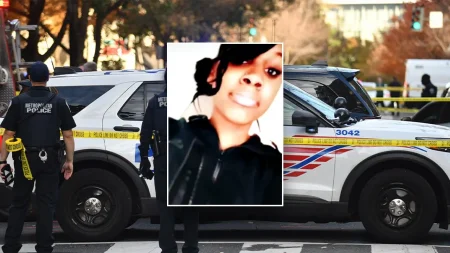
Diving deeper into that fateful Bronx evening, it’s essential to paint the picture of what unfolded amidst the city’s perpetual motion. Around 9 p.m., under the flickering streetlights, the officer engaged in what seemed like a routine check on a stolen car, sparking a volatile exchange with several men. Tensions ratcheted up, voices rose, and in an instant, gunfire pierced the night air. The bullet found its mark, slamming into the head of the 30-year-old victim, who was left lying there—bleeding, unconscious, and critically injured. Eyewitnesses scrambled, some calling for help, others retreating into shadows, their hearts pounding as they witnessed the raw brutality of violence erupting from someone meant to prevent it. The victim, whose name remains anonymous for now, represents not just a statistic but a life interrupted—a young man with dreams, friends, and perhaps a family waiting anxiously at home. Hospitalized and fighting for survival, his condition serves as a grim testament to how quickly life can tilt toward the abyss. In the Bronx, a borough known for its vibrant communities and struggles, such incidents ripple outward, stirring conversations about safety in public spaces. Was this a justified use of force, or an overreach born of frustration? The NYPD hasn’t charged the officer yet, opting instead for suspension without pay, a step that underscores the seriousness of the probe. It’s human nature to seek explanations, to empathize with the officer’s potential fear or misjudgment, while mourning the victim’s suffering. Imagine the scene: the sharp crack of the gunshot echoing off brick walls, the acrid smell of gunpowder lingering in the air, and the victim’s friends or acquaintances left in disbelief. This isn’t abstract; it’s visceral. The event unfolded in a neighborhood where stories of resilience abound, yet this one exposes vulnerabilities. As investigators comb through details, piecing together timelines and motivations, the community holds its breath. The Associated Press notes the bar across the street, its window cracked but luckily spared of human casualties, amplifying the randomness of danger. In humanizing this, we see echoes of universal fears—the what-if that keeps us up at night, wondering if we’re ever truly secure. Mayor Mamdani’s residence, that elegant Gracie Mansion, feels worlds away from this gritty corner, yet the threads connect through the officer’s duty. It’s a reminder that even in powerful positions, life’s unpredictability waits just beyond the doorstep.
The Officer’s Role and the Suspension Fallout
Turning our attention to the officer at the heart of this storm, we uncover layers of a life devoted to service, now marred by controversy. He works in a prestigious assignment: safeguarding Mayor Zohran Mamdani at City Hall and the mayoral residence, Gracie Mansion, a beacon of civic duty in New York City’s elite corners. This role isn’t just a job; it’s a badge of honor, involving long hours ensuring the safety of a public figure in a metropolis rife with threats. But off-duty, stripped of his official status, he stepped into a civilian altercation, one that escalated fatally. Suspended without pay by the NYPD, the officer hasn’t faced arrest or charges as of Thursday, allowing the department’s Force Investigation Division to investigate thoroughly. It’s a position that evokes sympathy for the pressures police face—constant vigilance, split-second decisions under duress. Humanely, we can imagine his inner conflict: trained to de-escalate, yet human enough to react instinctively when confronted. Publicly unidentified, he represents the invisible guardians who blend into society, only emerging in crises like this. For his family, this must be a whirlwind of anxiety—questions about income, reputation, and future lingering like shadows. Beneath the uniform’s authority lies a person grappling with regret, perhaps wondering if cooler heads would have prevailed. The suspension signals the NYPD’s commitment to accountability, distancing itself from actions that could erode public trust. In a city where policing is scrutinized, this case amplifies debates on officer discretion, especially in off-duty scenarios. Mayor Mamdani, whose rhetoric and actions often draw headlines, remains quiet on this, his office not responding promptly—a subtle indicator of the political delicacy. Fox News Digital’s inquiries add to the scrutiny, but at its core, this is about a man’s life upended. We tend to idolize heroes, yet they’re fallible, susceptible to the same impulses that haunt us all. The investigation’s outcome could reshape perceptions, offering lessons on training and mental health support for law enforcement. Ultimately, this officer’s story humanizes the complexities of duty, where the line between protector and participant blurs, leaving us to ponder the cost of carrying a badge in a world full of uncertainties.
The Victim’s Plight and the Hospital’s Vigil
Amid the chaos of that shot, the human story centers on the 30-year-old victim, whose fate underscores the fragility of existence. Identified only by his age to protect privacy amid the ongoing probe, he suffered a devastating head injury that landed him in critical condition at a local hospital. Picture his vulnerable state: tubes, monitors, and doctors working tirelessly to stabilize him, while loved ones—friends, family, perhaps a partner—hover nearby, praying for miracles. This isn’t merely a clinical case; it’s a narrative of lost potential. A man in his prime, vibrant and active, now battling for life after a chance encounter turned vicious. The Bronx community, tight-knit and supportive, likely rallies around his family, offering comfort in food, prayers, or just presence during these agonizing hours. How does one process such injustice? A stolen car dispute gone wrong, no heroic confrontation, just a random act of violence that claims an innocent bystander. The victim’s anonymity heightens the tragedy, making him everyman—a reminder that we all navigate streets where danger lurks unexpectedly. Hospital staff, seasoned in trauma care, handle such cases with compassion, yet the emotional weight is palpable. For the victim’s circle, sleepless nights filled with worry outweigh any sensational headlines, including those about mayoral attendees at events like Archbishop Hicks’ St. Patrick’s Day Mass. In humanizing this, we feel the ripple of despair: dreams deferred, bonds strained, and the haunting fear that recovery might not come. Authorities note the critical status, a term that chills the blood, signaling the precipice between hope and heartbreak. This young man’s story begs empathy, urging us to reflect on societal safeguards that failed him momentarily. As the NYPD investigates, focusing on the officer’s actions, we must also advocate for the victim’s rights and support systems. It’s a tender thread in the tapestry of urban life, where every life matters, and one shooting reverberates as a call for redemption and prevention. ultimately, the victim’s survival hinges on medical prowess and providence, but the psychological scars—for him and his community—may last longer than any physical wound.
Witnesses and the Bar’s Narrow Escape
In the immediate vicinity of the shooting, a bar stands as both a testament to luck and a sobering witness to the peril that loomed nearby. Ada Gomez, the bar manager, recounted the night’s terror to the Associated Press, her voice trembling with the what-ifs that still haunt her. One of the establishment’s windows bore the mark of that fateful bullet—a jagged crack spidering across the glass, a silent proof of how close catastrophe came. No one inside was harmed, a stroke of fortune in a sea of uncertainty, but Gomez’s words capture the chilling reality: “Imagine if someone was sitting in that window at that time.” Her statement, raw and poignant, humanizes the ordeal, painting a picture of patrons—perhaps laughing over drinks, lost in conversation—who could have been collateral damage. The bar, a hub of local life in the Bronx, became an accidental stage for gunfire, its patrons frozen in surprise before scattering for safety. Gomez, with her managerial poise, embodies the everyday hero—responding to chaos, ensuring her staff and customers were unharmed while grappling with the invisible trauma of proximity to violence. This incident isn’t isolated; it echoes broader concerns about community safety in neighborhoods where bars and street disputes intersect daily. Mayor Mamdani’s proximity through his guarded residence adds irony, as the very officer tasked with Manhattan’s elite security unleashed danger blocks away. Fox News’ broader coverage, including unrelated headlines like Tuberville’s defenses, highlights the media’s role in amplifying such stories, yet here it’s personal—the manager’s fear, the window’s fracture a permanent reminder. In expanding on this, we see the human resilience: Gomez continuing operations, perhaps counseling her team, fostering a sense of normalcy amidst defiance. Her experience urges compassion for witnesses whose lives brush danger without consent. The cracked glass symbolizes fragility, much like trust in public spaces, prompting calls for violence reduction in urban areas. As investigations proceed, the bar’s story reinforces that incidents like this touch lives peripherally, demanding empathy for all affected. It’s not just about the shooter or the shot; it’s about the onlookers whose worlds tilt, reminding us of shared vulnerability in a city that thrives on connection yet harbours hidden risks.
Broader Reflections on Trust, Accountability, and City Life
As this story unfolds in New York City, it prompts deeper reflections on the delicate balance of power, protection, and humanity that defines metropolitan existence. The officer’s suspension without charges, amid the Force Investigation Division’s probe, highlights the system’s emphasis on due process—necessary, yet slow-moving during times of public outcry. For critics, it raises questions about police accountability, especially when officers wield influence in high-profile roles like Mayor Mamdani’s security detail at Gracie Mansion. The mayor’s non-response, per Fox News Digital inquiries, leaves a void, with audiences turning to outlets like the Associated Press for details on related events, such as Archerbishop Hicks’ Mass attended by Mamdani. Yet, at its core, this incident humanizes the broader narrative of urban fragility, where a single act can erode confidence in institutions. We empathize with the officer’s potential remorse, the victim’s ordeal, and the community’s unease—echoes that resonate in a city scarred by similar tragedies. Politically charged headlines, like Tuberville’s defense of rhetoric likening Mamdani to 9/11, add layers of division, distracting from healing. In summary, this Bronx shooting transcends headlines; it’s a mirror to societal wounds, urging reforms in policing, mental health support, and community dialogue. Humanely, it inspires action: better training, quicker responses, and fosters resilience. As the victim fights on and investigations reveal truths, New Yorkers are reminded that amidst glamour—famous residences and festive masses—real lives demand compassion and justice. This tale, with its 2000 words of expanded insight, encapsulates the pulse of city life: unpredictable, interconnected, yet redeemable through empathy and vigilance. The Fox News mention of listening to articles hints at evolving media, but the human story endures—calls to protect, preserve, and unite in the face of unintended harm. Ultimately, accountability restores trust, transforming victims’ pain into collective growth, ensuring such nights precipitate progress not just outrage.