



The Shattered Beauty of Chihuly’s World
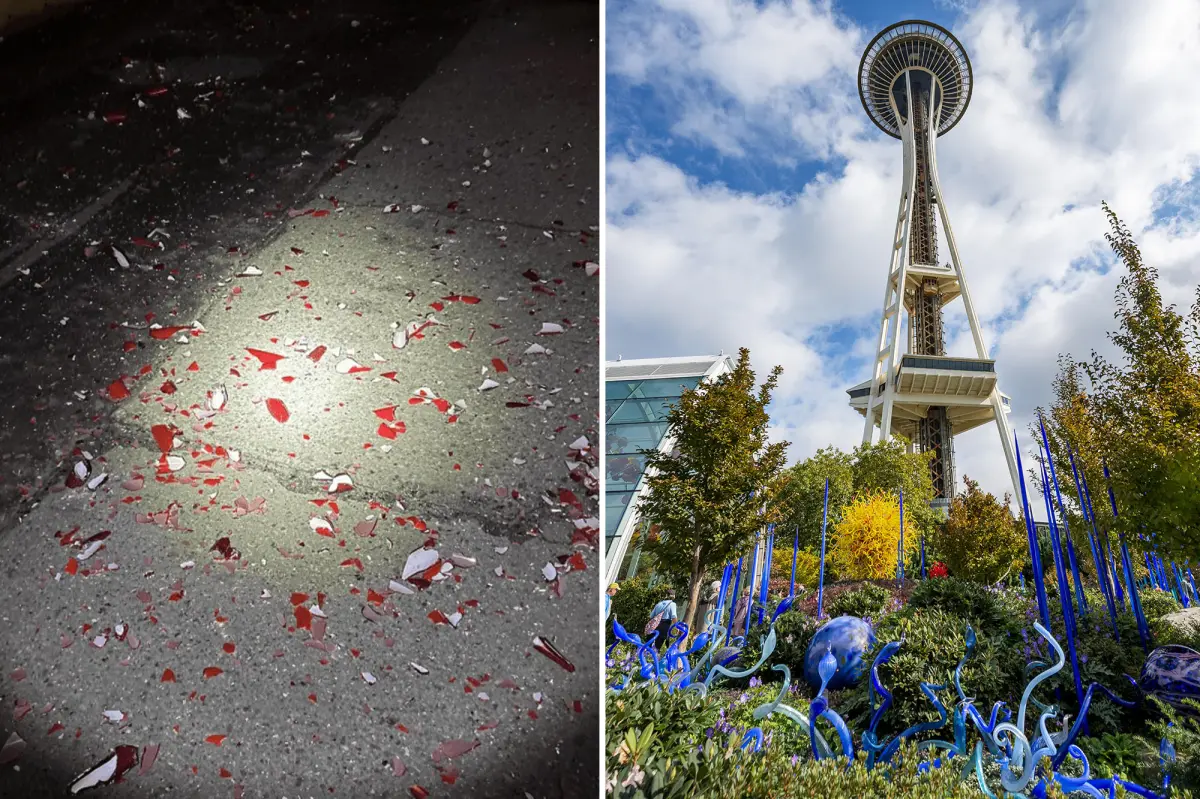
Imagine stepping into the Chihuly Garden and Glass, a sanctuary of vibrant hues and ethereal shapes on the Seattle Center grounds, where Dale Chihuly’s masterpieces transform everyday vision into a symphony of light and wonder. These aren’t just sculptures—they’re living testaments to human creativity, crafted with painstaking precision over hours, days, and months by artists who infuse each curve and swirl with soul. On a fateful Monday night just after 11 p.m., that fragile paradise was violated by Alexander Taylor Weis, a 40-year-old man whose actions would shake the community to its core. Authorities describe the scene as one of “catastrophic damage,” with nearly $250,000 in destruction raining down on these delicate glass artworks, symbolizing not just financial loss but a profound assault on the human spirit of artistry and perseverance. Weis, reportedly frantic and unchecked, turned a place of inspiration into a battlefield, leaving shattered remnants that echoed the chaos of his mind.
Weis wasn’t a stranger to turmoil; his life, marked by decisions that led him astray, culminated in this impulsive rampage. How does someone, perhaps driven by personal demons or a momentary loss of control, decide to annihilate something so purely beautiful? The Seattle Police Department paints a picture of disorder: large pieces of colorful glass, vibrant reds, blues, and golds that once danced like underwater forests, now littered the floor like discarded dreams. Security cameras and eyewitness accounts reveal Weis slipping into a “secure area,” his hands aggressively dismantling the intricate glass plants that Chihuly designed to mimic nature’s organic flow. Each smash wasn’t just breaking material; it was severing the threads of craftsmanship that connected artists to viewers, reminding us how vulnerability lurks in the most seemingly unassailable places. For visitors who sought solace in these luminous forms, this act of vandalism felt personal, like an invasion of our collective emotional space, where art offers respite from life’s harsher realities.
The human drama escalated when Weis confronted the guards charged with protecting this artistic treasure. In a frenzy that blurred lines between victim and assailant, he hurled glass shards at security officers, turning deadly debris into weapons. Police reports detail him picking up a jagged piece and lunging repeatedly at one officer, his face contorted in rage, as if channeling some inner battle onto the nearest figures of authority. Miraculously, no guards were injured, a testament to their training and quick reflexes in the face of such unpredictability. What must those officers have felt—heart pounding, adrenaline surging, defending not just property but the irreplaceable joy that art brings to countless hearts? Weis’s combativeness during arrest, refusing commands even as handcuffs clicked into place, spoke to a deeper resistance, a man grappling with surrender. Cuffed and hauled to King County Jail, his journey from creator of chaos to captive underscored the fragility of human behavior, where one unchecked moment can ripple into irreversible consequences.
In the aftermath, the Chihuly Garden and Glass team embodied resilience, a human response that lifted spirits amidst the wreckage. Despite the heartbreak of over $240,000 in estimated damage—evident in photos showing hundreds of glistening fragments strewn like fallen stars—museum officials and staff rallied. They swept up the broken pieces with care, reopening the next day as if defying the darkness, proving that human ingenuity often mends what brute force shatters. The damaged artworks were tenderly removed, with plans for replacements in the coming weeks, each new installation a promise of rebirth. Visitors, noting the swift recovery, felt a communal hug; it was as if the museum’s healing mirrored societal fortitude. For the workers who had poured passion into displaying Chihuly’s vision, this was a painful but unifying experience, reinforcing the bonds between art and its stewards.
Legally, Weis’s path took a sobering turn when he refused to appear in court, a defiant act that only solidified his fate. A judge, reviewing the evidence, found probable cause to hold him on charges of burglary—he had breached the secure heart of the exhibit—and assault for endangering lives in his stabbing attempts. Multiple counts of malicious mischief encompassed the vandalism, reflecting the deep malice in obliterating beauty without regard for its creators or admirers. Behind the courtroom formalities lay a human story: Weis, facing the mirror of his actions, perhaps confronting the isolation that drives such extremes. Society’s call for justice wasn’t just punitive; it was a plea for accountability, ensuring that one man’s turmoil didn’t eclipse the collective peace art fosters. As authorities guided the proceedings, the case highlighted how legal systems weave narratives of responsibility into the tapestry of public safety.
Finally, the public’s voice resonated with a mix of sorrow and resolve, humanizing the incident into a broader dialogue about fragility and value. Gary Rockafield, a visitor whose quote captured the zeitgeist, lamented, “There’s really no words… The time and effort it takes to make these things and put them on display just to have someone come in and do that.” His words echoed countless others, who saw in the wreckage a metaphor for life’s unpredictability—laboriously built wonders shattered in moments. Yet, beneath the despair bloomed empathy; was Weis a perpetrator or a product of unseen struggles? This event prompted reflections on mental health, security in communal spaces, and the sanctity of cultural havens. By humanizing the vandal as someone entangled in his own narrative, we grapple with compassion, even as we mourn the loss. The Chihuly Garden stands as a beacon, repaired and radiant, inviting us to cherish the delicate threads connecting humanity—one splash of color at a time.