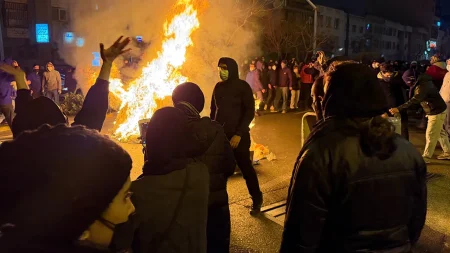



Ever imagined a world where war rages on land and in the skies, but money keeps flowing like digital ghosts through invisible networks? That’s the chilling reality unfolding in the Middle East, where geopolitical tensions are clashing with the invisible power of cryptocurrency. Picture this: It’s February 28th, and a series of U.S. and Israeli strikes rock Iran, targeting what experts believe are Revolutionary Guard missile sites. The Iranian government responds with a nationwide internet blackout, plunging millions into digital darkness. Connectivity drops to a mere 1% of normal levels, cutting off families from communication, news, and the outside world. Yet, amid this chaos, something extraordinary is happening beneath the radar. A sophisticated cryptocurrency infrastructure, linked to Iran’s elite Islamic Revolutionary Guard Corps (IRGC), not only survives but thrives, letting billions in digital assets slip out of the country undetected. Cyber intelligence firm RAKIA, founded by Omri Raiter, starts monitoring this activity in real-time. What they uncover isn’t just financial movement—it’s a lifeline for a regime under siege. The blackout is meant to isolate Iran, but the crypto pipes remain wide open, ferrying funds that evade sanctions and empower hidden proxies waging war across borders. It’s a tale of technological resilience in the face of human conflict, where code outsmarts bombs, and money talks louder than missiles. This story isn’t just about economics; it’s about how a digital underbelly keeps power structures intact, even as lives are disrupted above ground. As we dig deeper, we’ll see how this crypto corridor isn’t random—it’s deliberate, designed by a network that’s as secretive as it is ruthless. Raiter explains it like this: “In the shadows of war, money doesn’t stop.” And indeed, while civilians struggle without WhatsApp or streaming videos, the IRGC’s digital empire hums on, channeling wealth to fuel ongoing battles with Israel and beyond. It’s a stark reminder that in today’s hyper-connected world, the lack of internet access isn’t the end of connectivity—it’s just a barrier for some, not for those with the right tools and motivations.
The human side of this cyber saga hits home when you consider the people caught in the crossfire. Take RAKIA’s real-time tracking: right after the initial U.S.-Israeli strikes, their systems light up with activity. Some might think of crypto as some abstract blockchain buzz, but here it’s visceral—tens of millions flowing out in the first hours, ballooning to hundreds of millions as days pass. Raiter, speaking to Fox News, describes it as a floodgate opening: “Money was just flowing out from Iranian crypto accounts.” It’s not just numbers on a screen; it’s desperation and survival. Imagine IRGC officials or their allies, perhaps sipping tea in hidden bunkers, watching their digital wallets drain as strikes echo outside. This outflow isn’t trivial—it’s strategic, providing sustenance to proxy networks harassing Israel from Lebanon and Yemen. Think of Hezbollah fighters in Beirut or Houthi rebels in Sanaa, receiving this virtual cash to buy arms, bribe officials, or pay fighters. Simultaneously, though, it’s personal: regime insiders liquidating assets to protect their fortunes from the fallout of war. They see the writing on the wall—sanctions tighten, threats escalate—and decide it’s time to stash wealth abroad. For everyday Iranians, the blackout means no online banking, no instant transfers for essentials; their economy grinds to a halt while elites game the system. Raiter notes the coordination: “The scale and timing look deliberate.” It’s like watching a chess game unfold in the dark, where every move in crypto mirrors a gambit on the battlefield. This surge highlights a darker truth about hybrid warfare: digital assets aren’t just tools for innovation—they’re weapons of evasion, allowing bad actors to operate with impunity. As Chainalysis data shows, Iran’s crypto ecosystem ballooned to a staggering $7.78 billion in activity in 2025 alone, making it a financial giant in the shadows. For those not in the know, this isn’t fantasy; it’s the reality of how criminals and states exploit decentralized tech to outfox international scrutiny.
Now, zoom in on the IRGC’s massive footprint in this underground economy. According to RAKIA’s report, reviewed by Fox News, wallets tied directly to the IRGC hauled in over $3 billion in cryptocurrency that same year. That’s not pocket change—it’s empire-building fuel. The IRGC, Iran’s paramilitary powerhouse, has long been accused of funneling funds through murky channels, but crypto changes the game. It’s designed to be censorship-resistant, running on blockchain networks that don’t care about borders or blackouts. Raiter talks about Iran’s “significant crypto-based financial infrastructure,” one that’s battle-tested, surviving sanctions that have choked off traditional banking. These aren’t amateur hour setups; they’re sophisticated operations, likely involving coded messages, secure servers, and international fronts. Before the strikes, this system was already channeling money to proxies for wars that bleed into U.S. interests. Hezbollah’s Lebanon exploits? Houthi’s Yemen standoff? All allegedly fed by these digital veins. But post-attack, the floodgates burst, blending proxy funding with what looks like a mass exodus of personal wealth. Raiter compares it to two sides of the same coin: “They move through the same pipelines.” Personal capital flight makes sense—who wants their hard-earned (or stolen) millions locked in a country under fire? Yet, it’s the overlap that’s terrifying: regime bigwigs protecting their stash while funding the very proxies that escalate the conflict. This dual purpose shows how crypto democratizes corruption; no need for suitcases of cash when you can transfer billions in ether or bitcoin. For us outsiders, it’s a wake-up call—sanctions might isolate a nation, but they don’t dismantle its digital reserve. The IRGC’s success here undermines global efforts to starve rogue states financially, turning blockchain into a villainous equalizer.
Enter the U.S. response, a bureaucratic crusade against these invisible flows. Just days before the events, on January 30, the Treasury Department dropped sanctions on entire cryptocurrency exchanges linked to Iranian actors—a first in targeting whole platforms for sanctions evasion, not just wallets. Secretary Scott Bessent framed it as part of a relentless push to dismantle Tehran’s financial web. In a press release, he vowed: “The Treasury will continue to pursue Iranian networks and corrupt elites who enrich themselves at the expense of the people. This also applies to attempts by the regime to use digital assets to circumvent sanctions.” It’s a bold stance, acknowledging the digital shift. Imagine Bessent at his desk, poring over intel, realizing that crypto isn’t just for tech bros but for terrorists and militants too. The move marks a shift in how the U.S. fights this war—sanctions evolve from freezing bank accounts to blacklisting exchanges that facilitate IRGC trades. RAKIA’s analysis backs this up, showing how the very corridors sanctions aim to shut down are the ones pumping life into proxy operations. For Iranian insiders, it adds risk; getting tagged by U.S. designations means frozen assets worldwide, extradition threats, and reputational ruin. Yet, the IRGC presses on, adapting with new wallets or offshore havens. This cat-and-mouse game humanizes the complexity: Sanctions aren’t hammer blows; they’re slow squeezes, forcing adaptation. The Treasury’s actions reflect a broader strategy, but in the heat of war, they feel reactive. Bessent’s words carry weight, evoking the Iranian people— ordinary folks sidelined by regime greed. If crypto was meant to empower the masses, here it’s flipped into oppression’s ally, siphoning wealth while civilians deal with blackouts and uncertainty. It’s a policy puzzle: Crack down harder, and you might push more actors underground?
The post-strike surge in crypto outflows ties directly to Iran’s expanding web of proxy wars, painting a picture of coordinated chaos. RAKIA identifies funds streaming into areas historically linked to Iran-backed groups—Lebanon for Hezbollah, Yemen for the Houthis. This isn’t random gambling; it’s strategic reinforcement. As Israel braces for rockets from its northern borders or Iran-cooled conflicts in the Red Sea disrupt shipping, these crypto injections keep the fires burning. Raiter points to historical data: “Some accounts we saw are connected to proxy war zones.” Money buys drones, missiles, and loyalty, fueling threats that strain U.S. interests in the region. Simultaneously, the surge includes a rush of personal flights—regime-connected figures evacuating wealth amidst the blackout’s isolation. Picture titled officials or oligarchs, staring at laptop screens in candlelit rooms, rushing transfers before borders close further. This exodus isn’t born of fear alone; it’s savvy preservation. The IRGC’s coordinated effort shines through: elites protect their riches while sustaining wars, using the same crypto pathways. Iraq even faced international blame for not disarming these proxies, escalating tensions. This blend of personal and political finance creates a symbiotic monster—war enriches the few, perpetuating cycles of conflict. For regional stability, it’s dire: As oil prices spike and skies are contested, these unseen funds amplify threats. Humanizing this, think of families fragmented—proxies recruit young men with promises of jihad, while their masters pad offshore accounts. The U.S. and Israel strike back militarily, but crypto lets Iran retaliate digitally, reshaping the battlefield. It’s a reminder that modern warfare isn’t just boots on ground; it’s algorithms and anonymity.
Despite the sweeping internet shutdown, a testament to Iran’s digital firepower endures, proving crypto’s unkillable resilience. With national connectivity at just 1%— shut down by NetBlocks— you’d assume all digital livescreen halted. But RAKIA’s probe reveals over 1,100 active cryptocurrency nodes humming within Iran. Tom Malca, RAKIA’s head of cyber and AI research, calls it out: “Those nodes require dedicated bandwidth, stable power, and deliberate exemption from the shutdown.” These aren’t casual users; they’re specialized hubs, concentrated in the Tehran-Qom corridor, home to IRGC headquarters and government strongholds. Smaller clusters dot cities like Isfahan, Mashhad, Tabriz, and Kermanshah, forming a network that defies the blackout. Imagine engineers in secure facilities, routers humming, nodes validating transactions while millions are cut off from email or social media. This infrastructure thrives on exceptions—power backups, satellite links, or isolated intranets—sparing it from the people’s shutdown. For civilians, it’s frustrating; no streaming, no news, just offline tedium. But for the elite, it’s business as usual. Combining network monitoring with Chainalysis data, RAKIA paints a picture of deliberate resilience. The Iranian UN mission stays silent, but the report speaks volumes: Even isolated, the regime’s crypto backbone pulses, facilitating billions in flows. Raiter notes how this setup outlives sanctions, embodying Tehran’s IT prowess. Humanizing the tech, these nodes represent human ingenuity twisted—coders, soldiers, and officials collaborating to sustain power structures. It’s eerie: A blackout meant to defend becomes a shield for financial secrecy. As Fox News listeners tune in (that’s right, you can now listen to articles!), this story echoes warnings about digital sovereignty. In a world of blackouts and blockchain, control slips through fingers—unless you own the nodes. The IRGC’s triumph begs questions: Can sanctions ever truly strangle such adaptive beasts? As oil surges and region braces, this crypto saga underscores hybrid threats—visible wars, invisible wallets, reshaping global order one transaction at a time.