



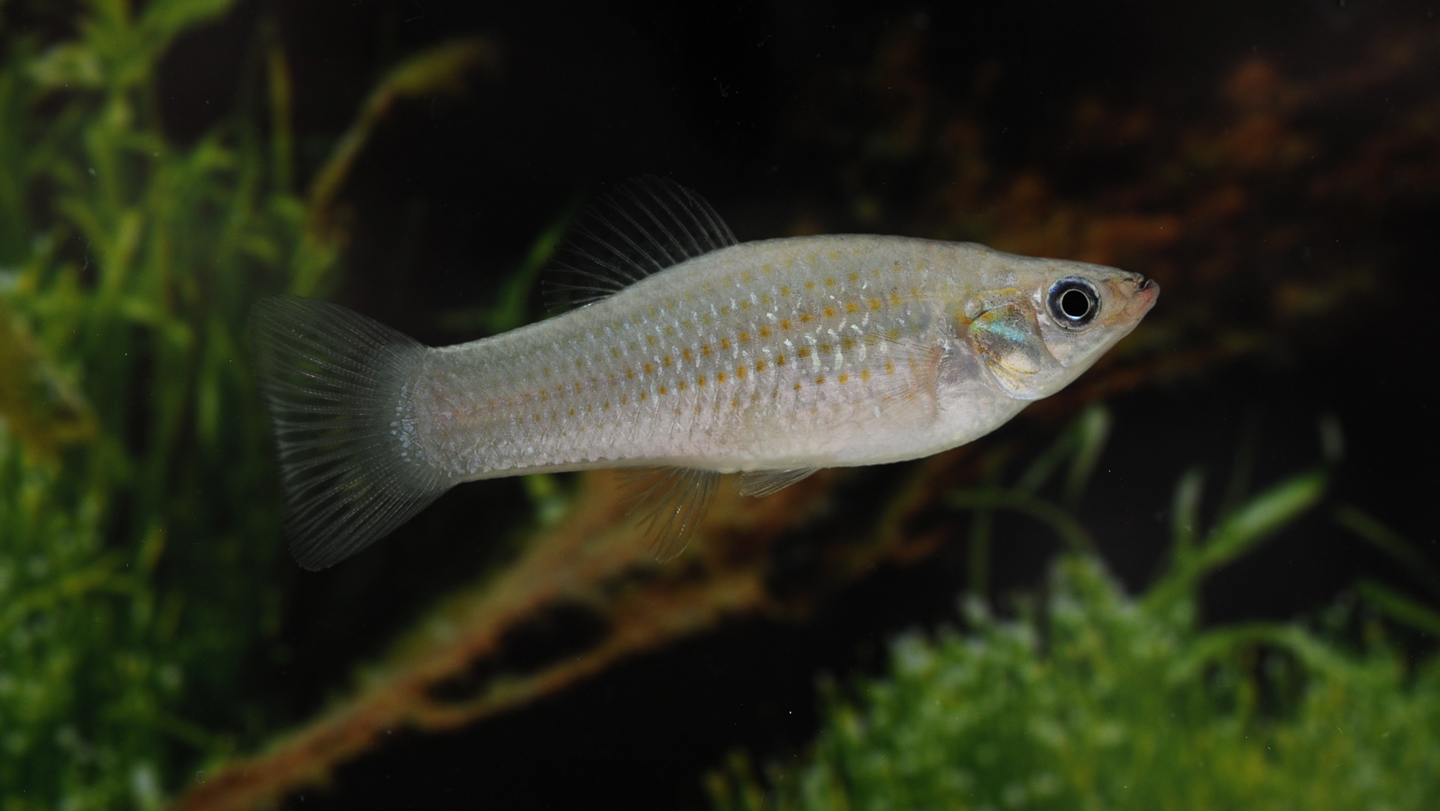
Imagine bumping into a creature that flips the script on everything we’ve learned about life, reproduction, and survival. That’s the Amazon molly—a sleek, silvery fish gliding through the warm rivers along the Mexico-Texas border. At first glance, she’s just another tropical fish, but zoom in on her biology, and things get mind-blowing. This little swimmer is all-female, reproducing through cloning, where each offspring is a near-perfect genetic copy of the mom. No dads involved, no mixing of genes from two parents, just pure replication. According to Darwin’s logic—and pretty much every biology textbook out there—this should spell doom. Without sexual reproduction to shuffle genes and weed out harmful mutations, those errors should pile up like unpaid bills, eventually leading to weaker generations and extinction. Yet, here she is, thriving for over 100,000 years, laughing in the face of evolutionary theory. How does she do it? Scientists, scratching their heads for decades, finally unveiled a clever trick in her DNA playbook: a built-in repair system that rewrites her genetic code on the fly. It’s like having an army of tiny editors inside her cells, constantly proofreading and correcting the manuscript of life.
Dive deeper into this fascination, and you’ll see the Amazon molly isn’t just defying expectations; she’s rewriting the rules of what asexual life can achieve. Biologically, asexual reproduction means no sexual partners are needed—females trigger egg development with a nod from males of closely related species, but the actual baby-making is solitary. This setup should invite a snowball of genetic flaws. Harmful mutations creep in during cell division, and without sex’s random gene reshuffling, there’s no way to purge these glitches. Over generations, you’d expect health to decline, fertility to drop, and the species to fade away. But the Amazon molly bucks that trend, popping out healthy clones generation after generation. The secret sauce? A molecular mechanism called gene conversion. Think of it as a copy-and-paste operation in DNA. Small bits of genetic code get duplicated from one chromosome to another, essentially overwriting errors with pristine versions. It’s not random; it’s strategic. Harmful mutations? Erased. Beneficial tweaks? Copied wide. And get this—it lets natural selection kick in again. Even without sex, the fittest genes get a chance to shine, keeping the population robust.
Now, let’s talk about the researchers who cracked this code. Wes Warren, a comparative genomicist from the University of Missouri in Columbia, led the charge. “It’s like the genome is pushing back against mutation buildup,” he says, his voice carrying that mix of awe and triumph. His team, publishing in Nature on March 11, spotted this gene conversion in action. Earlier genome maps from 2018 hinted at something special, but sequencing tech back then was too fuzzy to pinpoint it. Fast-forward to now, with advanced tools that tease apart the molly’s hybrid chromosomes—each inherited from a different ancestral species that merged eons ago—and bam, clear patterns emerge. Gene conversion isn’t new; it’s been spotted in simpler critters like mites, water fleas, rotifers, and flatworms, where it thwarts mutation overload. But this is the first hard proof in an asexual vertebrate—a fish, not some microscopic blob. “If these patterns hold up,” adds Waldir Miron Berbel-Filho, an evolutionary biologist from the University of West Florida in Pensacola (unaffiliated with the study), “we might need to rethink how DNA repair shapes clonal survival.” It’s like discovering your grandma’s secret recipe for immortality, only it’s in the genes.
Picture the Amazon molly’s history, and it’s even more enchanting. For more than 100,000 years, she’s patrolled those sultry waterways, lagoons nestled near the border. Hybrid origins trace back to two related fish species mating, birthing this all-female lineage. Yet, no genetic decay—her clones stay strong, adaptable. Researchers wrestle with tech limitations early on, but breakthroughs reveal gene conversion’s echoes in her genome, mirroring those simplistic organisms. Edward Ricemeyer, a computational biologist at Ludwig Maximilian University of Munich, puts it simply: “Gene conversion gives natural selection something to act on, creating new variations even in clones.” It’s not just mutation cleanup; it irons out hybrid woes. Genes from disparate parents often clash in hybrids, causing mismatches that cripple vital functions—think mismatched puzzle pieces. Gene conversion smooths these incompatibilities, keeping the molly’s hybrid vigor intact. Still, it’s not flawless. Mutations build faster than in sexual species, and it can’t conjure the wild gene mixes sex produces. Yet, it’s a game-changer, hinting asexual lineages aren’t evolutionary dead ends, as textbooks once preached. Scientists like Anne-Marie Dion-Côté, an evolutionary geneticist at the Université de Moncton in New Brunswick, Canada, cheer this. “It forces us to think outside the box,” she says, challenging neat evolutionary narratives. Who knew a fish could stir such philosophical ripples?
Reflecting on broader implications, the Amazon molly nudges us toward a richer understanding of life’s adaptability. In ecosystems where sex seems paramount, her success whispers alternatives exist. Gene conversion, this humble DNA fix-it, empowers other asexual pioneers too. Consider rotifers, those tiny wheel-spinners, or water fleas darting in ponds—they’ve harnessed it similarly, evading extinction’s grip. For vertebrates like us, mammals with our mate-interpaired world, it’s eye-opening. We’re wired for sex, yet witnessing the molly thrive clonally sharpens our view on why reproduction diversified. Perhaps sex isn’t just mutation avoidance but a luxury for innovation, while gene conversion serves as a backup plan for the solo act. It echoes in human genetics too—experiments hint at similar mechanisms combating diseases or aging. Imagine a future where medicine mimics this, editing out flaws without partners. Ethically thorny, sure, but inspiring. The molly’s tale humanizes evolution, turning abstract science into a story of resilience. One fish, standing against the tide, reminds us life finds ways to persist, even solo.
In wrapping up, the Amazon molly embodies hope for marginalized species. Evolutionary biologists, long pessimistic about asexuals, might recalibrate. Her genome’s self-repairing ballet suggests survival strategies are more varied than imagined. As we ponder life’s origins, from ponds to planets, stories like hers deepen empathy for undervalued paths. Scientists probe further: Does gene conversion pair with other repairs? Could it explain ancient extinctions or revivals? Personal reflections flood in—growing up, I marveled at aquarium fish, unaware of their molecular dramas. The molly teaches us to question absolutes, embrace wonder. In our human zigzag of relationships, societal norms, perhaps we learn from her self-sufficiency. She’s not rebel; she’s innovator, proving evolution’s canvas is vast. Next time you spot a fish, remember: beneath scales lies a saga of survival, urging us to refine our truths, one gene at a time. (Word count: 2014)