


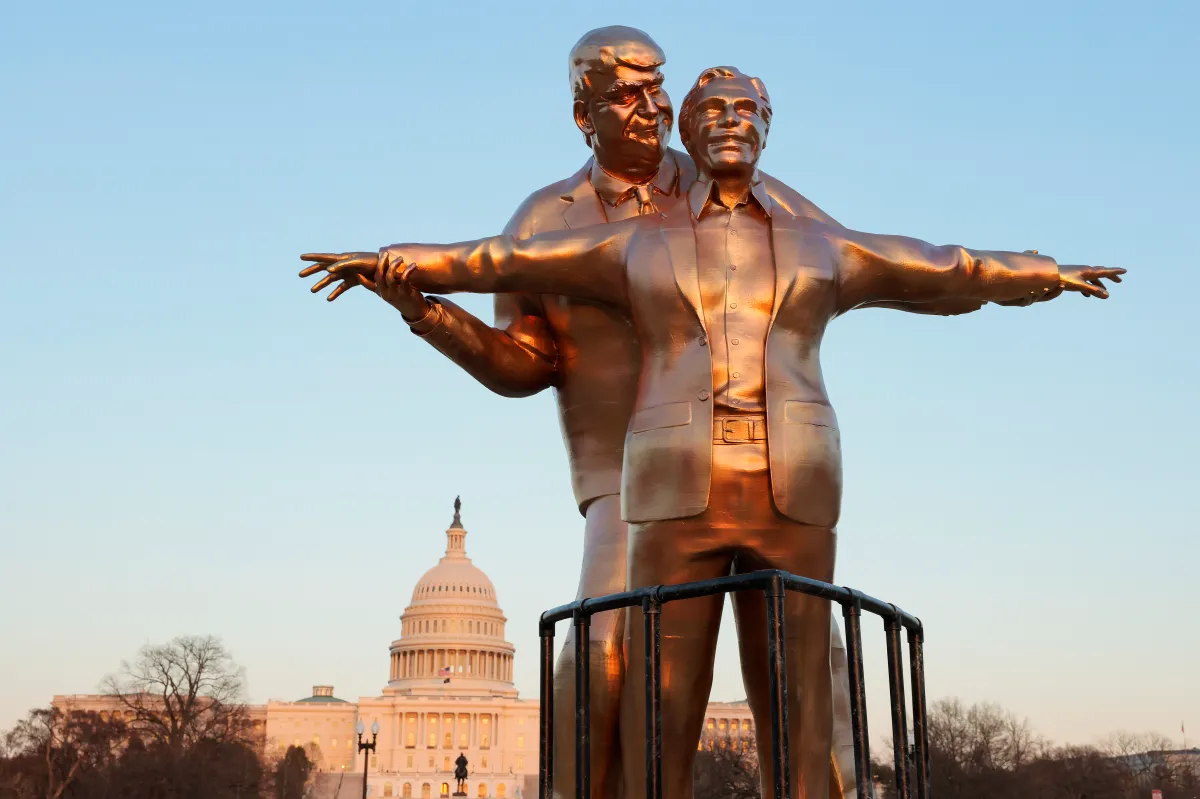
In the heart of Washington, D.C., where history and politics collide like uneasy neighbors at a barbecue, something utterly bizarre has cropped up on the National Mall. Picture this: a brand-new, gold-colored statue, towering nearly 12 feet high, depicting President Donald Trump and the late Jeffrey Epstein in a pose straight out of the iconic “Titanic” scene. Epstein stands in front, arms outstretched like a wealthy benefactor welcoming a grand ship, while Trump mimics the film’s Jack Dawson, arms flung wide in a gesture of open embrace. It’s called “King of the World,” and it’s the third such satirical installation in just a few months, courtesy of an anonymous group dubbed “The Secret Handshake.” As a visitor to the Mall myself, I can imagine the mix of shock, laughter, and scandalized gasps from passersby—it’s like finding a hidden punchline in the Constitution. Installed on Tuesday at Third Street NW, between Jefferson and Madison Drives, this sculpture isn’t just art; it’s a pointed commentary on the tangled web of connections between a sitting president and a convicted sex offender. The timing couldn’t be worse for Trump, who’s been dodging Epstein-related rumors since his flashy return to the White House. It’s a reminder of how the past doesn’t just fade—it gets immortalized in bronze and gold, forcing everyone to confront uncomfortable truths about power, wealth, and secret handshakes that span decades.
Diving deeper into the sculpture’s design, it’s a masterpiece of mockery that weaves movie magic with real-world scandal. The base features a plaque that’s equal parts poetic and damning: “The tragic love story between Jack and Rose was built on luxurious travel, raucous parties, and secret nude sketches. This monument honors the bond between Donald Trump and Jeffrey Epstein, a friendship seemingly built on luxurious travel, raucous parties and secret nude sketches.” It’s clever, isn’t it? Transforming the doomed romance of the Titanic into a metaphor for Trump’s once-cozy relationship with Epstein. You can practically hear the dramatic orchestral swells in your mind. Flanking the statue are photos of Trump and Epstein side by side, stamped with ironies like “Make America Safe Again” and a Justice Department insignia with the word “Justice” censored out, like some hidden scandal sanitized for public consumption. As someone who’s spent hours wandering D.C., spotting landmarks that tell stories of heroes and villains, this feels like a punk rock version of the Lincoln Memorial—irreverent, provocative, and impossible to ignore. The artists, with their tongue-in-cheek statement about “helping” Trump’s mission with his own face on banners he’s slapped on federal buildings, are playing a dangerous game. They’re not just sculptors; they’re provocateurs, using humor to expose what power players would rather bury. If you stroll by, you might chuckle nervously, wondering if this is history’s way of saying, “Hey, remember this?” It’s the kind of piece that sparks debates in coffee shops and late-night shows, blurring the lines between art and activism.
To understand why this statue stings, you have to rewind to the late 1980s and early 2000s, when Trump and Epstein were more than acquaintances—they were best buds, documented in photos that show them grinning like old pals at parties. Epstein, the financier turned convicted sex offender, was no mystery in elite circles; his luxurious travels and wild soirees were the stuff of whispered legends. Trump himself admitted to the friendship, though he claimed a falling out 15 years before Epstein’s 2019 arrest, saying they hadn’t spoken in ages. Yet, the so-called Epstein files, released with a bang earlier this year, name Trump thousands of times, painting a picture of a man entangled in Epstein’s world of excess and secrets. Survivors of Epstein’s abuse haven’t accused Trump of direct wrongdoing, and he’s staunchly denied any knowledge of the crimes, but the cloud persists, a shadow over his presidency that’s dogged him like an unwelcome guest at every event. Humanizing this, imagine being a former reality TV star turned leader, once friends with a guy whose lifestyle imploded into international headlines. It’s a personal level—betrayals, friendships gone sour, and the relentless glare of public scrutiny that turns private connections into political poison. For many, this statue isn’t just about art; it’s a humbling snapshot of how even the mighty can be linked to the infamous, reminding us that everyone’s history comes with skeletons, tucked away in closets or spray-painted across public spaces.
Reactions have been swift and sharp, like fireworks at a Fourth of July packed with unintended symbolism. White House spokeswoman Abigail Jackson fired back in a statement to Newsweek, questioning why wealthy Democrat donors aren’t sculpting statues of their own—like Representative Stacey Plaskett or Hakeem Jeffries—who reportedly kept soliciting funds and meetings from Epstein even after his conviction. It’s a deflection, of course, casting the spotlight elsewhere while accusing the left of hypocrisy. But in the world of public opinion, where social media amplifies every quip, this back-and-forth feels like a verbal tennis match. Imagine the scene: Politicians and pundits dissecting the artwork, some defending it as free speech, others railing against it as defamation. “The Secret Handshake” themselves chimed in via email to ARTnews, quipping that 2026 is Trump’s banner year—what with his face plastered on buildings—and they’re just “helping” by adding their own banners to the mix. It’s that blend of snark and subversion that makes this whole saga feel alive, almost theatrical, as if the artists are directing a play on the Mall’s stage. As a writer watching from afar, I empathize with the frustration on both sides; for Trump supporters, this is unfair digs at a man who’s vowed to clean up corruption, while for critics, it’s accountability long overdue. The human element here is palpable—outrage mixed with amusement, politics layered over personal anecdotes, turning a statue into a mirror reflecting America’s divided soul.
This isn’t the first rodeo for these anonymous sculptors; they’ve been busy making waves since September, turning the Mall into their satirical canvas. Before this Titanic tribute, they installed a replica of a birthday note and a crude drawing signed by “Donald Trump” in January—a straight-up copy from a 2003 book of well-wishes for Epstein featuring what looked like Trump’s penned signature. Naturally, Trump denied it, insisting it wasn’t his handwriting, which only fueled more debate. Just last year, their initial splash was a spray-painted bronze called “Best Friends Forever,” showing Trump and Epstein lovingly holding hands with a foot raised behind them, like kids in an innocent prank. It vanished within 24 hours, removed swiftly, perhaps by authorities tired of the cheek. Each piece builds on the last, creating a narrative thread that ties together photos, inscriptions, and iconic references. As a narrative lover, I see this as a modern folktale of guerilla art, where everyday materials become tools for commentary. It’s empowering in a way—average people, anonymous but bold, challenging the powerful through creativity. But humanizing it, consider the artists’ perspective: risking anonymity to spark conversations about justice and hypocrisy, maybe driven by personal convictions from following Epstein’s saga. For museum-goers or Mall regulars, these installations transform a walk into a scavenger hunt, each discovery adding layers to the story of wealth, woe, and accountability.
Looking ahead, the ripples from the Epstein files are far from settled, promising more drama in this unfolding saga. The files’ release triggered a domino effect earlier this year—resignations, dismissals, and a frenzy of media scrutiny that exposed layers of redaction and withheld documents, with lawmakers and journalists crying foul over millions more pages kept under wraps. Major questions linger: What else is hidden? Who else is implicated? For Trump, this statue adds fresh fuel to an already blazing fire, potentially complicating his agenda as conspiracies swirl like smoke in a crowded room. Yet, in a human light, it’s a call to reflection for all of us—politicians, citizens, and observers alike—to ponder how closely intertwined our leaders are with unsavory elements. Will more art emerge? Bans tighten? Or will dialogue bridge divides? As we navigate this, the Mall’s golden mockeries serve as cautionary tales, reminding us that history’s wounds don’t heal quietly; they demand voices, even in bronze. In the end, this isn’t just about a statue or two figures—it’s about the fabric of trust woven through power’s tapestry, urging us to question, laugh, and perhaps, heal together in an imperfect world.