




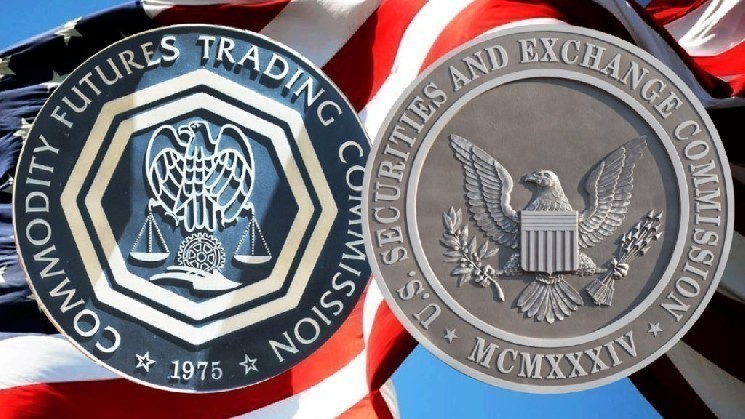
Regulatory Harmony on the Horizon: SEC and CFTC Eye Closer Ties in Crypto Oversight
In the ever-shifting landscape of cryptocurrency regulation, a notable development has emerged from the corridors of American financial oversight. At the recent FIA Global Clearing Markets Conference held in Florida, U.S. Securities and Exchange Commission (SEC) Chairman Paul Atkins unveiled plans that could reshape how the United States manages one of the world’s most volatile asset classes. Atkins, known for his pragmatic approach to market governance, hinted at a landmark collaboration between the SEC and the Commodity Futures Trading Commission (CFTC), two powerhouse agencies that have long navigated overlapping jurisdictions in the digital currency realm. This potential partnership, encapsulated in a proposed memorandum of understanding, signifies a pivot from rivalry to synergy, promising more cohesive regulatory enforcement. As investors and industry players watch closely, this move could address longstanding ambiguities in crypto markets, fostering stability in an arena plagued by rapid innovation and regulatory gray areas.
Delving deeper into Atkins’ speech, the SEC chairman articulated a vision for inter-agency alignment that directly addresses the fragmented oversight of cryptocurrencies. He emphasized that the days of redundant or competing enforcement actions between the SEC and CFTC are over, marking an end to what he described as inefficient one-upmanship. Instead, the agencies plan to operate under existing legal frameworks to pursue shared objectives, such as protecting investors and ensuring market integrity. By formalizing their relationship through a memorandum of understanding (MOU), Atkins stressed the need for unified decisions on critical issues. This agreement, still in the drafting phase, is anticipated to cover joint deliberations on financial product applications, interpretations of regulatory rules, and coordinated investigations into firms operating in the crypto space. For instance, derivatives tied to digital assets have been a point of contention, with the CFTC viewing them as commodities and the SEC as potential securities. Under this proposed MOU, such classifications could be resolved more swiftly, reducing the legal limbo that often delays product launches and innovation in the burgeoning field of decentralized finance.
Atkins also revealed that he has already directed his staff to initiate joint meetings with CFTC counterparts, a proactive step toward building trust and operational efficiency. This collaborative spirit aims to streamline processes that were previously bogged down by jurisdictional disputes. Imagine a scenario where a new crypto-related investment product is evaluated—not in isolation by each agency, but through a combined lens that leverages expertise from both sides. Such an approach could expedite approvals, potentially accelerating the growth of legitimate crypto businesses while clamping down on fraudulent schemes. Historically, the rivalry between the SEC and CFTC has led to confusion for startups and investors alike. Craig Wright’s Bitcoin-related claims in 2015, for example, saw the CFTC grant regulatory clarity where the SEC held back, highlighting the past inefficiencies. Now, with Atkins at the helm, this MOU represents a bridge over those divides, positioning the two regulators as complementary forces rather than adversaries.
In broader strokes, Atkins framed the SEC and CFTC as “sister institutions” poised to regulate the majority of U.S. cryptocurrency activities. This sibling analogy underscores their intertwined roles in safeguarding markets that blend traditional finance with cutting-edge technology. Cryptocurrencies like Bitcoin and Ethereum, once dismissed as fringe experiments, have evolved into mainstream assets drawing billions in investment. Regulatory clarity is crucial here, as ambiguous rules can deter institutional adoption and invite risky speculation. By anchoring their cooperation in a formal MOU, the agencies aim to create a robust framework that evolves with the market. Enforcement decisions, once siloed, will now be informed by pooled resources, enabling faster responses to emerging threats like pump-and-dump schemes or unregistered exchanges. This shift could also encourage international investors, viewing the U.S. as a model for crypto governance in a global economy where regulatory arbitrage—where firms exploit jurisdictional differences—remains a challenge.
The implications of this regulatory realignment extend beyond immediate compliance headaches, touching on the wider economic strategy championed by the Trump administration. Atkins’ announcement aligns seamlessly with President Donald Trump’s vision to position the United States as the world’s leading hub for cryptocurrency innovation. By fostering a collaborative regulatory environment, the U.S. could attract more projects, jobs, and capital to its shores, countering competitors like Singapore and Switzerland. Trump’s executive actions, including calls for stablecoin regulations, underscore a pro-growth stance that anticipates crypto as a driver of economic competitiveness. In fact, sources close to the administration suggest that inter-agency harmony is a key pillar of this strategy, ensuring that American regulators don’t stifle the industry with overreach but instead nurture it toward maturity. Investors, long wary of political volatility in crypto markets, might find reassurance in this bipartisan effort, potentially boosting confidence and liquidity in digital assets.
As the dust settles from Atkins’ speech, the proposed MOU stands as a testament to adaptive governance in an age of digital disruption. While the details of this agreement are still being hammered out, early signals point to a more predictable regulatory landscape, where cooperation trumps conflict. For crypto enthusiasts and skeptics alike, this development could mean fewer regulatory surprises and more room for sustainable growth. However, it’s essential to remember that market dynamics are influenced by countless factors, and past assurances haven’t always equated to smooth sailing. As the SEC and CFTC move toward this historic pact, observers are reminded of the adage that unity in regulation might just be the recipe for crypto’s long-term prosperity. With eyes on Washington, the industry braces for what could be a defining chapter in the saga of digital currencies. This is not investment advice; always conduct thorough research and consult professionals before making financial decisions. For the latest updates on regulatory shifts, stay tuned to reputable sources, as the crypto world continues to evolve at breakneck speed, demanding vigilance and adaptability from all stakeholders.