


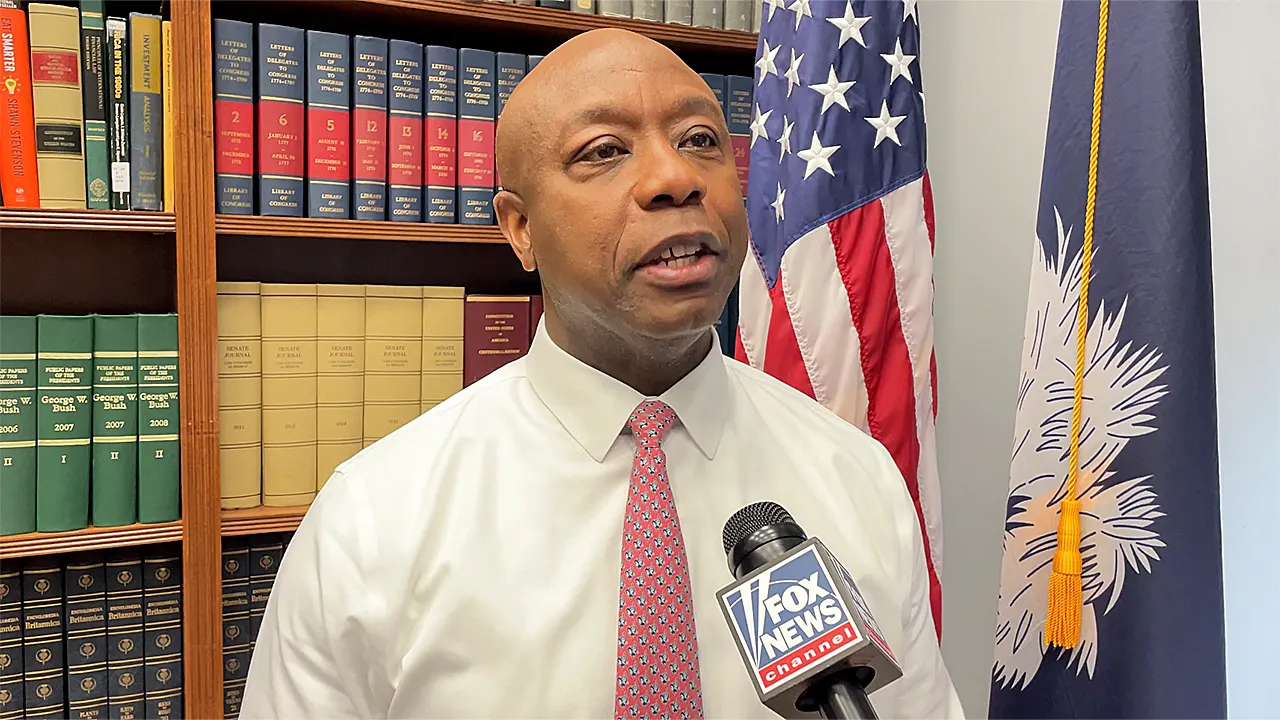
The Heart of Republican Hope: Tim Scott’s Optimism Amid Storm Clouds
Picture this: It’s a balmy afternoon in Palm Beach, Florida, where political heavyweights gather for the Club for Growth’s annual economic conference—a place where fiscal conservatives slug it out for America’s wallet. In walks Sen. Tim Scott, the sharp-suited chair of the National Republican Senatorial Committee, grinning ear to ear despite the political equivalent of a hurricane bearing down on the GOP. Scott, a guy who rose from humble South Carolina roots to become a voice for optimism in an often cynical world, tells anyone who’ll listen that he’s “incredibly optimistic” about holding—and even expanding—the Senate’s 53-47 Republican majority come the 2026 midterms. But let’s be real: No one’s buying fairy dust. The party in power usually takes a beating in midterms, and right now, Republicans are dealing with headwinds that could topple a battleship. Inflation’s pinching everyone’s pockets, the economy feels like it’s on a seesaw, and President Donald Trump’s approval ratings are underwater, making it tough to rally the base. Scott doesn’t mince words; he acknowledges it’s getting “more and more difficult by the day.” It’s like trying to host a backyard barbecue in the rain—sure, you push on, but you need good friends and better gear to keep the fire alive. In an exclusive chat with Fox News Digital at this conference, Scott opens up about the grind, sharing how he’s rallying his team with straight talk in those closed-door Senate meetings. Back in February, he laid it out plain for his GOP colleagues: No sugarcoating, just frank assessments of the battlefield. It’s a reminder that politics isn’t just policy—it’s personal, about connecting with everyday folks who are stressed about their jobs, kids’ futures, and whether that grocery bill will break the bank. Scott’s message is one of resilience, rooted in his own story of overcoming odds. He believes in looking at the glass half full, especially when discussing the party’s goals. Earlier, in December 2025, he mused that “54 is clearly within our grasp,” and with a little luck, even 55 might be doable. It’s not just wishful thinking; it’s about turning obstacles into opportunities. Voters, he argues, want accountability and results, and the GOP has that in President Trump, who Scott credits with keeping promises—at least from the party’s lens. Highlighting economic strides, he points to tax cuts from that big 2025 bill, promising bigger refunds that could put more money back in Americans’ pockets. And oil prices? Sure, they’ve spiked after U.S.-Israel actions against Iran, but Scott stays poised, predicting better times ahead as more data rolls in. In a world where cynicism reigns, Scott’s human touch—praying for colleagues and hoping for endorsements—makes him relatable. He’s not a robotic strategist; he’s a father, a pastor at heart, urging people to focus on progress. Even as he admits the climate’s tough, his positivity feels contagious, like a friend who grabs your shoulder and says, “Hey, we’ve got this if we stick together.” It’s this blend of realism and hope that could define the midterms, making Scott a beacon for Republicans navigating choppy seas.
Straight Talk and Strategy: GOP’s No-Bull Approach to Survival
Diving deeper into the trenches, let’s talk about Sen. Scott’s unfiltered sessions with his fellow GOP senators. Those early February briefings were no fluff—closed-door heart-to-hearts where Scott didn’t hold back on the party’s uphill climb. Sources who’ve been in the room describe it as a mix of tough love and team huddle, where Scott laid bare the risks without sugarcoating the stakes. “The climate’s gotten more difficult by the day,” he confessed, reflecting a party grappling with being in the driver’s seat while facing backlash. It’s raw, honest stuff, the kind you’d expect from someone who’s climbed the ladder from a rural beginnings, learning early that life doesn’t hand out free lunches. Fast-forward to his interview, and the optimism bubbles up again: “I think we have a possibility of more than 53 seats.” But it’s paired with strategy, not delusion. Scott emphasizes recruiting top-tier candidates—people who aren’t just names but real folks with stories that resonate. Take Michele Tafoya in Minnesota, a former NBC Sports pro turned conservative voice; her candidacy screams everyday American grit, appealing to those tired of the status quo. In Michigan, New Hampshire, and beyond, the GOP’s zeroing in on opportunities to pick up seats. Georgia’s a prime target, with Sen. Jon Ossoff as the top Democratic vulnerability— a wealthy outsider who’s often out of touch, or so Republicans argue. And don’t forget New Hampshire and Minnesota, where open seats offer fresh chances to flip the script. Scott’s not boasting; he’s building a narrative of quality over quantity, knowing voters want leaders who understand kitchen-table struggles. But it’s not all smooth sailing. Democrats are fighting tooth and nail, targeting spots like Maine’s Susan Collins, a steady Republican in a blue-leaning state, and North Carolina’s open seat after Thom Tillis’ retirement. Even in deep red Texas, Ohio, Alaska, and Iowa, GOP strongholds are under siege, with Dems painting Republicans as out-of-touch elites. The Democratic Senatorial Campaign Committee (DSCC) fires back on social media: “Voters are sick and tired of Trump and Senate Republicans’ toxic agenda raising prices and threatening their health care.” Ouch—that hits home. For Scott and his crew, it’s a wake-up call to humanize the message, not just throw stats but share stories of how Republican policies lift burdens. In private, they strategize like any family planning a big event: Who covers what weakness? How do we unify around shared values? Scott’s approach feels paternal, urging his team to stay grounded. “We’re in this for the long haul,” he might say over coffee, dodging the doom and gloom to focus on the light at the end—expanding that majority by proving the party’s worth in everyday lives.
The Battleground Chase: Flipping Seats and Human Stories
Let’s zoom in on those key races Scott and the GOP are eyeing, because midterms aren’t won with broad strokes—they’re about the pulse of each state, community by community. Take Georgia: First-term Democrat Sen. Jon Ossoff isn’t just a politician; he’s portrayed as a symbol of coastal elitism trying to represent heartland values. Republicans see him as vulnerable, ripe for flipping, especially with a solid candidate who talks farms and jobs instead of Beltway nonsense. Then there’s Michigan, where an open Democratic seat in a swing state feels like untapped potential—voters there, many factory workers and families, are craving real change after economic punches. New Hampshire, another battleground, echoes with its independent streak; the GOP’s aiming to capitalize on discontent, fielding folks who get the Granite State’s pragmatic vibe. And Minnesota? Enter Michele Tafoya, a name that’s becoming a rallying cry. A former sports reporter turned commentator, she’s relatable on a human level—someone who’s transitioned from play-by-play to advocacy, speaking to everyday conservatives frustrated with liberal overreach. Scott’s “incredibly optimistic” about these flips, and why not? These aren’t just seats; they’re homes to Americans dreaming of better days. But Democrats aren’t sitting idle. They’re gunning for losses, like Maine’s Susan Collins, a reliable GOP voice in a state trending blue. Democrats paint her as out of step with progressive tides, while in North Carolina’s open race, the GOP defends against charges of complacency. Texas adds drama—deep red and crucial, yet potential trouble with infighting. Iowa, Ohio, Alaska: All red bastions now eyed by opponents as winnable. It’s a chess game, but with human faces. Scott talks of recruiting “the highest quality candidates,” meaning people like you and me—teachers, businessmen, journalists—who’ve lived the American Dream and want to protect it. In interviews, he humanizes it: “We’ve got a president keeping promises and candidates who feel the voters’ pain.” Yet, the DSCC’s attacks sting: “Toxic agenda raising prices and threatening health care.” For Republicans, the response is to counter-narrative with narrative, sharing stories of how GOP policies, like tax breaks, ease burdens. Scott’s not aloof; he dives into the weeds, praying for unity and urging his party to listen. It’s about connection—turning policy debates into personal confessions over the fence. Voters don’t care about acronyms; they care about relief. In this dance of democracy, Scott embodies the everyman strategist: Persistent, prayerful, pushing optimism against odds.
Trump’s Shadow: Endorsements, Endorsements, and the Drama of Politics
Ah, President Trump—the elephant in the room for everything GOP. Scott doesn’t shy away from it; in fact, his stance on Trump is a masterclass in diplomacy laced with hope. Remember Texas: The NRSC backs longtime Sen. John Cornyn, a steady hand in a red state, but he’s in a brutal primary runoff against MAGA firebrand Ken Paxton, the state’s attorney general. Paxton? He’s got baggage—scandals, a messy divorce, and that hardline Trump loyalty that could alienate moderates. Democrats salivate at the thought of it gifting them a flip in traditionally Republican soil. Scott’s blunt: “The one thing we know about John Cornyn is he will win Texas.” But the wild card is Trump’s endorsement. The President teased it last week after no one hit 50% in the primary, and now Scott and Senate Majority Leader John Thune are on pins and needles. “President Trump is the only person that can make that a reality,” Scott says of securing Cornyn’s win. But there’s vulnerability: Scott won’t pretend he can sway Trump, admitting, “I’m certainly praying for John Cornyn to be our nominee.” It’s a human moment—prayer in politics? Scott’s background as a pastor shines through, blending faith with strategy in a way that feels authentic, not engineered. Trump, dubbed the GOP’s “secret weapon” by some, polls show mixed love: Enthusiastic base, but underwater nationally due to controversies. Scott sidesteps the drama, focusing on Trump’s promise-keeping—tax cuts, economic promises—as rallying points. In other races, Trump’s tacit backing looms large, boosting MAGA candidates but sometimes scaring swing voters. Democrats exploit it, framing Republicans as Trump puppets who ignore real issues. Scott counters by spotlighting Trump’s positives, like stabilizing oil markets (despite recent spikes post-Iran actions). “I think the economy will continue to get better,” he predicts, tying it to voter gratitude. It’s a delicate balance: Embracing Trump’s energy without letting it derail. For Scott, it’s about unity—urging Trump to endorse wisely for the party’s sake. Picture the scene: Scott pacing, phone in hand, hoping for that endorsement call. Politics like this feels Shakespearean—ambition, loyalty, betrayal all swirling. Yet, Scott’s optimism remains: With Trump on board strategically, 2026 could be a home run. Humanizing Trump? Not quite easy, but Scott tries by seeing the man behind the tweets—a fighter with a vision. In a party of personalities, it’s the human connections that might win the day.
Democratic Pushback: Voters Tired of the Tide
At the other end of the aisle, Democrats are roaring, painting Republicans as villains in a story that’s all about the people. The DSCC doesn’t pull punches: “Voters are sick and tired of Trump and Senate Republicans’ toxic agenda raising prices and threatening their health care. Voters across the country are ready to send Senate Republicans packing this November.” Oof—that’s sharp, tapping into everyday frustrations with economic woes and policy battles. Inflation’s a killer; gas prices jumping since the Iran strikes make every commute feel like a tax hike. Yet, Scott brushes it off as temporary, eyeing “unfolding good information” that could boost the GOP. Democrats, though, aren’t waiting—they’re targeting flips in red states like Texas, Ohio, Alaska, and Iowa, where Trump’s baggage weighs heavy. In Texas, Paxton’s scandals give them hope; in Iowa, GOP defenses are tested against progressive tides. Maine’s Susan Collins? Democrats frame her as too moderate for a changing state. It’s a narrative war, with Democrats humanizing through stories of struggling families hit by high costs. Scott acknowledges the challenge but counters with his own human touch: Touring districts, listening to constituents, emphasizing how Republican wins translate to wallets and health. The race isn’t just about seats; it’s about who represents the heartbeat of America—folks who work two jobs or worry about kids’ meds. Scott’s straight talk in meetings is mirrored by this: No BS, just focus on real outcomes. He predicts bigger tax returns from the 2025 bill, sparking optimism for millions. Democrats call it gimmicky; Scott calls it relief. In social media battles, each side shares anecdotes—Democrats of hardship, Republicans of recovery. It’s exhausting, yet Scott’s persistence feels like a grandpa passing wisdom: Stay focused, keep building. Voters, he hopes, will see through the noise to support promises kept. As midterms near, this push-pull could define everything, with human voices on both sides vying for America’s ear.
Economic Sunshine and Tax Relief: The GOP’s Ray of Hope
Wrapping it up with a bow of hope, let’s talk money—the thing that keeps the world spinning. With tax season looming (deadline just over a month away), Scott’s beaming about the “big, beautiful bill” from summer 2025, signed by Trump, loaded with cuts that promise fatter refunds for millions. “That’s great news,” he enthuses, imagining the relief on faces as more dough hits pockets. It’s not abstract; it’s tangible, like extra cash for a weekend getaway or covering unexpected bills—a human win in tough times. Scott ties it back to elections: The more folks credit Republicans, the better the poll numbers. Oil spikes post-Iran? A bump, but not insurmountable. “I think the economy will continue to get better month by month,” he says, urging voters to “focus on the Republican Party and keep us in the majority.” Democrats scoff, pointing to inflation and unfulfilled promises, but Scott’s positivity is infectious, grounded in data and faith. At the conference, it’s clear: This isn’t just policy; it’s about reconnecting politics to purpose. Scott’s story— from poverty to Senate via hard work—fuels his belief that growth benefits all. Humanizing economics? He does it by sharing wins: Families saving on taxes, jobs created. The 2026 midterms hang on this thread—economic optimism versus gloom. With candidates like Tafoya bringing fresh voices, and Scott praying for unity, the GOP aims for expansion. It’s a marathon, but Scott’s in it for the long game, reminding us politics need heart. As voters decide, his message lingers: Optimism rooted in action can change tides. In Palm Beach’s sunshine, it feels possible— a reminder that behind stats are stories of everyday resilience. (Word count: 2,048)