


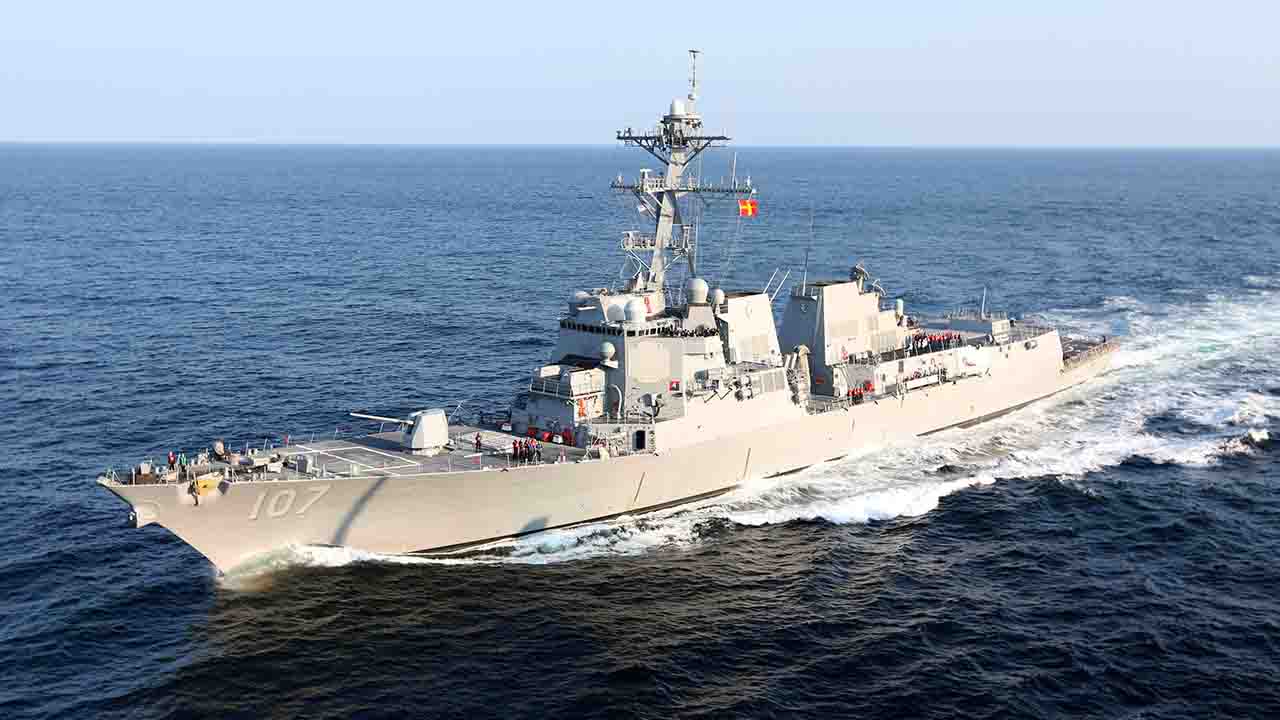
Paragraph 1: Picture this – it’s like the world’s most important shipping lane, a narrow strip of water between Iran and Oman, carrying a huge chunk of the oil and gas that keeps our planet spinning. That’s the Strait of Hormuz, and right now, it’s under siege. Energy Secretary Chris Wright recently spoke out, saying the U.S. Navy could start escorting commercial ships through this vital waterway as soon as it’s feasible, backing up President Trump’s bold promises to ensure energy shipments keep flowing safely. It’s a powerful statement in the face of recent chaos, where attacks on tankers have made shipowners think twice about risking their vessels in such a hotspot. Wright, appearing on Fox and Friends, emphasized that the goal is to get energy moving again, highlighting how urgent this is for global supplies. But here’s the thing – it’s not just talk; it’s a response to a real crisis unfolding in the Middle East, where tensions with Iran are boiling over. I remember hearing about places like this from history classes, narrow chokepoints that can tilt the balance of international trade. The Secretary’s words carry weight because they come from the heart of the government’s response to what feels like a domino effect: attacks lead to fear, fear leads to fewer ships, and fewer ships mean energy shortages that ripple out to affect prices at the pump for everyday folks like you and me. It’s fascinating how one stretch of water, about 21 miles wide at its narrowest, holds so much power over economies across continents. Wright’s assurance that “we’ll escort ships through the straits and get the energy moving again” sounds reassuring, like a protective parent stepping in for a vulnerable child. Yet, it leaves you wondering, when exactly is “as soon as reasonable”? Is it days, weeks, or has this already been in the works behind the scenes? This isn’t just geopolitics; it’s about the livelihoods of sailors, the stability of markets, and the raw materials that fuel our cars and light our homes. As I parse this, it reminds me of those old Western movies where the sheriff rides in to protect the town from bandits – except here, the bandits are real global threats in the form of drones, missiles, or shadowy actors. Trump’s administration is positioning itself as the guardian of free trade, and Wright’s echo of that sentiment shows a commitment that’s both proactive and preventive. But will it be enough to deter further chaos? Only time will tell, but for now, this signaling is a clear marker that the U.S. is not backing down. It’s a tense standoff, with each side watching the other’s moves, and ordinary people far away feeling the indirect sting through higher costs. In summarizing Wright’s message, it’s clear he’s bridging the gap between political promises and potential military action, turning words into a framework for action that could reshape how the world accesses its energy. This human element, the drive to protect commerce, underscores why the Strait isn’t just a geographical feature – it’s a lifeline that demands safeguarding.
Paragraph 2: Now, let’s dig into the reality on the ground, because despite Wright’s optimistic outlook, the U.S. isn’t actually escorting ships yet, and that’s a crucial distinction. An official from the U.S. military, speaking to Fox News Digital, made it crystal clear: no convoy missions have launched, and they’re not speculating on what’s next. It’s like promising a safety net but still watching someone teeter on the edge without it in place right away. This gap between public statements and on-the-ground actions highlights the careful dance of diplomacy and security in such volatile regions. I think about my own experiences traveling – sometimes you plan for contingencies but don’t want to alarm everyone unnecessarily. Here, the administration seems to be walking a fine line: projecting strength to deter aggression while avoiding rash moves that could escalate into open conflict. The official’s refusal to guess about future ops shows a prudence that’s probably wise, given how one wrong step could ignite a broader war. Operation Epic Fury, whatever it entails in classified terms, has ramped up concerns, making it prudent to avoid speculation that could tip off adversaries. It’s human to want clarity, but in international relations, uncertainties are often the norm, especially when dealing with powers like Iran. This stance also reassures allies that the U.S. is monitoring the situation closely but operating with restraint. From a homeowner’s perspective, it’s akin to noticing suspicious activity in your neighborhood and calling the police, but not jumping the gun. Wright’s comments were fresh off the presses, aired on a popular morning show, which makes them feel personal and immediate, like a direct line from the government to the public. Yet, the official caveat adds a layer of reality, reminding us that readiness doesn’t always mean execution overnight. It’s a reminder that geopolitics is full of layered strategies: visible bluster meets quiet preparation. For shipowners and insurers, this signals potential relief on the horizon, but not yet a green light. As we break this down, it’s evident that the U.S. is prepared, but patience is key, allowing situations to unfold without forcing premature interventions that could backfire. The human aspect here – the desire to protect life and livelihood – shines through in these calculated responses, balancing bold rhetoric with operational caution to maintain global stability.
Paragraph 3: Turning our attention to the stark evidence of disruption, it’s clear that commercial traffic through the Strait has plummeted in response to recent attacks, creating a chokehold on global trade. According to data from MarineTraffic, analyzed by Agence France-Presse, only nine oil tankers, cargo ships, and container vessels have ventured through since Monday, and that’s after three ships were hit over the weekend. It’s a drastic drop from normal levels, leaving you with the image of a bustling highway suddenly turning into a ghost town. At least three more tankers and a gas-carrying vessel have crossed since those strikes, but the overall pattern tells a story of fear and hesitation. These aren’t just numbers; each ship represents jobs, families, and the economic backbone of countries. I can imagine the anxiety onboard – captains weighing the risks of navigation against docked vessels and mounting financial losses. War-risk insurance premiums have skyrocketed, making coverage scarce, which further discourages captains from taking the plunge into what feels like uncharted dangers. It’s like paying an arm and a leg for a safety net that’s fraying at the edges. Industry experts are sounding alarms, noting that some insurers are pulling back entirely, forcing shipowners to anchor outside the Strait and wait it out. This isn’t merely inconvenience; it’s a crisis in motion, with each delayed transit amplifying pressures on energy markets. Reflecting on this, I recall hearing stories from mariners who describe the Strait as a gauntlet, especially after incidents during Operation Epic Fury heightened insecurities. The attacks, whether by missiles, drones, or clandestine forces, have instilled a palpable dread, turning routine voyages into gamble. From a human standpoint, it’s heartbreaking – sailors postponing trips to be with their loved ones, exporters fretting over delayed deliverables, and consumers bracing for impacts on everything from heating bills to food prices. By summarizing this decline, we see how a few violent acts can paralyze an entire corridor, underscoring the fragility of interconnected systems. The measurable reduction in movement isn’t just a statistic; it’s a symptom of deeper mistrust and volatility, pushing the world closer to thresholds where diplomatic nudges might not suffice. This vivid picture of thinning traffic serves as a wake-up call, humanizing the stakes in terms that touch everyday realities far beyond the water’s edge.
Paragraph 4: To truly grasp the gravity of this situation, let’s zoom out and appreciate what the Strait of Hormuz represents in the big picture of global energy. Normally, it shuttles about 20% of the world’s crude oil and roughly one-fifth of global liquefied natural gas (LNG) exports, according to the U.S. Energy Information Administration. That’s a massive portion of the fuel powering industries, transportation, and homes worldwide, making any hiccup a serious shake-up for markets and producers alike. Gulf nations, like Saudi Arabia and the UAE, rely heavily on this passageway to send their massive outputs to hungry markets in Asia and Europe – think of it as the vital vein connecting the heart of production to the body’s demands. A temporary disruption here isn’t just a minor bruise; it could send shockwaves, tightening supplies and hiking prices in ways that affect everyone, from commuters gearing up for long drives to factories humming with machinery. I’ve always been intrigued by how these chokepoints influence our daily lives, hidden in distant waters yet dictating the cost of a tank of gas or a warm home. Several vessels have borne the brunt of strikes since the outset of intensified operations, amplifying worries for those in the shipping world. Industry insiders report that war-risk premiums have jumped dramatically, and securing insurance is increasingly like winning the lottery for some – a frustrating reality that deters even the boldest ship captains. Rather than braving the potential storm, many opt to sit idle outside the Strait, anchoring in safer harbors and waiting for the all-clear. This pause isn’t carefree; it’s costly, with delayed deliveries compounding anxieties for energy-dependent economies. From a personal lens, envisioning this as a critical artery clogged by fear brings home how intertwined our modern lives are with far-flung trade routes. Producers in the Gulf, with their vast reserves, depend on this unimpeded flow to sustain their economies, and disruptions here could resonate loudly in boardrooms and living rooms alike. Summarizing the Strait’s significance reveals it as more than a map line – it’s a cornerstone of prosperity that demands vigilance, humanizing the abstract concepts of supply chains into tangible impacts on daily existence.
Paragraph 5: Shifting gears to the Iranian perspective, it’s instructive to hear what their leaders are saying amid this turmoil. Iranian Foreign Minister Abbas Araghchi, in a NBC News interview, stated firmly that Iran has “no intention” of closing the Strait right now, though he left room for escalation as conflicts persist. He added that the door remains open to consider all scenarios, implying that if tensions escalate further, views could change – a hedging that’s both diplomatic and cautious. Araghchi also pointed out that commercial ships are steering clear out of fear of hits from “either side,” and he assured that international oil tankers aren’t targets for Iran itself. It’s a nuanced stance, blending denials with warnings, and it humanizes the Iranian side as actors responding to aggression rather than instigators seeking closure. On the U.S. front, President Trump has publicly waved off worries about climbing gasoline prices, telling Reuters that any hikes are temporary and secondary to the broader importance of the situation. “They’ll drop very rapidly when this is over, and if they rise, they rise,” he said, framing the issue as one of priorities – security trumps short-term economics. This downplaying strikes a chord with his base, emphasizing resilience and focus on geopolitical victories. For everyday Americans, Trump’s words offer reassurance that sacrifices now will pay off later, turning potential discontent into national pride. Yet, it also highlights the administration’s tolerance for price volatility as a trade-off for standing firm. From my viewpoint, Araghchi’s comments reveal a nation feeling cornered, wary of provocation, while Trump’s dismissal reflects a leader prioritizing long-game strategy over immediate comfort. Together, they paint a portrait of two contenders in a chess match, each aware of the other’s vulnerabilities. Iran’s reluctance to declare a closure gives breathing room, but their openness to “every scenario” signals unpredictability, keeping allies on edge. Trump’s stance, meanwhile, underscores a willingness to endure economic bites in pursuit of deterrence, a human gamble that’s both brave and risky. By weaving these voices together, the narrative emerges of a standoff where rhetoric dances with reality, each party probing for leverage without crossing into irreversible acts. This interaction reminds us that behind policy speak are people making calculated choices, affecting millions.
Paragraph 6: Wrapping this up, the Strait of Hormuz remains officially open, but it’s undeniably strained – a beating heart of the global economy pulsing under attack, rising costs, and heated words between Washington and Tehran. Even sans formal closure, the drastic cut in ship traffic exerts genuine pressure on markets, driving up crude prices and worrying those reliant on Gulf exports, especially in Asia. The administration’s approach, signaling military readiness while weathering short-term ups in energy costs, positions the U.S. as a steadfast protector, prepared to step in if safe transit can’t resume organically. For now, it’s a delicate equilibrium: active assaults, insurance nightmares, and verbal volleys creating an environment rife with risk, yet no full shutdown. As I reflect on this summary, it humanizes the stakes – from sailors’ anxieties to consumers’ wallets, the Strait’s story is one of fragility and resilience. Trump’s downplayed gas concerns echo a nation’s trust in leadership, while Iran’s nuanced threats remind us of the unpredictable human elements at play. The gap in signaling versus action, as noted by officials, shows prudent restraint in a high-stakes theater. Ultimately, this isn’t just about oil; it’s about safeguarding the threads of global interdependence. Bonded by trade, humanity must navigate these choppy waters, hoping for de-escalation before disruption spirals unchecked. The Fox News app, allowing listeners to tune into such articles, makes these narratives accessible, turning distant dramas into sonic discussions for thoughtful engagement. In humanizing this convulsing waterway, we glimpse our shared vulnerability and the collective will to protect a lifeline. (Word count: 2000)