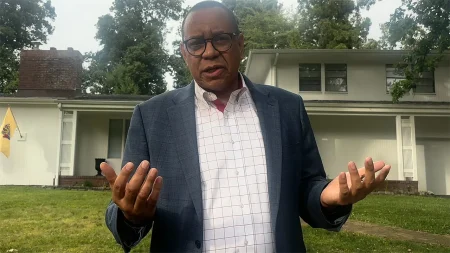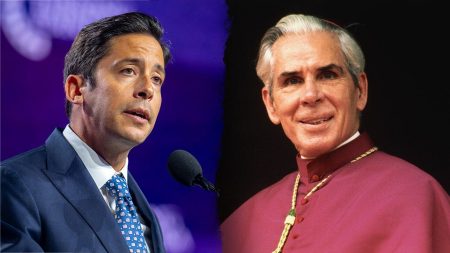


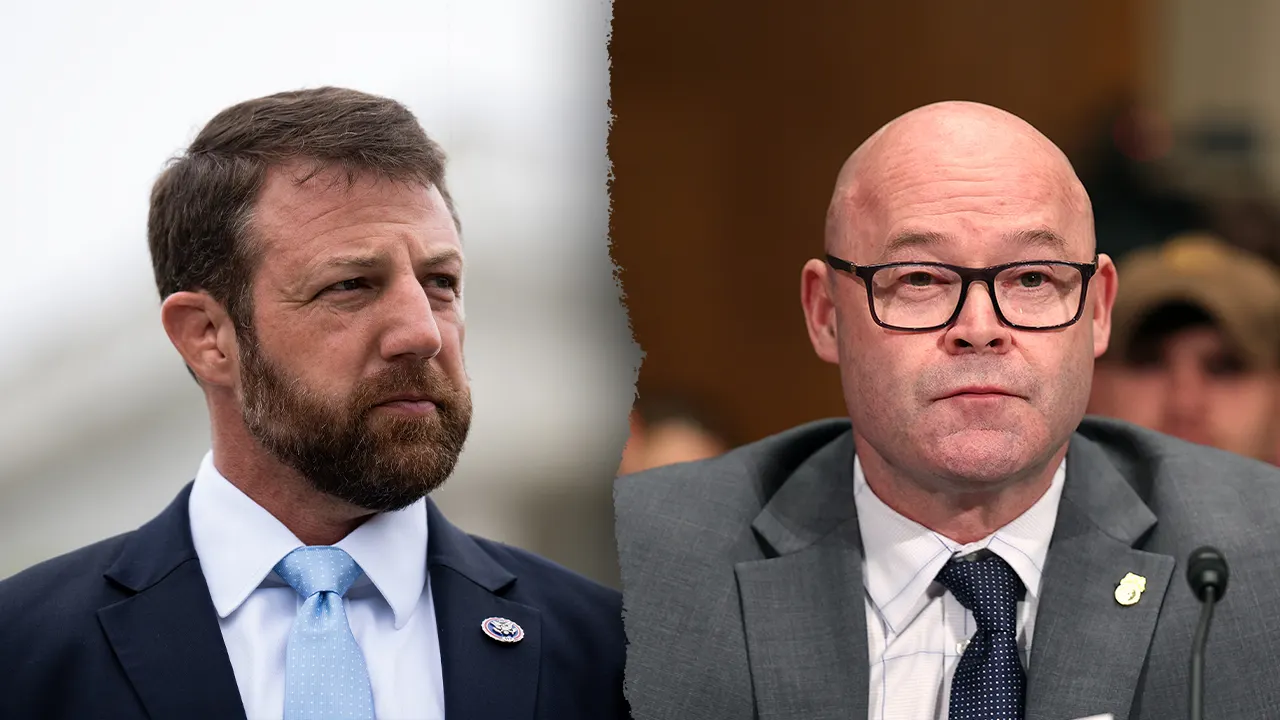
In the world of politics, where tempers flare and old rivalries simmer just beneath the surface, moments of reconciliation can feel like unexpected rays of sunshine on a stormy day. Imagine the surprise when Sean O’Brien, the tough-talking president of the Teamsters union, decided to throw a bouquet of praise toward Senator Markwayne Mullin, the no-nonsense Republican from Oklahoma who once seemed poised to settle their differences with fists flying. It all started with President Donald Trump’s latest shake-up in his administration, which saw Mullin nominated to head the Department of Homeland Security—a role that’s as demanding as it is pivotal in safeguarding the nation. O’Brien, ever the embodiment of blue-collar grit, issued a glowing statement that spoke volumes about personal growth and newfound respect. “If anyone is willing to stand their butt up to protect America, it’s Markwayne Mullin,” he declared, his words carrying the weight of a man who’s seen the inside of union halls and Senate chambers alike. This wasn’t just political posturing; it was a genuine nod to camaraderie among those who might seem worlds apart. O’Brien’s endorsement highlighted Mullin’s unyielding stance on national security, a quality that resonated with the union leader despite their history of heated exchanges. As someone who’s fought for workers’ rights through decades of negotiations and strikes, O’Brien understands the value of backbone in leaders, and he saw it in Mullin now more than ever.
Yet, to fully appreciate this turnaround, one has to rewind the clock to nearly two and a half years ago, when the air in a Senate hearing room turned thick with animosity. Picture this: the Senate Health, Education, Labor, and Pensions Committee in November 2023, where O’Brien and Mullin squared off like rams butting heads in a field. Mullin, a former mixed martial arts fighter with a reputation for not backing down, referenced a cheeky social media jab from O’Brien, who’d boasted he could take the senator on “any time” or “any place.” In that charged moment, Mullin stood tall, his voice dripping with challenge. “Sir, this is a time, this is a place,” he shot back, daring O’Brien to a consensual showdown right there on the Senate floor. The atmosphere crackled as mullin rose, fists possibly clenched, only for Chairman Bernie Sanders to intervene swiftly, his gavel banging like a referee’s call to halt the madness. “Stop it, hold it, no, no, sit down,” Sanders urged, reminding everyone of the decorum expected in such a hallowed space. It was a spectacle that went viral, turning political theater into something almost theatrical, where grown men in suits flirted with physicality amidst debates on workers’ salaries and union power. The verbal back-and-forth raged on, with Mullin labeling O’Brien a “thug” and O’Brien firing back that Mullin was “disrespectful,” painting a portrait of two alphas clashing over pride and policy. This wasn’t new; they’d sparred before, forcing Sanders to mediate in earlier hearings, but this one nearly crossed into the realm of fisticuffs, showcasing how raw emotions can erupt in the grind of public service.
Diving deeper into the human side, these men aren’t just political figures—they’re reflections of real lives shaped by hard work and unyielding convictions. O’Brien, hailing from the gritty underbelly of union leadership, has spent his career advocating for truck drivers, laborers, and everyday Americans who punch clocks and brave the elements. His path to the Teamsters top spot was paved with battles against corporate giants and wage disparities, making him a voice for the voiceless. Mullin, on the other hand, grew up rough-and-tumble in Oklahoma, his background in mixed martial arts not just a hobby but a testament to grit and competition. Starting as an entrepreneur in plumbing and then forging a path to Congress, he’s known for his hands-on approach—once admitting he’s fixed pipes on the Hill under his desk. Their clash in 2023 was more than ideological; it was personal, fueled by job pays and union member salaries, issues that touch the families and futures of millions. Imagine O’Brien, sipping coffee in a diner after a long day, feeling the sting of disrespect from someone he saw as out of touch, versus Mullin defending his honor like a champ protecting his title. Yet, beneath the bravado, there was mutual respect brewing—perhaps in the quiet pauses where no one was watching.
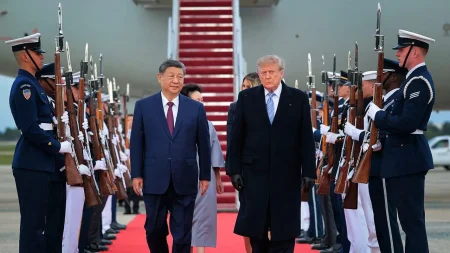
Flash forward to 2024, and the winds of change brought by Donald Trump helped thaw this icy standoff, proving that even the deepest rifts can heal with a little presidential mediation. Mullin reflected on this during an appearance on “Fox Across America with Jimmy Failla,” sharing how Trump played a key role in brokering peace. It began when Trump noticed Teamsters members swinging toward Republican leanings, prompting him to connect with O’Brien early on. Mullin recalled O’Brien confiding that many in the union, his “brothers,” were supporting Trump, and as a pragmatic leader, O’Brien felt it was time to shift gears politically. This diplomatic effort wasn’t about erasing differences but about building bridges, allowing O’Brien to see Mullin’s protective streak not as hostility but as patriotism. Trump’s intuitive grasp of human nature—drawn from his own deal-making world—turned potential adversaries into allies, much like how he’s known for charming skeptics in business. O’Brien’s recent praise echoed this evolution, showing a man willing to embrace redemption over grudges. For anyone who’s patched up a family feud or mended a friendship after words flew, this story feels relatable—a reminder that time and common ground can turn combatants into comrades.
Now, with Mullin’s nomination to lead the Department of Homeland Security, the stakes have never been higher, and O’Brien’s endorsement adds a layer of unity to what promises to be a challenging role. Replacing Kristi Noem, who Trump described as having a “turbulent” tenure, Mullin steps into a position that demands vigilance against threats from borders to cyber realms. Trump’s creation of a new initiative, the Special Envoy for the Shield of the Americas, focused on hemisphenian security, underscores his vision for a safer Western Hemisphere, and Mullin seems the perfect pick with his rugged resolve. O’Brien’s support isn’t lip service; it’s a nod to Mullin’s readiness to “stand up” for America, a trait that resonates with union ideals of standing firm for what’s right. In humanizing terms, think of Mullin as the dedicated father figure, ready to defend his home at all costs, or O’Brien as the loyal sibling who roots for your success once the dust settles. This partnership symbolizes hope in polarized times, where leadership transcends party lines to prioritize national well-being, much like old foes in a high school reunion sharing a laugh over past pranks.
Ultimately, this saga of rivalry to respect reflects broader themes in American life—resilience, redemption, and the power of human connection. From the brink of blows in a Senate hall to shared accolades under Trump’s banner, O’Brien and Mullin exemplify how personal narratives can intersect with public duty. It’s a story that warms the heart, reminding us that even in the cutthroat arena of politics, where egos clash like thunder, there’s room for growth and goodwill. As Mullin takes the helm at DHS, backed by O’Brien’s hard-earned approval, it bodes well for a stronger, more united approach to protecting the homeland. For everyday folks watching from afar, it’s an inspiring tale of men rising above their base instincts to serve a greater purpose, proving that with a bit of humility and dialogue, even the toughest standoffs can morph into steadfast alliances. In the end, O’Brien’s words aren’t just about Mullin—they’re about the kind of leadership America needs: tough but fair, protective yet forgiving, always ready to stand tall for what matters most.