


The Chaos Unfolds Downtown
On a tense Friday afternoon in downtown Los Angeles, what began as a student-led protest against U.S. Immigration and Customs Enforcement (ICE) escalated into a dangerous confrontation. Federal agents, part of a larger effort to enforce immigration laws, found themselves at the center of the storm. Amid chants and marches, things took a violent turn when several protesters attacked a federal agent, causing serious injuries. The Los Angeles Police Department (LAPD) confirmed that a federal officer was hurt in the incident, with reports indicating assault including bites and thrown objects. For millions of viewers tuning in via Fox News, this wasn’t just headlines—it was a raw reminder of the deep divisions in America’s immigration debate. Families watching from home might wonder how a peaceful demonstration turned so hostile, as young voices, fueled by frustration over policies they see as unjust, clashed with law enforcement tasked with upholding the law. The scene was filled with the sounds of sirens and shouts, the air thick with tension, transforming what could have been a shared expression of dissent into a moment of personal peril for one agent who was simply doing his job.
The March into Turmoil
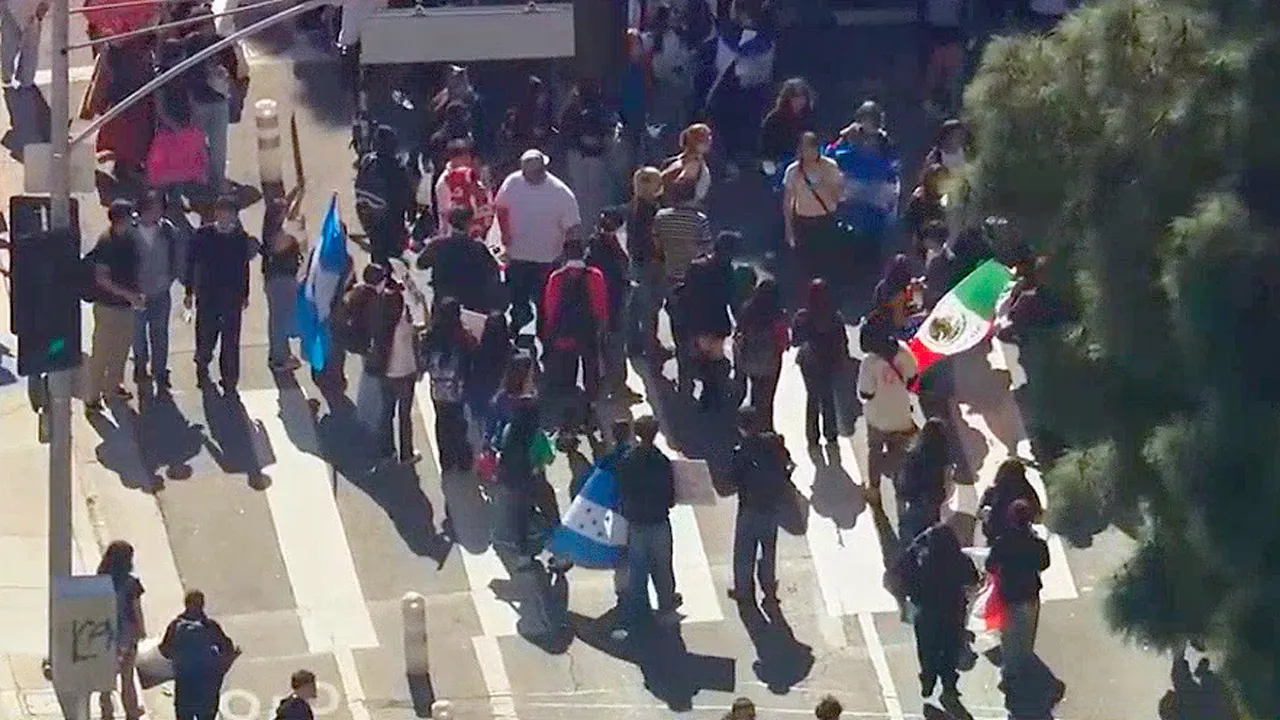
As the protest unfolded, aerial footage captured hundreds of students marching through the streets, deliberately stalling traffic and making their presence known in the bustling heart of LA. Holding up flags of various nations—American, Mexican, and others—they wove through the city like a living tapestry of cultural identities and political frustrations. Signs waved vigorously, some proclaiming bold statements like “Honk if you hate Nazis” and others more direct with expletives targeting political figures such as “F—k Trump.” These displays resonate deeply with many, tapping into widespread anger over what activists perceive as draconian immigration enforcement tactics. Imagine the passion on these young faces, their energy channeling generations of family stories about border crossings and separations. Yet, this fervor spilled beyond words; the LAPD reported that protesters not only blocked roads but also committed acts of vandalism, targeting the Federal Building and hurling items at police. It was a poignant clash of ideals, where the right to protest met the reality of boundaries, forcing officers to navigate a crowd that mixed idealism with potential violence.
The Assault and Immediate Aftermath
The turning point came when a group of agitators specifically targeted federal agents, leading to the injury of one officer whose details remain shrouded due to the chaos. Eyewitness accounts, pieced together from LAPD updates and media reports, suggest the attack was brutal, involving physical assaults that mirrored isolated but high-profile incidents elsewhere, like a recent bite attack on a federal officer in Minneapolis where a finger was reportedly bitten off. In this LA episode, the injured agent was swiftly transported to a hospital, leaving onlookers and authorities in suspense about his condition. This humanizes the event beyond statistics—picture a dedicated professional, perhaps a father or someone with a family waiting anxiously, now facing recovery from what started as a routine deployment. The protesters who carried out the attack reportedly blended back into the march, complicating efforts to identify and apprehend them. For many, this evoked a sense of vulnerability, questioning the safety of those in uniform who patrol divisive events, and highlighting the blurred lines between protected speech and unlawful aggression.
Echoes of Past Protests
This incident wasn’t isolated; it echoed a similar student-led anti-ICE rally just weeks prior in the very same downtown area, where police had to issue a dispersal order after participants vandalized property and disrupted normal city life. In that event, at least four suspects were detained for felony vandalism, setting a precedent that encouraged cautious optimism from law enforcement this time around. Yet, the recurrence suggests a pattern of unrest, where youthful activism crescents against systemic issues, only to ignite real-world consequences. Stories from protesters shared on social media reveal personal motivations—immigrants’ children reckoning with ICE raids that have torn apart families, or students outraged by what they view as discriminatory policies that harm communities they cherish. This narrative humanizes the standoff, showing not just clashing forces but intersecting lives; officers with badges symbolizing authority, and marchers representing a mosaic of hopes and fears tied to the American dream.
Symbols of Defiance and Division
Amid the march, the waving flags and signs told a story of resistance and identity. American flags fluttered alongside Mexican ones, symbolizing a fusion of national pride and transnational solidarity, while provocative messages challenged the status quo. For folks following along, it’s easy to empathize with the emotions driving these displays—perhaps thinking of one’s own ancestors who braved borders or the current debates over who belongs in this coastal city of dreams. California Post coverage highlighted how these elements turned the protest into a visual spectacle, yet one fraught with risks. As traffic halted and streets filled, it wasn’t merely disruption; it was a statement. This humanizes the protestors as individuals with stories, not faceless agitators—college students skipping classes to stand for beliefs that feel urgent, their signs scrawled in marker evoking classroom debates or family dinners rife with heated discussions.
Lingering Questions and Uncertainty
Hours after the attack, the hospital treating the agent released no updates on his condition, leaving a community on edge and authorities grappling with unanswered questions about arrests and accountability. LAPD officials noted the suspects’ disappearance into the crowd, a tactic that underscores the challenges of maintaining order in volatile gatherings. For concerned citizens, this raises broader issues about the balance between protest rights and public safety, potentially shaping future dialogues on immigration and policing. Fox News apps and broadcasts brought these events into living rooms nationwide, prompting reflections on how moments like this bridge divides or deepen them. In the end, as the day wound down, the injured agent’s identity and agency affiliation remained undisclosed, preserving anonymity amid healing. Despite outreach for comments, the full story continues to unfold, reminding us of the human costs behind the headlines—an agent recovering, protesters scattering, and a city pondering the fractures in its fabric. For those touched by immigration stories, it was a stark reminder: activism can inspire change, but unchecked rage risks lives on all sides. As news cycles shift, the echoes of that Friday march in LA linger, a testament to the passionate yet perilous pursuit of justice in a complex world.