


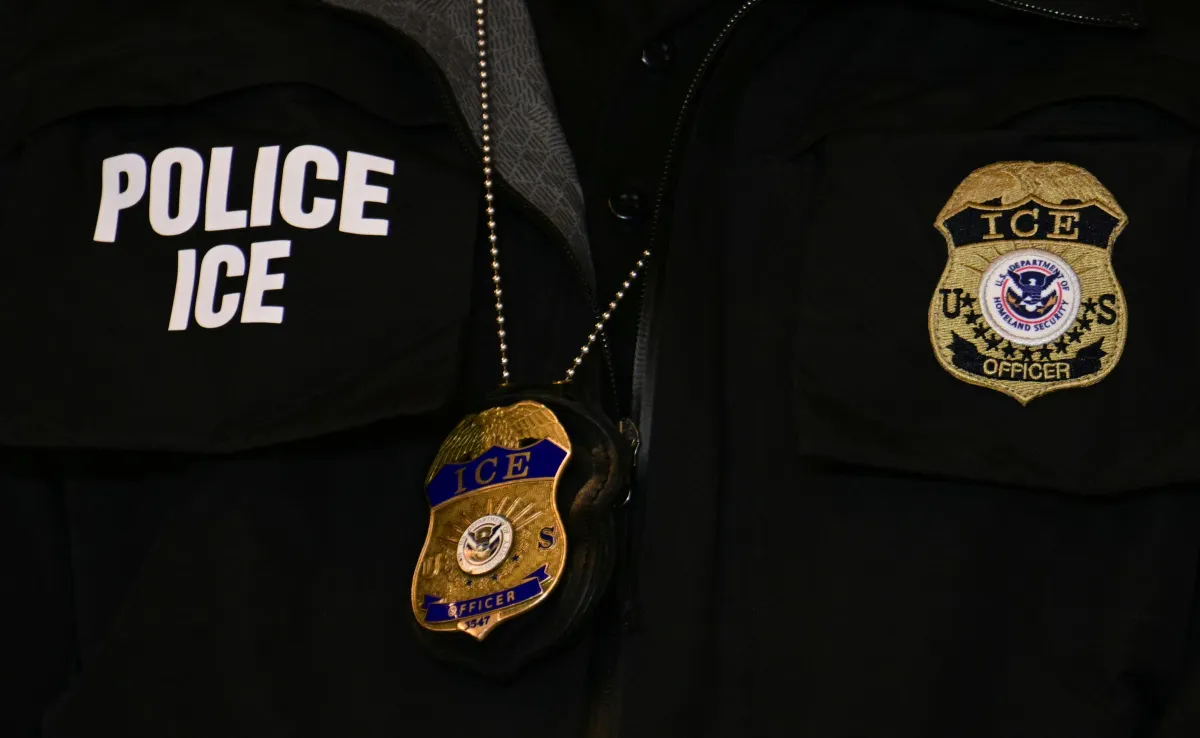
In a surprising turn of events that has lit up social media and political debates, a man identified as Brashad Johnson was arrested during a police sting operation in Bloomington, Minnesota, focused on prostitution. The Department of Homeland Security (DHS) quickly denied any connection, insisting he was not an ICE employee or contractor. Their spokesperson called it a “smear” from critics, pointing out a sharp rise in assaults on ICE agents. But Bloomington police confirmed that Johnson had a Department of Defense ID classifying him as a contractor for federal background checks, which they verified with the government. This clash of stories feels like just another chapter in the ongoing drama surrounding U.S. immigration enforcement, where facts get tangled in political noise. Imagine being an everyday guy doing what you think is a routine job only to wake up in a jail cell because someone higher up is twisting the facts. It’s a reminder of how heated these debates can get, turning news into fodder for both sides.
What makes this arrest stand out is the broader context of criticism aimed at ICE under the Trump administration’s push for stricter immigration enforcement. Just last month, two American citizens, Renee Nicole Good and Alex Pretti, were fatally shot in Minneapolis during what appeared to be ICE-related activities, sparking outrage. Critics keep bringing up allegations like using a 5-year-old as bait in operations, things that sound straight out of a nightmare and make people question if the ends justify the means. For families like the Good and Pretti households, this isn’t just politics—it’s real lives lost. The arrest comes amid this scrutiny, and it highlights a system that’s under fire from every angle. You can almost hear the frustration from communities wondering if these agencies are crossing lines to enforce laws. Politicians on both sides are using it to score points, but at the heart of it, it’s about trust in government and how policies affect real people on the ground.
The sting, dubbed “Operation Looking for Love in All the Wrong Place,” netted 30 suspects, and Bloomington Police Chief Booker Hodges described Johnson’s detainment as particularly “disturbing.” Hodges explained that Johnson worked as a background investigator for not just ICE, but also Homeland Security, FBI, and other federal agencies—handling security clearances that could determine someone’s access to sensitive information. It’s eerie to think that someone vetting others for trustworthiness might be caught up in something like this. A video of Hodges’ press conference went viral on X, racking up 2.3 million views, turning what should be a local story into a national sensation. You can’t help but feel for the officers involved; they’re out there doing the dirty work to keep streets safe, only to get caught in these crosshairs. And for Johnson, who reportedly didn’t have an attorney at the time, it’s unclear what his side of the story is—fodder for speculation across the internet.
Polling shows a majority of Americans, about 66 percent, disapprove of how ICE handles its job, with only 34 percent approving, according to a recent NBC News survey of nearly 22,000 adults. That disconnect bubbles up in everyday conversations—friends arguing over dinner about immigration, each side accusing the other of bias. Now, as lawmakers scramble, there’s a risk of a partial government shutdown by February 13 if they don’t fund DHS adequately. The January stopgap gave them just two weeks, forcing negotiations on ICE’s budget. Democrats want limits like no masks for agents and mandatory IDs, aiming to prevent the kind of unchecked tactics that led to those fatal shootings. Republicans, led by figures like Senate Majority Leader John Thune, call these demands unrealistic and political saboteurs, dismissing them as nonstarters that drag out the process. It’s a standoff that feels like high-stakes poker, with real consequences for government operations and public safety hanging in the balance.
Voices from the ground paint a picture of local frustration and support. Chief Hodges clarified that Johnson’s work for the Department of Defense covered backgrounds for multiple agencies, not just ICE, emphasizing the scope of federal vetting. Minnesota Governor Tim Walz, a Democrat, thanked local police for targeting criminals like those in the sting. His tweet highlighted a collaborative effort between state and local forces, praising them for removing “the worst of the worst” from streets. Meanwhile, the viral spread of Hodges’ remarks shows how quickly stories like this can polarize public opinion. People are sharing, debating, and forming judgments based on snippets, turning a police action into a symbol of bigger issues. It’s human nature to connect dots, even imperfect ones, and this incident has people questioning the reliability of those in positions of authority—from contractors to politicians.
Looking ahead, Johnson’s court appearance remains uncertain, leaving speculation in the air. ICE faces ongoing national scrutiny, fueled by the immigration debate and incidents like the Minneapolis shootings. Governor Walz believes ICE raids in Minnesota could wrap up soon, but the underlying tensions—political divides, funding battles, and public distrust—suggest this is far from over. For everyday Americans, stories like this one underscore the need for accountability in how enforcement happens. Whether Johnson is cleared or convicted, the ripple effects will echo in policy changes, media cycles, and community dialogues. It’s a vivid reminder that in the tapestry of immigration enforcement, every thread matters, and missteps can unravel trust on a grand scale. As the government shutdown deadline looms, eyes are on Congress to navigate these choppy waters without further dividing the nation. This isn’t just about one man or one sting; it’s about the soul of how we balance security, justice, and humanity in an increasingly divided society. In the end, perhaps open conversations, free from smears or denials, could bring some clarity to the chaos.
The narrative continues unfolding, with social media amplifying every development. Users dissect the police chief’s words, questioning the DHS denial and wondering if this incident will prompt real reforms. Some empathize with the accused, pointing out that background checks are tedious work that might drive anyone to seek relief in unhealthy ways—human flaws in a high-stakes profession. Others rally behind law enforcement, stressing the importance of community safety. The video’s millions of views show how digital platforms bridge local happenings to global audiences, for better or worse. Public figures weigh in, from governors to pundits, each adding layers to the debate. This event isn’t isolated; it’s symptomatic of broader disillusionment with federal agencies, where controversies seem endless. As court proceedings approach, people are poised for more revelations, hoping for transparency that restores faith.
Politically, the funding clash mirrors deeper ideological rifts. Democrats’ letter, co-signed by leaders like House Minority Leader Hakeem Jeffries and Senate Minority Leader Chuck Schumer, lays out reforms born from real tragedies. They demand targeted enforcement to avoid overreach, like the alleged child-bait tactics that horrified the public. Republicans counter that such requirements handcuff agents in dangerous situations. It’s a classic tug-of-war, where compromise feels elusive amid election-year pressures. The shutdown threat isn’t abstract—it’s real families budgeting around uncertainty. Agencies like ICE, vital yet vilified, symbolize the struggle to enforce laws while upholding rights. This arrest, tied to funding woes, could very well influence voter sentiment in 2026 midterm elections.
On a personal level, the story humanizes the complexities of law enforcement workers. Brashad Johnson, potentially a contractor vetting clearances for national security, becomes a cautionary tale. Was he overwhelmed by the job’s stresses, leading to poor choices? Or is the narrative spun for political gain, as DHS alleges? His possession of a DoD ID raises questions about overlapping roles in federal investigations. Police confirming his status officially adds credence to claims of affiliation, making the flat denial puzzling. Families of past victims, like the shooters’ killings, see parallels, urging reform. It’s poignant how one man’s alleged misconduct sidelines ongoing critiques of ICE’s methods.
Moving forward, resolution might come in courtrooms or legislative halls, but lasting change requires bridging divides. Governor Walz’s optimism about ending raids signals a cooling of tensions, yet critics demand accountability for excesses. Public opinion, heavily against ICE per polls, pressures lawmakers to act. This incident, with its viral spread, catalyzes discussions on ethics in enforcement. People want fair processes, not sensationalism. As the dust settles, perhaps it inspires a more balanced approach—where security doesn’t trump humanity, and smears give way to substantive dialogue. The sting’s operation aimed at cleaning streets, but it inadvertently spotlighted messier issues. In human terms, it’s about flawed individuals in flawed systems, and finding paths to improvement.
Reflecting on the broader picture, this tangle of policy, policing, and personal failings illustrates America’s ongoing struggle with immigration. The prostitution sting, intended as a routine crackdown, morphed into a catalyst for scrutiny. Social media’s role in disseminating Chief Hodges’ unsettling description cannot be underestimated, turning a local bust into a nationwide discourse. The 1,300% spike in assaults on ICE agents, as cited by DHS, underscores the perilous environment agents face daily. Yet, incidents like Johnson’s arrest fuel skepticism. We must ask: How do we maintain public trust when contractors, entrusted with vetting, face such allegations? It’s a call for rigorous oversight, ensuring that those wielding power adhere to higher standards.
Ultimately, the 2026 shutdown looms as a critical juncture. If lawmakers fail to agree, essential services stall, affecting all Americans. Democrats’ push for reforms aims to prevent mishaps, while Republicans advocate for unfettered operations. Compromise seems distant, with political seasons heating up. The Goodman and Pretti families’ losses linger, driving demands for change. This arrest, amidst it all, might just be the spark needed for meaningful reform. Humanizing these stories reminds us: Behind policies are lives impacted, and empathy could mend fractured relations. As court dates approach and debates rage, resolution hinges on dialogue over division. In the end, a just system balances enforcement with compassion, ensuring no one is above accountability. This episode, with its twists and turmoils, encapsulates the human drama of governance in action.