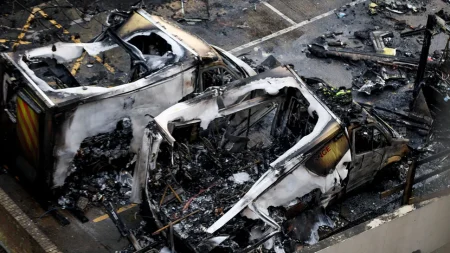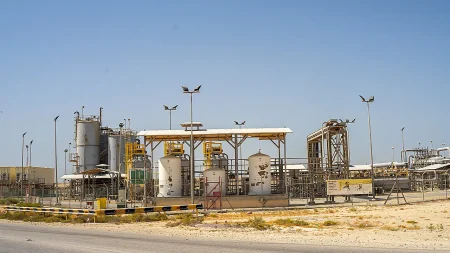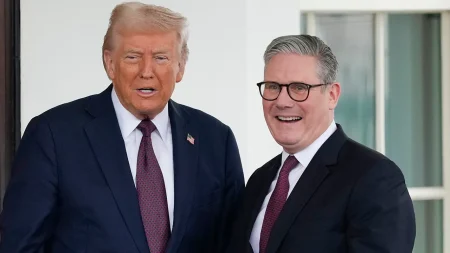


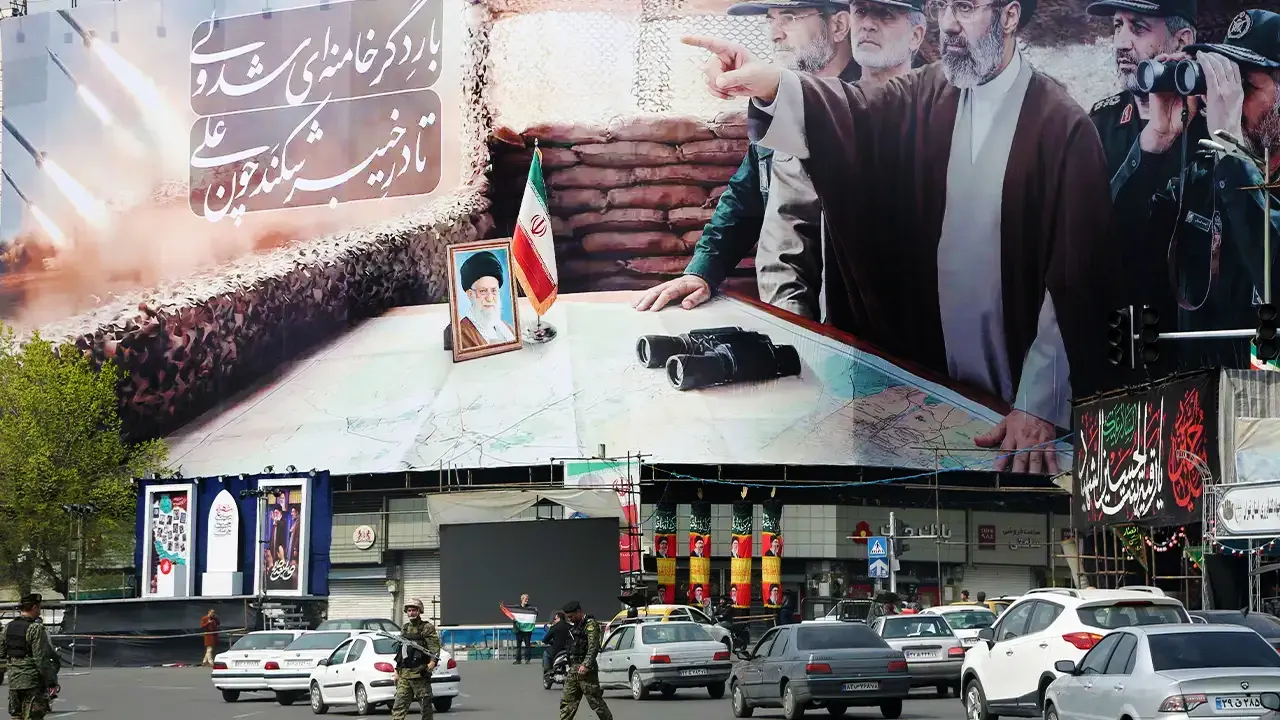
President Donald Trump stood in the White House on Tuesday, his voice cutting through the air like a determined edge in this high-stakes game of global chess. He painted a picture of Iran that’s both wildly chaotic and ripe with opportunity—a leadership in turmoil, teetering on the brink of perhaps finally bending toward a deal. “Nobody knows who to talk to,” he said, with that signature shrug of his, but then added, with a hint of triumph, “But we’re actually talking to the right people, and they want to make a deal so badly.” It was a bold claim, one that immediately set diplomatic tongues wagging. The U.S. asserted it was engaged in talks with a “top” Iranian figure, while Tehran maintained a steely silence, denying any such negotiations outright. This wasn’t just about hashing out terms; it boiled down to a fundamental question: In the wake of devastating U.S.-Israel strikes that obliterated senior Iranian leaders, including the late Supreme Leader Ali Khamenei, who in Iran actually held the reins? The nation seemed less like a unified theocracy and more like a fractured wartime patchwork of overlapping power centers, all swirling around one unyielding force—the Islamic Revolutionary Guard Corps (IRGC). As clashes raged on, both militarily and politically, the world watched to see if anyone in Tehran had the clout to seal the deal or if this was just another mirage in the desert. It’s eerie to think about the ripple effects of those strikes—grand halls emptied, families grieving, and a vacuum of power that felt almost palpable. You could almost hear the echoes of confusion in diplomatic corridors, where seasoned officials exchanged whispers about who was taking control. For everyday Iranians, those increasingly visible in protests with their unveiled hair and defiant dances, this power shake-up represented a glimmer of hope, a chance to challenge what one analyst called an “unholy alliance” of socialists, radicals, and hypocrite regimes. But for Trump and his envoys, it was a strategic opening, a window to pry open negotiations that had stalled before what Iran dubbed Operation Epic Fury—a chain of events rooted in a 12-day war that left the Islamic Republic’s leadership decapitated in ways that exposed long-simmering fractures.
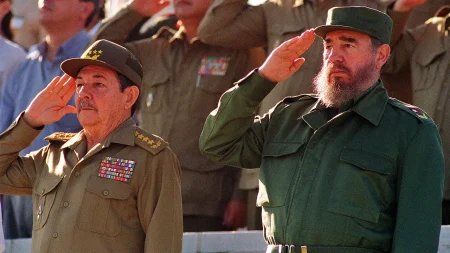
Diving into the heart of it, if you really want to understand who’s calling the shots in Iran today, look no further than the IRGC. Intelligence reports and on-the-ground analyses paint a clear picture: this elite military force hasn’t just stepped up; it’s positively dominated the political scene. Think of it like a colossus overshadowing weaker structures, born from the ashes of Iran’s 1979 revolution and hardened by decades of clandestine operations and internal purges. Behnam Ben Taleblu, a sharp-minded analyst from the Foundation for Defense of Democracies in Washington, D.C., put it into relatable terms: “No doubt both the 12-Day war and this current conflict have trimmed the commanding heights of the Islamic Republic’s political and military leadership.” Yet, far from weakening them, he argued, these events have accelerated something deeper—a trend where the IRGC’s security forces ascend to the throne, turning Iran into what he called a “national security rump state.” It’s a grim evolution, where the state feels weaker than ever, but the guards’ grip is ironclad, more controlling than before. Imagine the lives affected: families of those commanders mourn quietly, while others whisper about the IRGC’s relentless expansion into everyday politics. Taleblu didn’t mince words in his advice to Washington—don’t get bogged down in who to negotiate with. Instead, focus on achieving “a military win at a political win,” which means confronting the IRGC head-on, supporting Iranian dissidents who crave change. It’s humanizing to consider how this shift feels on the streets: ordinary people see the IRGC not as distant power brokers but as enforcers stifling their freedoms, from media censorship to crackdowns on protests. As the U.S. ponders its next move, this advice cuts to the core—victory might not come from backroom deals but from amplifying the voices of the people pushing back against this behemoth.
At the center of this swirling power web sits the Supreme National Security Council, a kind of nerve center that coordinates Iran’s military might and foreign policy decisions. Established right after the revolution, it’s evolved into the primary mechanism for hashing out crises, from nuclear standoffs to regional wars. Picture it as a high-stakes roundtable where IRGC commanders sit elbow-to-elbow with government officials, all nominally under the supreme leader’s watchful eye—but lately, that eye feels a bit dimmed. Recently, Iran appointed Mohammad Bagher Zolghadr, a battle-tested IRGC veteran, as its secretary, underscoring how embedded this military influence has become. A knowledgeable Middle Eastern source, speaking candidly about the setup, described it vividly: “Right now, the power is in the hands of the IRGC. The Supreme National Security Council makes the decisions, of course, with the backing of the majority of IRGC commanders.” It’s like imagining a boardroom where the generals hold all the chips, debating strike plans and diplomatic gambits while civilians nod in agreement. For those watching from afar, this structure humanizes the chaos—it’s not just faceless bureaucracy but real people making life-altering choices. Think about Zolghadr’s background: a commander forged in the fires of conflict, now steering a ship through stormy seas. And the impact? Ordinary Iranians, enduring economic sanctions and war’s toll, see this council as the engine of repression, prioritizing regime survival over their daily struggles for bread, medicine, and liberty. As talks potentially unfold, this council becomes the linchpin, showing how Iran’s wartime mentality has turned its political system into a fortress, hard to penetrate from the outside.
Formally, the spotlight falls on Mojtaba Khamenei, the new Supreme Leader, inheriting his father’s mantle after those deadly strikes in February. But let’s be real—his grip on power feels tenuous, like a crown that’s ill-fitted and still bloodied. Unlike his predecessor, who wielded almost unmatched authority, Mojtaba “lacks the automatic authority enjoyed by his father,” as that same Middle Eastern source noted, a sentiment echoed by analysts wary of his silence. He hasn’t shown his face publicly since ascending, relying on written statements that fuel rumors of injuries from the strikes, possibly sustained amid the explosion that claimed his father’s life and others. It’s haunting to imagine: a man in his prime, perhaps holed up in a secure compound, grappling with the weight of leadership while doctors tend to unseen wounds. Brig. Gen. (ret.) Yossi Kuperwasser, head of the Jerusalem Institute for Strategy and Security, offered a stark analogy: “For the time being, since Mojtaba has been injured, it seems he’s a hologram and not holding power.” Yet, if he heals and steps into the light, he could become a force, not just a puppet. This uncertainty adds a deeply human layer—families in Iran must be holding their breath, wondering if their new leader is up to the task or merely a placeholder. For the broader world, it’s a reminder of how personal tragedies ripple into geopolitics. As protests swell in Iran, with people dancing uncovered and shouting “Hypocrites!” at the regime’s allies, Mojtaba’s absence symbolizes the erosion of a system built on clerical supremacy. Will he recover to steer Iran wisely, or will the IRGC overshadow him forever? That question hangs in the air, personal and profound.
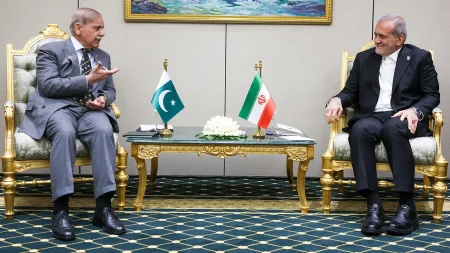
When Trump hinted at talking to a “top person” in Iran, all eyes turned to Mohammad Bagher Ghalibaf, a figure who’s become the nexus of speculation. As speaker of parliament and a former IRGC commander, Ghalibaf embodies that curious blend of military muscle and political savvy—someone who’s bridged wars and legislatures. The White House is reportedly eyeing him as a potential negotiating partner or even future leader, with murmurs of a meeting with U.S. envoys Steve Witkoff and Jared Kushner possibly happening in Pakistan soon. It’s like casting a spotlight on a man whose past is marked by iron-fisted decisions, including the brutal crackdown on 1999 student protests, and presidential runs since 2005—None successful, but they’ve kept him relevant. Ghalibaf’s public denials of any U.S. talks add intrigue; no confirmations, just the dance of diplomacy’s shadows. Taleblu, that astute observer, cautioned against overemphasizing Ghalibaf’s IRGC pedigree, noting that personality, not background, has long driven Iranian politics—pointing to past council secretaries who were also IRGC veterans. Humanizing this, think of Ghalibaf as a survivor: a commander who’s navigated purges, wars, and political intrigues, perhaps longing for a path to stability amid the turmoil. For Iranians, he’s a polarizing force—praised by hardliners for his toughness but eyed skeptically by reformers as just another guardian of the status quo. As potential talks loom, Ghalibaf’s role feels pivotal, a bridge across chasms, offering a glimmer that even amid strikes and ruptures, dialogue might flourish, changing lives scarred by isolation.
Finally, weaving through these titans are other key players, each adding to Iran’s tapestry of power. Foreign Minister Abbas Araghchi stands out as the diplomat on the stage, likely part of any delegation if talks materialize, channeling messages with his public face, yet barred from setting policy solo. Analysts see him as a communicator, not a kingmaker—decisions on war or peace still echo from the IRGC’s chambers. Beyond him lies a wider circle of generals, clerics, and enforcers: IRGC chief Ahmad Vahidi, Quds Force leader Esmail Qaani, naval commander Alireza Tangsiri, Judiciary Chief Gholamhossein Mohseni-Ejei, President Masoud Pezeshkian, and ideologues like Saeed Jalili and Ayatollah Alireza Arafi. They represent facets—military might, proxy wars in the region, control of vital sea lanes, domestic repression, and religious dogma. Together, it’s a resilient web, fragmented yet unified on survival. Kuperwasser captured the divide: pragmatic elites like Araghchi versus hardliners, but all converge on preserving the regime. From the perspective of everyday Iranians—facing skyrocketing oil prices, U.S. air dominance, and bracing for more upheaval—this unity feels oppressive, a regime clinging to power while the people yearn for freedom. As Trump pushes for deals, the story humanizes a nation at a crossroads: leaders maneuvering in shadows, people rising in defiance, and the world watching if change can finally break through. Iran’s U.N. mission remained silent on queries, a fitting end to a tale of secretive endurance.