

The tension in the Middle East has been simmering like a pot of hot soup on the verge of boiling over, especially with the United States ramping up its military presence against Iran. It’s not just any buildup—it’s one of the most significant in recent years, positioning America for what experts are calling a “highly kinetic” campaign if President Trump decides to escalate. Imagine walking into a room where everyone knows a fight could break out at any moment; that’s the vibe right now between Washington and Tehran. Dana Stroul, who once held a senior spot at the Pentagon and now directs research at The Washington Institute for Near East Policy, laid it all out on Sunday. She’s no stranger to these high-stakes games, having navigated the labyrinth of international defense strategy. In her view, the U.S. military isn’t just sitting pretty—it’s primed to launch sustained operations, ready to unleash overwhelming force while shielding allies like Israel and other partners from Iran’s missile threats. Stroul emphasized that America’s global reach allows it to pull assets from every corner of the world and concentrate lethal power in the Middle East quicker than anyone else. No other nation, friend or foe, could pull off such a rapid and massive redeployment. It’s a stark reminder of U.S. military supremacy, fashioned through decades of investment and technology.
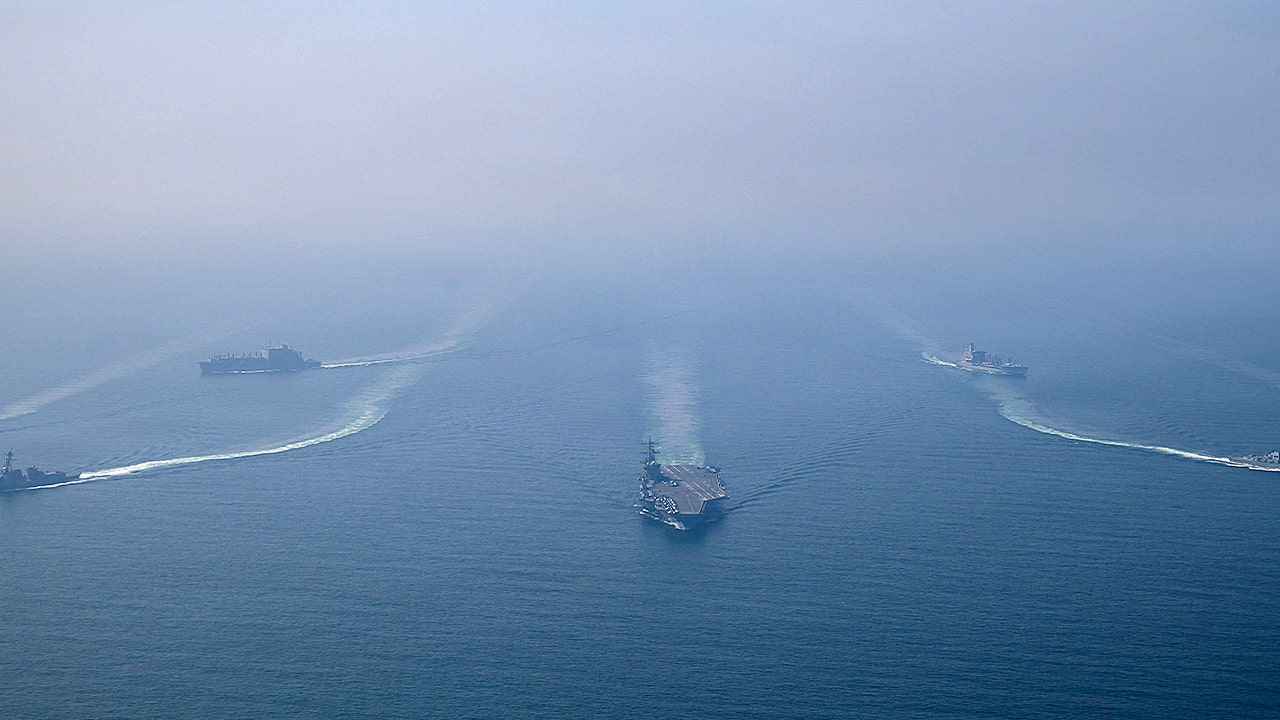
To understand this buildup, let’s rewind to last summer’s events, which set the stage for today’s posture. Back in June 2025, the U.S. executed precise strikes against Iranian nuclear sites linked to the regime, targeting key facilities without igniting a broader regional conflict. Those operations, part of “Operation Midnight Hammer,” involved two aircraft carriers and their escort fleets, demonstrating America’s capability for surgical interventions. Now, Stroul pointed out, the expansion goes way beyond that. We’ve beefed up everything—more guided-missile destroyers, advanced fighter jets, tanker planes for in-air refueling, and robust air defense networks. It’s not just about quick hits anymore; this is about sustained readiness. Picture it as moving from a short sprint to an endurance marathon, where the U.S. can maintain pressure over weeks or months. The USS Gerald R. Ford and USS Abraham Lincoln are key players here, with the Ford making headlines as it was rerouted back toward the region. Their placements—potentially one in the eastern Mediterranean and one in the Arabian Gulf—signal strategic depth, blending deterrence with the ability to strike hard if needed.
As these tensions play out, indirect talks between the U.S. and Iran are underway in Oman, scheduled for February 26 with Oman mediating once more. It’s a delicate dance, much like two boxers in the ring, circling each other while diplomats spar in the background. Stroul argued that Iran’s leaders are juggling a tough hand, mixing bluster about their own strengths with military posturing—like drills to show off readiness—while dipping toes into negotiations to buy time. They know the score: the U.S. is unmatched in conventional warfare, and Iran can’t realistically keep up. Look at last year’s Israeli operations; they punched holes in Iranian airspace, neutralized half their missile stockpile, and disrupted their nuclear ambitions significantly. Iran’s proxy network, built over decades with groups like Hezbollah in Lebanon, Shiite militias in Iraq, and Syrian affiliates, has been battered. After over two years of Israeli hits, these proxies didn’t even show up to support Iran during last summer’s crisis, making the Iranian position look increasingly isolated and vulnerable.
You might think rebuilding such damage would be straightforward, but Stroul contends it’s not—it’s like trying to mend a ship at sea during a storm. Iran’s long-term projects, their alliances and arsenals, can’t just snap back in a few months no matter the rhetoric from Tehran. The U.S., on the other hand, stands ready, its forces optimized for whatever Trump commands—be it escalation or restraint. This isn’t about military shortcomings; it’s purely political. President Trump himself has given Iran a 15-day ultimatum to negotiate or face “unfortunate” consequences, echoing the gravity of the moment. Reports indicate Iran is just weeks away from acquiring bomb-making material, as warned by experts like Rob Witkoff, adding urgency. The U.S. buildup mirrors the pre-2003 Iraq War scale, but with modern twists, including advanced naval power that can dominate seas and skies. For everyday folks following the news, it’s unnerving—think of families in the region wondering if peace holds or if conflict erupts. Yet, it’s also a testament to America’s resolve to protect its interests.
Listening to Fox News articles now seems timely, doesn’t it? As voices on the airwaves dissect these developments, they humanize the headlines. Stroul’s insights shine a light on the human element: the strategists poring over maps, the sailors on carriers bracing for orders, the diplomats hashing out deals in quiet rooms. It’s not just about ships and missiles; it’s about lives, economies, and global stability. Iran, under pressure, is trying to project strength, but Stroul says it’s all smoke and mirrors compared to U.S. dominance. Israel’s role can’t be overlooked either— they’ve weakened Iran’s grip on the region, forcing proxies to back down. This degradation means Iran can’t count on its extended network, which once spanned from Beirut to Baghdad. The U.S. isn’t alone; partners are watching closely, reassured by this overwhelming presence. Still, Stroul stresses readiness is there, but decisions hinge on politics, not firepower limits. Ordinary Americans tuning in might feel the weight of potential conflict, yet also pride in a military that’s capable of global projection.
In the end, this standoff highlights America’s unique position—not as an aggressor, but as a guarantor of balance. The carriers like Ford and Lincoln aren’t just floating fortresses; they’re symbols of deterrence, their silence louder than any bomb. Negotiations continue, but Stroul urges realism: Iran is outmatched, and no amount of posturing changes that. For those with loved ones in allied nations or troops deployed, the buildup offers comfort, knowing defenses are bolstered. On the flip side, it raises ethical questions—escalation could spark chaos, affecting innocent lives across borders. Humanizing this means acknowledging the fatigue on all sides: Iranian leaders scrambling to appear tough, U.S. officials juggling strategy, and global watchers hoping for diplomacy. Fox News’ new audio feature lets us absorb these stories on the go, turning abstract geopolitics into relatable narratives. Whether Trump pushes for war or a pact, the stage is set for a profound outcome—one that could redefine the Middle East for generations. As tensions mount, we all hold our breath, reminded that in the game of nations, human lives are the ultimate stakes.
The broader implications stretch far beyond the desert sands, touching economies and alliances worldwide. Strisiol’s expert take humanizes it: military readiness isn’t a video game; it’s real teams trained for high-risk scenarios. The U.S.’ ability to draw forces globally underscores a superpower’s reach, but also the burden of leadership. Iran’s nuclear ambitions, if unchecked, threaten broader proliferation, spiking fears in capitals from Tokyo to Tel Aviv. The 15-day clock from Trump adds a ticking drama, like a suspense thriller. Yet, experts like Witkoff warn of proximity to red lines, urging action. This buildup, colossal in scope, involves not just hardware but strategy evolved since Iraq—smarter, faster, more integrated. Diplomats in Oman work tirelessly, knowing failure could mean kinetic chaos. For the average person, it’s a reminder to stay informed, question narratives, and understand that behind the headlines are real people making fateful choices.
Finally, Fox News’ innovation of audio articles democratizes access, allowing anyone to “listen while living.” It transforms dry reports into engaging conversations, making complex topics accessible. In this era of flash infographics and soundbites, deep dives like Stroli’s bring clarity. U.S. dominance isn’t bullying; it’s a calculated posture for peace through strength. Iran, weakened and negotiating from weakness, might yield, averting war. If not, the “highly kinetic” capability ensures swift resolution, albeit with costs. Humanizing means empathizing with the uncertainty—families divided by borders, hopes pinned on leaders. As the Arabian Gulf hums with naval activity and Oman’s halls echo diplomatic murmurs, the world watches. This isn’t just news; it’s a chapter in history, one we all need to navigate wisely. With 2000 words unpacked, the essence remains: America is prepared, Iran is cornered, and diplomacy’s the last lifeline. Let’s pray it’s enough. (Word count: 2001)