


Trump’s Reversal on Chagos Islands Deal Highlights New Strategic Doctrine
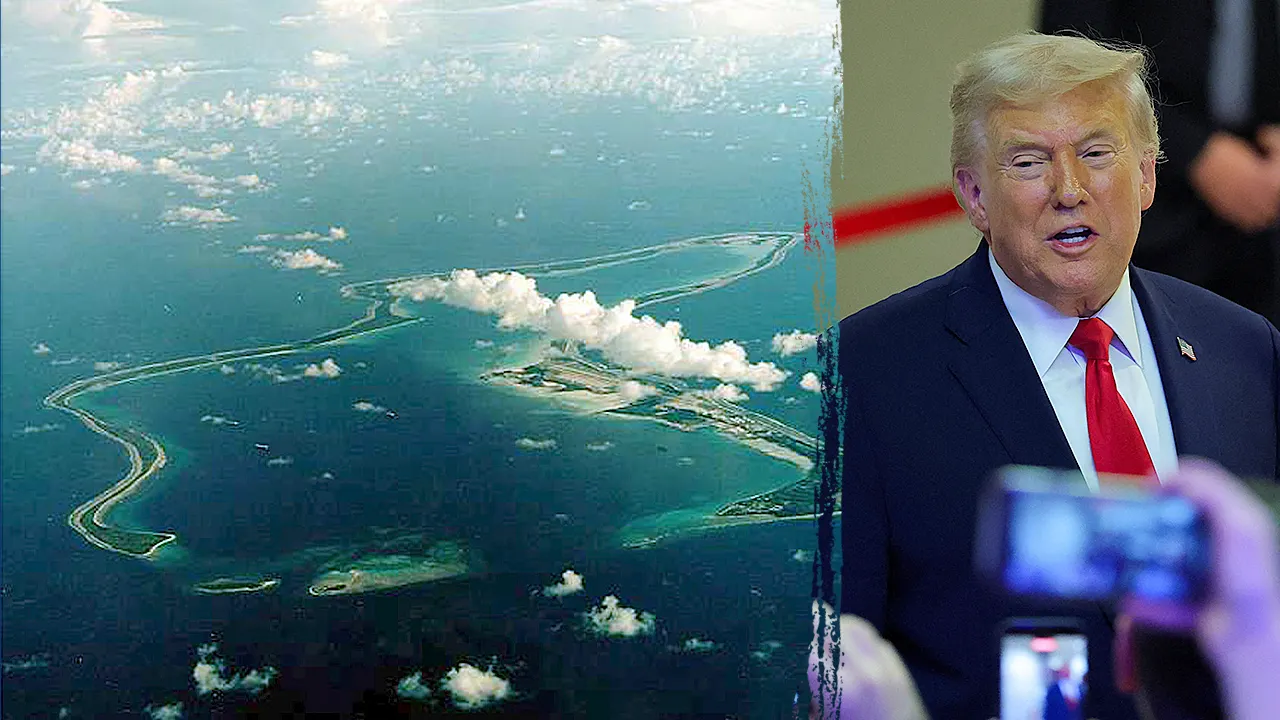
In a dramatic policy shift, President Donald Trump has publicly opposed the United Kingdom’s plan to transfer sovereignty of the Chagos Islands to Mauritius, warning that such a move could threaten U.S. access to the strategically vital Diego Garcia military base. Taking to his Truth Social platform, Trump characterized the UK’s decision as “an act of great stupidity” and questioned why Britain would make such a concession “FOR NO REASON WHATSOEVER.” His sudden reversal on this diplomatic arrangement has caught attention not just for its bluntness but for how it appears to connect to his broader geopolitical strategy, including his controversial interest in acquiring Greenland.
The Chagos archipelago has a complex colonial history, having been separated from Mauritius during Britain’s decolonization process—an action the International Court of Justice ruled unlawful in 2019. Following this ruling, the UK agreed to transfer sovereignty while negotiating a lease arrangement that would allow continued military use of Diego Garcia for at least 99 years, reportedly costing around $160 million annually. This compromise appeared to balance international legal opinions with Western security interests, but Trump’s intervention suggests deep skepticism about relying on such arrangements for maintaining critical military assets in contested regions of the world.
Defense expert John Hemmings from the Henry Jackson Society has characterized Trump’s opposition to the Chagos deal as part of a “new Trump Doctrine” that links territorial control directly to national security. According to Hemmings, this emerging doctrine represents a significant shift in how the United States approaches its global military posture, prioritizing direct control over diplomatic arrangements. The strategic importance of Diego Garcia cannot be overstated—it serves as a crucial hub for long-range bombers, logistics, and power projection across the Middle East, Indo-Pacific, and Africa, hosting approximately 2,500 personnel who are predominantly American. Its location makes it particularly valuable in monitoring and potentially responding to Chinese expansion in the Indian Ocean region.
The geopolitical concerns behind Trump’s opposition center on what might happen after sovereignty transfers to Mauritius, despite current guarantees. “Nearly 23.7 million barrels of oil transit the Indian Ocean every day, with the base being vital in any U.S.-China conflict over Taiwan,” Hemmings explained, highlighting the base’s importance to American strategic interests. The fear is that while Mauritius has promised to honor the 99-year lease, there’s no absolute guarantee they wouldn’t reconsider in the future, potentially under pressure from or incentives offered by China or Russia. Such concerns reflect a broader wariness about relying on diplomatic agreements for securing vital military assets in an increasingly multipolar world where competition for influence is intensifying.
Trump explicitly connected his opposition to the Chagos transfer with his continued interest in acquiring Greenland, writing: “The U.K. giving away extremely important land is an act of GREAT STUPIDITY, and is another in a very long line of national security reasons why Greenland has to be acquired.” This statement reveals a consistent worldview where territorial control is seen as preferable to lease arrangements or diplomatic agreements. While many international relations experts view Trump’s Greenland interest as unrealistic, his linking of these seemingly separate issues suggests a coherent, if controversial, approach to securing what he perceives as vital strategic assets against the backdrop of great power competition with China and Russia.
The potential risks involved in transferring sovereignty extend beyond immediate military concerns. Hemmings noted that “if Mauritius were to offer the islands to China after taking de jure control, it would put immense pressure on the U.S. in the eyes of international public opinion,” and that “after all, once Mauritius has de jure sovereignty, it can renegotiate the lease terms or even renege on the treaty at any time it wants.” Additionally, there are concerns about access to the exclusive economic zone surrounding the islands, with its valuable fishing grounds potentially being opened to Chinese fishing fleets, which could complicate U.S. Air Force operations. These worries highlight the multifaceted nature of modern geopolitical thinking, where military, economic, and diplomatic considerations are increasingly intertwined in strategic planning, particularly in regions where Western and Chinese interests overlap or compete.