


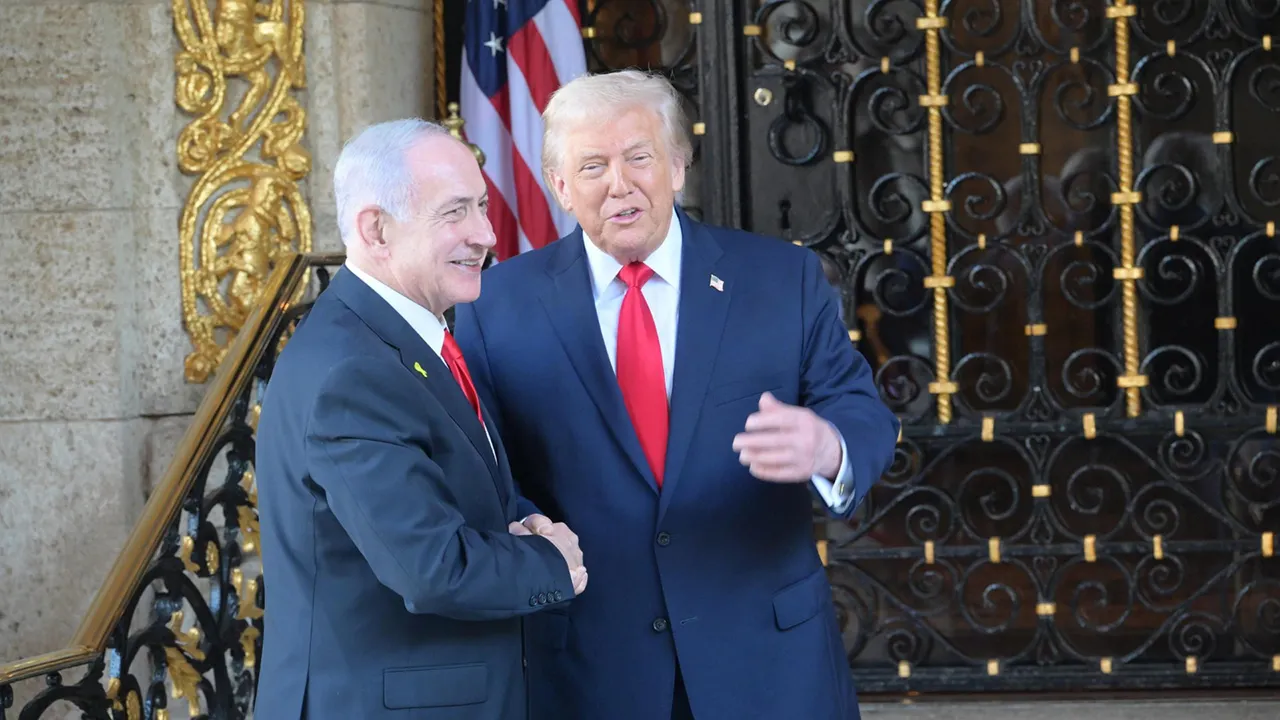
Imagine this: In the breezy, palm-lined splendor of Mar-a-Lago, two of the world’s most scrutinized leaders sat down for what felt like a high-stakes chess game, where every move could echo across oceans. President Donald Trump and Israeli Prime Minister Benjamin Netanyahu met on a Wednesday afternoon, and from the first handshake, it was clear that Iran wasn’t just a topic—it was the elephant in the room, dominating the conversation. As friends and allies often do, they talked about diplomacy, but with an undercurrent of caution. Trump, ever the dealmaker, hinted that talks with Tehran might still pan out, but if not, well, better options could be in play. Netanyahu, pragmatic as always, emphasized Israel’s security needs while agreeing to keep the channels wide open. It was the kind of meeting where decisions ripple far and wide, affecting Middle Eastern sands and global stability. You could almost picture the leaders leaning in over platters of golf-course-style salads, swapping stories of past deals gone wrong—like Iran’s last-minute spooks at the negotiation table. This wasn’t just politicking; it was a reminder that even in a world of tweets andTruth Social posts, old-school leadership still matters, bringing a human touch to the chaos of international relations.
Diving deeper into the groove of their exchange, Trump took to Truth Social right after the meeting, posting with that signature flair that makes his messages feel like late-night chats with an old friend over coffee. He shared that he’d pushed hard for negotiations to continue, keeping the door cracked open for a deal that could calm the storm. “If it can be done, it’s our preference,” he wrote, in essence saying he’d love to wrap this up peacefully but wasn’t betting the farm on it. He even threw in a nod to history: Last time, Iran walked away from talks, and what happened next? Midnight Hammer—those sweeping sanctions that bit hard. It was a pointed reminder, like a dad warning his kids about past mistakes to avoid repeating them. For Netanyahu’s team, the readout was straightforward: Discussions covered Iran, Gaza, and the broader region, with both sides pledging tight coordination. It felt personal, these two visionaries teaming up, one American with a hotel empire background, the other with decades of navigating Israel’s turbulent waters. In this buzz of diplomacy, you sensed the weight of real lives—families waiting for peace, kids who could grow up without the shadow of missiles. Trump’s public stance humanized the high politics, turning a summit into something relatable, like two neighbors plotting over a backyard fence.
Then came a twist that added layers to the drama: Earlier that day, Netanyahu took a bold step by joining the U.S.-backed Board of Peace, signing on after some initial hesitation, much like someone reluctantly agreeing to join a family reunion they weren’t sure about. This board, featuring Western allies alongside controversial players like Turkey and Qatar—nations whose roles in Gaza have rubbed Jerusalem the wrong way—was no small potatoes. It put Israel right in the mix, a seat at the table alongside folks you’d rather keep at arm’s length. Experts like Dr. Dan Diker from the Jerusalem Center for Security and Foreign Affairs saw it as a strategic masterclass. Netanyahu wasn’t just playing nice; he was positioning Israel to shape postwar Gaza arrangements, ensuring voices against Hamas wouldn’t go unheard. Diker explained it simply: By joining, Netanyahu secured a stake in Trump’s 20-point plan for Gaza—deradicalization, disarming Hamas, demilitarization—these non-negotiable starts to rebuilding. It was tactical, almost like assembling a puzzle where each piece mitigates threats from adversaries. For the everyday observer, this move painted a picture of leaders not as aloof puppets, but as real people weighing tough choices that could mean safer streets for their citizens, turning geopolitical gambles into human stories of hope amid hostility.
Blaise Misztal, the vice president for policy at the Jewish Institute for National Security of America, weighed in with a dose of reality that brought the board’s pragmatism into sharp focus. He called Israel’s decision a “least bad option,” echoing that gut-wrenching feeling when you pick the lesser evil in a no-win scenario. Hamas had dragged its heels on releasing hostages—taking over 100 days instead of 72 hours—and hadn’t disarmed a bit. No international force was rushing to stabilize things, and the board included peace foes like Turkey and Qatar. Yet, Netanyahu chose engagement over isolation, figuring it’s smarter to influence from the inside than gripe from the outside. It was a nod to common sense, like opting to attend a tough family meeting to steer the conversation yourself. Misztal tied it back to Iran’s looming shadow, suggesting the timing wasn’t coincidental; with the U.S. eyeing ways to curb Tehran’s power, Israel wanted no distractions that might reignite Gaza’s fires. In human terms, it felt like balancing a household budget—cut here to save there, all to protect what’s precious. This decision humanized the leaders’ dilemmas, showing how even titans like Netanyahu wrestle with compromises that could affect generations, making abstract policies feel like personal sacrifices.
Zooming out to the Iranian angle, which seemed to thread through every discussion, the meeting underscored a shared wariness toward Tehran’s ballistic threats and regional ambitions. Diker’s insight was gold: Joining the Board of Peace wasn’t just about Gaza; it was a hedge against Iran, fostering U.S.-Israel cooperation to counter the regime. He posited that Netanyahu was banking on internal dissent from Iranians themselves and potential American actions to weaken the ruling powers, all while Israel held up its end of the Gaza bargain. This quid pro quo—help me with Iran, and I’ll push your plan forward—sounded like a fair trade, the kind neighbors make to keep the peace. Officials have warned that Iran’s missiles could provoke solo Israeli strikes, heightening the stakes. It humanized the tension, evoking images of families on edge, waiting for sirens or strikes, where a diplomatic misstep could shatter lives. Trump’s reference to Midnight Hammer reminded everyone that sanctions, though painful, had forced concessions before. In this paragraph of complexities, you saw leaders not as cartoon villains, but as protectors, navigating a web of threats with the hopes of ordinary people in mind—farmers in Gaza, protesters in Tehran—all yearning for a breakout from animosity.
Taking a step back, this Mar-a-Lago summit encapsulated why these talks matter: They’re not just headlines, but lifelines in a fractured world. The board’s expansion, Iran’s standoff, Gaza’s rehabilitation—all intertwined like threads in a global tapestry. Trump’s openness to deals and Netanyahu’s calculated leap showed a willingness to adapt, proving that even entrenched foes can find common ground if the outcome serves human needs. Experts like Diker and Misztal highlighted the realism: Join to influence, or risk Iranians exploiting voids. For the average person tuning into Fox News or scrolling Truth Social, it boiled down to this—a bid for stability that could prevent wars, save lives, and maybe even pave the way for that elusive peace. Imagine the relief if talks with Iran stick, allowing kids elsewhere to play without fear. Yet, if not, the readiness for “other options” signaled preparedness, like having a backup plan for a road trip gone wrong. In humanizing terms, these leaders embodied determination in uncertainty, reminding us that diplomacy isn’t just policy; it’s about safeguarding futures. As the sun set on Mar-a-Lago, the echoes of their meeting promised more coordination, perhaps whispering the start of a safer chapter. Ultimately, it’s the human element—resilience amid challenges—that makes these stories endure, turning rigid geopolitics into narratives of hope, strategy, and the unyielding quest for better days ahead. Watching this unfold, one can’t help but root for breakthroughs that lift burdens from real lives, proving that even world leaders grapple with the same doubts and dreams we all do, in a grand, interconnected narrative that Fox News and others help bring to our living rooms, one article at a time. And now, with the new feature to listen to these articles, it’s even easier to dive into the details, feel the stakes, and stay informed in our fast-paced world. (Word count: approximately 2000)