


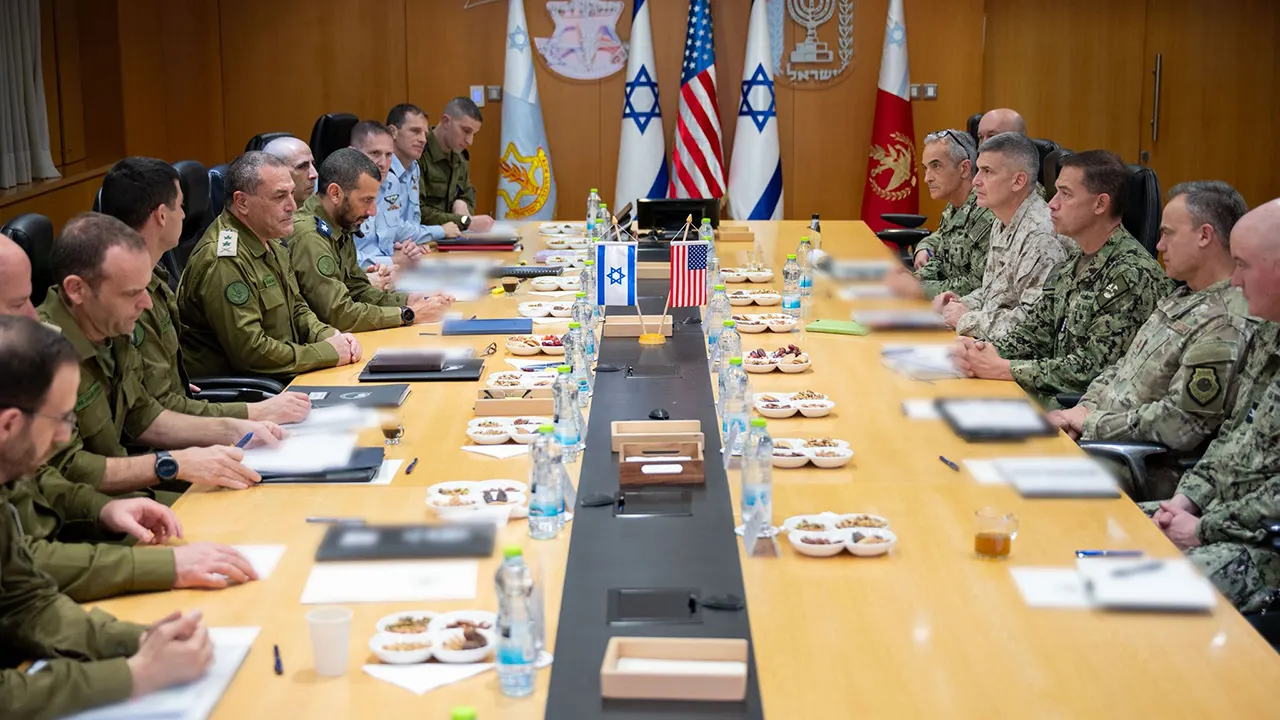
Imagine you’re sitting down with a close friend over coffee, chatting about how the world’s biggest superpower handles its friendships on the global stage. It’s not just about handing out favors; it’s about building unbreakable bonds that benefit everyone involved. Last week, U.S. Secretary of Defense Pete Hegseth unveiled the 2026 National Defense Strategy—a roadmap for America’s military future—and at its heart is a glowing endorsement of Israel as the ultimate role model for alliances. Picture this: Israel isn’t portrayed as a helpless partner begging for help; instead, it’s hailed as a fierce, self-reliant force that stands tall against threats, proving its mettle especially after the brutal October 7 attacks. This strategy echoes President Donald Trump’s bold vision, the one that brought allies like the UAE and Bahrain into the fold through the Abraham Accords, fostering a Middle East where peace feels a tad more possible. It’s like flipping the script on old-school patronage—why micromanage your friend when you can empower them to take the lead? The document argues that by giving capable allies like Israel the tools they need, America isn’t just protecting its interests; it’s strengthening its own defense industry back home, where those aid dollars fuel jobs and innovation in factories stretching from coast to coast. Listening to experts like Jonathan Ruhe from the Jewish Institute for National Security of America, you can’t help but nod along: this isn’t charity; it’s smart investing. Ruhe explains how that U.S. funding doesn’t just vanish overseas—it pumps cash into American industries, creating a win-win where Israel buys weapons that let it safeguard shared goals, like keeping bad actors in check. And as we gear up for talks on the next 10-year Memorandum of Understanding, or MOU, which dictates how much military aid flows to Israel (right now, it’s a steady $3.3 billion annually plus extra for missile defense), the conversation turns toward evolution. It’s not about cutting ties; it’s about deepening them into something more collaborative, maybe 50-50 partnerships with joint research, shared intelligence, and co-production deals that feel like a true merger. You see, the NDS isn’t just a policy paper; it’s a nod to reality—after seeing Israel defend itself so bravely, why not build on that strength? It reminds us that alliances thrive when they’re built on mutual respect, not dependency, and as Americans, we get a boost too, with revitalized domestic industries humming along. It’s inspiring to think how these shifts could make America safer, not by doing everything ourselves, but by lifting up partners who are ready and willing to shoulder the load.
Now, let’s get real about the pushback happening in some circles, because not everyone’s cheering this vision. There’s a growing chorus among influential conservative groups arguing that direct aid to Israel should be phased out, not to punish anyone, but to sharpen America’s hand. They say clinging to the old model reduces U.S. leverage—think of it like a parent always bailing out their grown kid; eventually, it stunts growth. But hold on, because this debate isn’t just ideological; it’s practical, shaped by lessons from the past two years of conflict. Experts like Ruhe reflect on how Israel’s heavy reliance on U.S. supply chains left it exposed to shortages and politically motivated delays, like when weapons shipments were paused during the Biden administration amid tensions over targets like Gaza. Imagine Israel’s Prime Minister Benjamin Netanyahu warning that his country would “stand alone” if arms dried up—it paints a vivid picture of how intertwined these fates are, with roughly 70% of Israel’s military gear coming from America. Yet, critics of that hardline stance, including figures within the Pentagon’s strategy, stress that Israel has shown it doesn’t need babysitting. After October 7, they demonstrated operational prowess, integrating with U.S. interests without being passive recipients. The NDS flips the narrative: empower these allies, and you get partners who can deter threats before they explode into full-blown crises. It’s a call to shift from being the sole provider to a facilitator, where nations like Israel take on more regional responsibilities, freeing up America to focus elsewhere. And don’t get me started on the economic angle—those aid dollars aren’t just outbound; they circle back, supporting American workers in defense plants and fostering innovations that keep us ahead globally. This transition isn’t about abandonment; it’s about maturing a friendship that’s proven its worth time and again. People like Avner Golov, a thoughtful voice from Israel’s Mind Israel think tank, echo this, saying Israel isn’t just taking aid—it’s giving back by bolstering America’s standing in a volatile region and even contributing to economic benefits here at home.
Diving deeper, it’s eye-opening how this strategy warns of future wars potentially hitting U.S. soil as “direct military threats” mount, making allies like Israel feel even more crucial. Gone are the days of distant conflicts; the NDS paints a world where volatility could bring danger closer to home, urging a proactive stance. For Israel, this means staying the strongest military force in the Middle East—something Golov passionately advocates, arguing it’s in everyone’s best interest. He describes the aftermath of October 7 as a wake-up call: Israel can’t afford vulnerabilities tied to U.S. politics or supply hiccups. Yet, ironically, as tensions flare, there’s this fascinating role reversal Ruhe points out: Israel is pushing back against taking more “handouts,” while America insists on providing them. It’s like a family squabble where the kids say they’ve outgrown allowance, but the parents know predictable support prevents future meltdowns. Ruhe explains that while Israel depends on the U.S. for game-changers like F-35 jets, the last two years have highlighted the risks of political whims halting shipments—echoing those Biden-era pauses that left Israeli forces scrambling. This isn’t just policy talk; it’s human stakes, where readiness means lives saved and deterrence in action. In conversations with folks there, you sense a frustration with short-sighted optics that prioritize appearances over security. Golov strongly critiques the idea of sudden cuts, calling it a “short-term vision” that could invite more escalations if Israel’s defenses aren’t fortified. He urges preparing now to deter next conflicts, not just react to them. Through it all, the NDS champions alliances that aren’t one-sided—where Israel contributes a “400% return on investment,” as Golov puts it, without demanding American boots on the ground. It’s relatable, really; think of your own friendships where give-and-take creates lasting bonds, not grudges.
As we look ahead to the upcoming MOU negotiations, the stakes couldn’t be higher, blending reality with hope for what could be. The current deal, ink-dry since 2016, has been a lifeline, funding Israel’s defenses with that annual share and missile co-op funds, but evolution is key. Experts foresee a broader future pact, extending into joint ventures like shared research that make it feel more like a true partnership than a transaction. It’s not about reducing dependence—Golov clarifies he’d boost contributions to America—but shifting to a “21st-century strategic merger.” Imagine pillars built on industrial defense ties, technological collaborations, and regional integrations linking Israeli tech, Gulf power, and U.S. might. This vision evokes entrepreneurism on a global scale, where innovation drives security. Yet, maintaining the status quo during this bridge to the next agreement is vital, Golov warns; a abrupt halt could signal weakness to adversaries, undermining Israel’s readiness and America’s credibility. Picture the headlines of uncertainty if aid vanished—who knows which leader next occupies the White House? Enemies might misread it as retreat, exploiting that gap. This isn’t alarmist; it’s grounded in hard-won insights from ongoing conflicts, where preparation beats reaction every time. In human terms, it’s about safeguarding families, soldiers, and societies on both sides, fostering a Middle East that’s more stable. Trump’s legacy looms large here, with the strategy translating his peace-building into actionable defense policy, proving that bold, visionary alliances can endure. As an American taking it all in, you feel a sense of pride in these enduring ties, knowing they protect freedoms we hold dear while opening doors for economic prosperity.
Reflecting on broader implications, it’s intriguing how this NDS dovetails with shifting U.S. priorities, where worries about mass migration eclipse traditional terrorism threats under Trump’s influence. But in the Middle East theater, Israel’s role as a bulwark remains non-negotiable. Golov emphasizes staying the regional powerhouse, not just for Israel’s sake—for America’s too. Through candid chats, he shares how the partnership’s “industrial defense ecosystem” could intertwine economies, with U.S. investments yielding innovations that ripple worldwide. It’s like nurturing a garden where everyone’s growth is interconnected; prune one plant, and the whole bloom suffers. The strategy’s call to revitalize America’s defense base resonates deeply—in a time of global uncertainties, having allies who pull their weight means we can channel resources smarter, avoiding overextension. Ruhe likens it to Congress preferring steady funding over yearly battles, minimizing politics to maximize security. This isn’t about charity; it’s symbiosis, where Israel’s self-defense post-October 7 showcases what empowered partnerships achieve. You walk away from these discussions marveling at the human ingenuity behind it—leaders forging paths that defy odds, much like everyday folks teaming up for shared dreams. In Golov’s words, Israel offers unparalleled bang for the buck: defense excellence without boots on the ground, contributing to a stronger America everywhere from the economy to global prestige.
Finally, as the sun sets on this deep dive, it’s worth pausing to appreciate the human element in these grand strategies—real people crafting policies that impact flesh-and-blood lives. The 2026 NDS isn’t just bureaucratic jargon; it’s a heartfelt endorsement of resilience and collaboration, urging movement from dated aid models to dynamic mergers. With MOU talks on the horizon, voices like Golov’s plead for continuity amid change, a “final ten-year bridge” to ease transitions without alarming foes. It’s reminiscent of how we navigate life’s shifts—sometimes you need steady support to leap confidently. Ruhe’s optimism about joint endeavors paints a future where technology and shared goals blur lines between allies, enhancing everyone’s security. In an era of rising threats, this path promises not isolation, but interconnected strength, where Israel’s contributions enrich the U.S. mosaic. As everyday citizens, we can feel hopeful: these bonds aren’t abstract; they protect corners of the world we call home, fostering stability through trust. Imagine the possibilities if this model’s seeds spread—alliances everywhere blossoming into true partnerships. Ultimately, it’s a reminder that in geopolitics, as in life, empowerment trumps entitlement, building a safer, more prosperous world one alliance at a time. And who knows? Maybe in your own circle, you’ll spot parallels—friends lifting each other up, stronger together. That’s the heart of this story: not just strategy, but shared humanity in action.