


Sydney Unites: Bondi Beach Reopens After Tragic Hanukkah Shooting
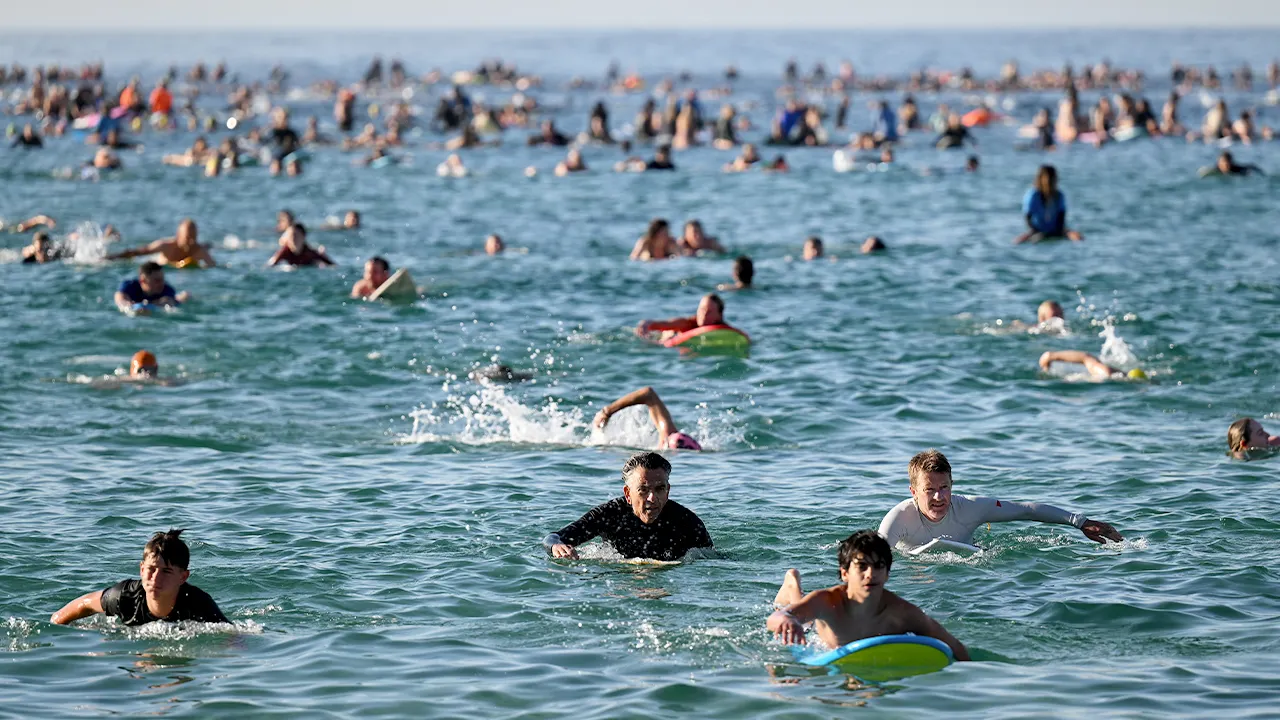
In a powerful display of unity and resilience, thousands of Sydney residents gathered at Bondi Beach as it partially reopened just five days after a devastating mass shooting that targeted a Hanukkah celebration, leaving 15 people dead and dozens injured. The beach, normally a symbol of Australia’s carefree lifestyle, transformed into a site of collective mourning and solidarity. The commemoration began with a solemn gathering as people stood shoulder-to-shoulder on the golden sands before forming an enormous human circle in the ocean—a poignant symbol of Sydney’s unity and unwavering support for the Jewish community. The iconic beach setting, with its crashing waves and open sky, provided a natural cathedral for this outpouring of community grief and determination to stand together against hatred.
The tragedy has sparked both security concerns and remarkable moments of cross-cultural solidarity. Armed police officers now stand guard outside synagogues and mosques throughout Sydney, a visible reminder of the new reality facing the city. Yet amid this heightened tension, extraordinary stories of heroism have emerged to inspire the nation. Ahmed al Ahmed, a Syria-born Australian Muslim store owner, has become a symbol of courage after tackling and disarming one of the gunmen during the attack. Despite being shot and wounded by the second assailant, al Ahmed’s bravery transcended religious and cultural boundaries. In a moving video shared on social media, he proudly declared Australia “the best country in the world” before raising his fist and leading the traditional chant: “Aussie, Aussie, Aussie.” His actions embodied the multicultural spirit of modern Australia—people of diverse backgrounds united by shared values of courage and community.
The footbridge at Bondi Beach, where the attackers were spotted carrying out their horrific plan, has been transformed into a spontaneous memorial site filled with tributes to those lost. Amid chalk drawings of menorahs and Australian flags lies a touching bumblebee drawing commemorating Matilda, the youngest victim at just ten years old. When Australian Opposition Leader Sussan Ley visited the site and walked across the footbridge, she was overwhelmed by emotion. “I wasn’t prepared for the feelings that hit me when I crossed the bridge,” Ley told the Sydney Morning Herald. “I saw that bridge on television the night that it happened, and like all Australians, I was in shock and horror. Then I heard directly from people who sheltered under that bridge and saw the gunmen, and will never be able to walk through this part of Bondi again without all of those feelings coming back.” Her reaction echoed the sentiments of countless Australians struggling to comprehend how such violence could erupt in a place synonymous with joy and leisure.
The surfing community, integral to Bondi’s identity, honored the victims with a traditional “paddle-out” ceremony—typically reserved for when a fellow surfer dies. Participants sat on their boards in a circle as tributes were shared, occasionally splashing and cheering in celebration of lives cut short. On shore, Jewish community members prayed while others watched in respectful silence. This distinctly Australian ritual brought together people across religious and cultural divides, emphasizing shared humanity over differences. Meanwhile, Australian Olympians Jessica Fox, Ian Thorpe, and Steve Solomon visited the growing memorial to pay their respects. Fox and Solomon, both Jewish, were visibly moved by the outpouring of support. “It shouldn’t take a tragedy to bring people together,” Fox remarked tearfully, capturing both the beauty and sadness of the moment. Solomon added, “Moments like this, coming in together, connecting, vowing for change, vowing for improvements and prosperity as a community and a country, is what gives us hope to put on the uniform as we have today.”
In a remarkable demonstration of practical solidarity, Australians broke national records for blood donations following the tragedy. According to Lifeblood, a branch of the Australian Red Cross, nearly 35,000 donations were made and more than 100,000 appointments booked since Monday—tangible proof of Australians’ desire to help in whatever way possible. This surge in donations represented more than just practical medical assistance; it symbolized Australians literally giving a part of themselves to help their wounded compatriots. The response demonstrated how communities often discover their greatest strength precisely when confronted with their moments of deepest vulnerability and pain.
As Sydney navigates the aftermath of this tragedy, questions about security, community cohesion, and the protection of religious minorities remain at the forefront of public discourse. The Australian government has already moved to tighten gun laws in response to the shooting, recognizing the need for practical measures alongside emotional solidarity. Yet beyond policy responses, the true healing will come through the countless small acts of kindness and understanding between neighbors of different faiths and backgrounds. The scenes at Bondi Beach—of prayers on the sand, of surfers forming circles in the water, of flowers placed gently at makeshift memorials—suggest that while the path forward may be difficult, Sydney’s diverse communities are determined to walk it together. As the city looks toward recovery, the enduring image of thousands standing united on the shores of Bondi Beach serves as both a memorial to those lost and a promise to build a future where such tragedy never happens again.