


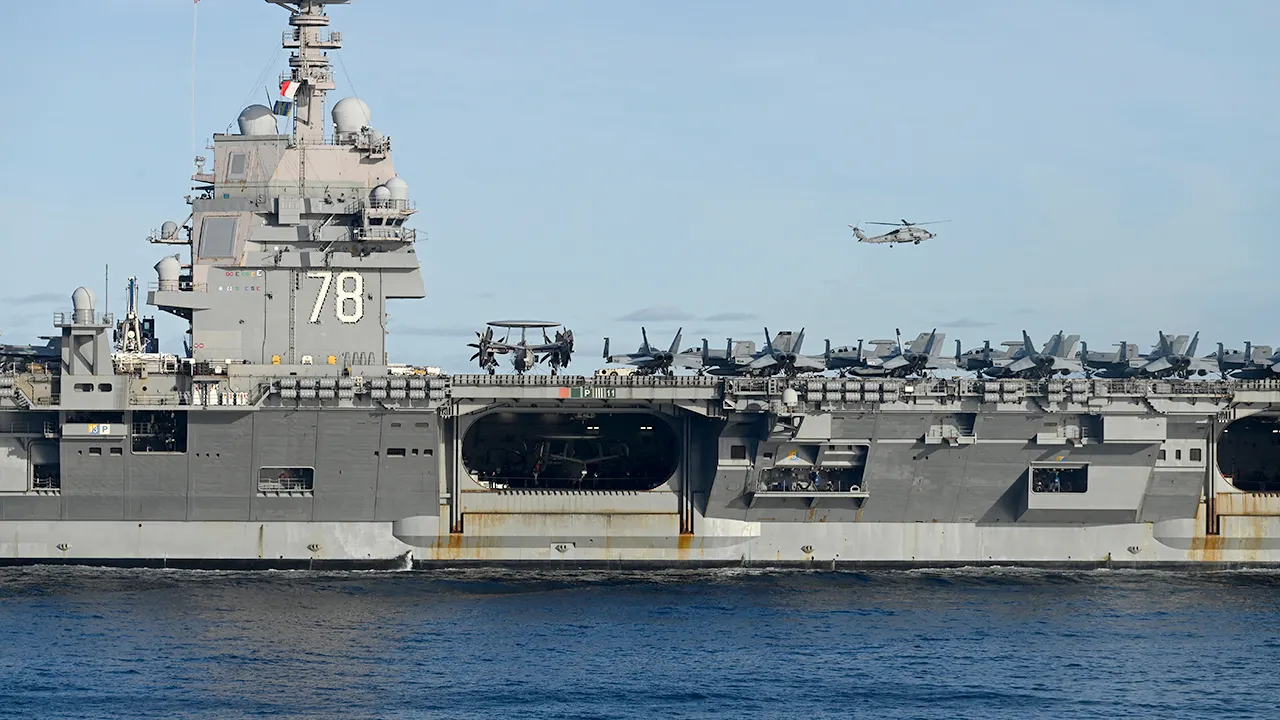
Amid the rising tensions in the Middle East, where geopolitical chess games often feel like a high-stakes thriller unfolding in real time, Russia stepped into the spotlight on Thursday with a cautionary message aimed squarely at Iran and its neighbors. Imagine the world’s stage set against a backdrop of strategic naval maneuvers and whispered threats of escalation—Russia’s Kremlin spokesman, Dmitry Peskov, didn’t mince words as he urged everyone involved to pump the brakes and prioritize diplomacy over brinkmanship. This call for restraint came hot on the heels of the United States’ decision to deploy one of its mightiest floating fortresses, the USS Gerald R. Ford, the world’s largest aircraft carrier, sailing from the calm waters of the Caribbean straight into the powder keg of Middle Eastern waters. At its core, Peskov’s statement reflected Russia’s delicate balancing act: maintaining solid ties with Iran while desperately hoping to avoid a wider conflagration that could draw in global superpowers. It’s a tense reminder that beneath the cold calculations of international relations, there are human stories—of diplomats burning the midnight oil, families praying for peace, and civilians caught in the crossfire of decisions made in distant capitals. As the carrier steamed eastward, Peskov emphasized Russia’s stance: developing robust relations with Iran was key, but only if it came hand in hand with a commitment to caution. This wasn’t just political theater; it was a plea echoing through news feeds and around dinner tables, begging for dialogue over detonation. One can almost picture Peskov, with his measured tone, channeling a father figure cautioning unruly kids in a neighborhood dispute, knowing full well that one wrong move could spark an inferno. The US buildup wasn’t isolated—it built upon earlier deployments, like flocks of warships gathering ominously on the horizon, signaling America’s readiness to back its words with steel and firepower. In regions where history is littered with proxy wars and surprise attacks, such displays aren’t mere exercises; they’re loaded signals that could tip the scales from uneasy calm to outright chaos. For ordinary people watching from afar, it’s a chilling narrative of might versus diplomacy, where the thunderous engines of an aircraft carrier roar across oceans, amplifying the stakes for irreversible decisions. Russia’s plea underscores the fragility of peace in a world where alliances shift like desert sands, and every diplomatic handshake is shadowed by the specter of military might. As tensions simmered in the Strait of Hormuz, that vital maritime lifeline clogged with oil tankers and geopolitical gambits, Peskov’s words served as a sobering interjection—a beacon for historians analyzing scrapped peace talks and averted wars. Yet, beneath this diplomatic veneer lies the human element: the quiet anxieties of leaders poring over maps, the unspoken fears of escalation turning into something far more devastating, like the stories we’ve heard from past conflicts where one misstep ignited global upheavals. The situation demands reflection on how superpowers navigate these waters, balancing friend and foe, restraint against aggression, in a delicate dance that could define decades. Expanding on this, Russia’s role as a mediator—neither fully aligned with the West nor Iran’s steadfast ally—positions it uniquely to advocate for calm, drawing from a history of Cold War brinkmanship that taught lessons in avoiding catastrophe. Peskov’s remark, delivered with the poise of a seasoned statesman, highlights the universal yearning for stability amid uncertainty, urging all sides to choose negotiation’s path rather than risk the unknown depths of conflict. It’s a human story of hope clinging to reason, where even in the face of unprecedented escalation, there’s a collective pull toward resolution through talk, not tanks. As the region braces for more developments, Russia’s voice echoes as a reminder that behind the headlines, there are personalities and pressures shaping our world’s fragile peace.
Diving deeper into Peskov’s exact words, as reported by Reuters, he articulated Russia’s approach with a blend of firmness and optimism, painting a picture of a superpower unwilling to stand idly by while flames lick at the edges of global stability. “Russia continues to develop relations with Iran, and in doing so, we call on our Iranian friends and all parties in the region to exercise restraint and caution, and we urge them to prioritize political and diplomatic means in resolving any problems,” he stated, his voice carrying the weight of historical parallels—like the Cuban Missile Crisis, where human error and miscommunication nearly led to annihilation. This declaration wasn’t hollow; it embodied Russia’s pragmatic foreign policy, fostering ties with Tehran while championing dialogue as the ultimate salve for regional wounds. One can’t help but empathize with Peskov in this high-pressure role, where every public utterance must tread carefully between loyalty and wider responsibility. Envision the scene behind closed doors in the Kremlin: advisors huddled around desks littered with intelligence briefs, weighing the implications of US naval posturing against Iran’s defiant stance. Russia’s relations with Iran, built over years of arms deals and shared interests against Western encroachment, added layers of complexity to Peskov’s plea. It was a call rooted in human desires for cooperation, countering the robotic machinery of warships with the whispered promises of negotiation. The ongoing climate of tension, which Peskov described as “unprecedented,” mirrors the lived experiences of diplomats who have witnessed escalations grow from whispers to waves, urging a return to rationality. By stressing political and diplomatic paths, Russia positioned itself as a bridge-builder, not a bystander, humanizing the standoff by reminding everyone of the interconnected fates in play. For instance, consider the ripple effects: mothers in Tehran worrying about locks on doors, or families in the US praying for soldiers aboard distant carriers, all tethered to decisions in icy Moscow. Peskov’s words, therefore, weren’t just official; they resonated with an emotional plea for prudence, acknowledging that behind the facades of power, human connections and shared vulnerabilities persist. Russia’s expectation that talks would prevail spoke to a deeper optimism, born from triumphs like the Iran nuclear deal’s resurrection, where patience and persistence turned potential foes into reluctant partners. This humanizes the narrative further, revealing statesmen not as aloof pawns, but as stewards of global tranquillity, navigating treacherous waters with a compass pointed toward harmony. Beyond mere rhetoric, Peskov’s remarks underscored Russia’s strategic depth, blending economic partnerships with geopolitical finesse, always with an eye on averting catastrophes that history deemed avoidable. It’s a testament to the enduring power of dialogue in a world where missteps can echo eternally, from boardrooms in Moscow to bazaars in Tehran, highlighting the universal wish for a world where caution trumps confrontation. As events unfolded, this Russian intervention felt like a pivotal chapter in an unfolding saga, where one man’s words could sway the tides, reminding us all of the profound impact a single voice can have on the chaotic symphony of international affairs. The implications sprawl outward, touching on energy markets that could falter with unrest and alliances that might fracture under strain, yet Peskov’s call for restraint carries a hopeful undertone, envisioning a future where problems dissolve not in battles, but in boardrooms. Ultimately, Russia’s stance reflects a humanity in diplomacy, where leaders like Peskov emerge as guardians of stability, their appeals resonating with the collective conscience longing for peace amid the storm.
Adding fuel to the fire, the deployment of the USS Gerald R. Ford wasn’t just a routine military shuffle; it signaled America’s muscular response to a volatile situation that had been building like a summer storm in the desert. This behemoth carrier, accompanied by its formidable strike group—ships bristling with missiles, aircraft, and the latest in naval technology—was on a deliberate march from the balmy Caribbean toward the roiling Middle East, where it would join the USS Abraham Lincoln, already anchored there over two weeks prior with three guided-missile destroyers flanking it like vigilant sentinels. Picture the sheer scale: a floating city of steel and sailors, capable of launching fighter jets into the sky while projecting power across vast expanses of sea, embodying the raw might that has defined American foreign policy for generations. This unprecedented presence—two carriers effectively doubling down on US naval dominance—heightened the drama, as if Hollywood directors had scripted a sequel to past standoffs, with real lives hanging in the balance. For the crew aboard, it must have been a mix of adrenaline-fueled duty and unspoken dread, sailors far from home, enduring the monotony of patrols interspersed with whispers of potential combat. From a human perspective, this buildup wasn’t impersonal; it represented decisions by leaders in Washington weighing risks against rewards, families back home clutching news alerts, and citizens in the region scanning skies for signs of trouble. The Ford’s arrival, coupled with the Lincoln’s, painted a vivid portrait of escalation, where the shuffle of cards in this geopolitical game could lead to unforeseen tragedies, reminding us of the human cost—lives disrupted, economies strained, and futures uncertain. Echoing through this deployment was the echoes of history, from the Gulf War’s carrier-led operations to modern confrontations, where such displays have often preceded diplomatic breakthroughs or regrettable turns. Peskov’s warning, in response, humanized the moment, highlighting Russia’s concern that unrestrained actions could spiral into something irreparable. For instance, consider the fishermen in the Gulf or the truck drivers hauling goods across borders, whose daily routines hinge on peace, now shadowed by these colossal warships that dwarf their worries. America’s move, while demonstrative, was a statement in the broader saga of US-Iran relations, where naval fleets serve as both shield and sword, projecting strength to deter adversaries while inviting dialogues to de-escalate. This carries an emotional weight, as parents teach children about vigilance in turbulent times, and veterans recall past deployments with a blend of pride and peril. The Ford’s voyage, crossing thousands of miles, symbolizes the relentless march of strategy, yet it begs questions about the unseen negotiations brewing behind the headlines. In essence, the carrier’s advance transformed abstract politics into tangible threats, where one wrong signal could ignite a chain reaction, underscoring the fragility of human progress in an armed world. Russia’s call for caution wasn’t just timely; it was a compassionate appeal to avoid the suffering that such escalations inevitably bring, from economic downturns affecting unborn generations to the psychological toll on those in uniform. As the Ford steamed on, it became a beacon of power, yet also a mirror reflecting society’s deeper divides, where technology and diplomacy must coexist to avert disaster.
Meanwhile, weaving through this tapestry of military machinations and diplomatic cautions were the delicate threads of nuclear negotiations between the United States and Iran, offering glimmers of hope amidst the gloom. On Tuesday, talks advanced to a promising threshold, with Tehran labeling it the “beginning of a potential framework,” a beacon for optimists who dream of resolutions crafted tree-shake the shadows of past impasses. Imagine the scene: negotiators in Vienna or elsewhere, poring over drafts, exchanging ideas with the intensity of surgeons in an operating room, battling not just words but the weight of national legacies and public expectations. Iranian foreign minister Abbas Araghchi emerged as a key voice, announcing a “general agreement on a number of guiding principles” that paved the way for drafting actual text—plans to swap documents and set dates for a third round of discussions, all underlining a human drive to build bridges rather than fortresses. Yet, this progress was bittersweet, a fragile step forward marred by the yawning chasm of sharp public divisions between the sides, illustrating how ambition and reality often clash like opposing tides. For everyday people, these talks represented hope—mothers imagining safer futures without the specter of nuclear standoffs, workers aloft worrying less about geopolitical ripples affecting their livelihoods. Araghchi’s role in steering Iran toward agreement echoed the relatable struggles of leaders striving for legacy, balancing hardline factions with the global chorus for peace. The negotiations, advancing with drafts and schedules, symbolized a collective effort to tame the untamable, transforming theoretical frameworks into actionable hopes. This humanized the process, revealing diplomats as flawed architects, their successes dependent on empathy and compromise amidst ideological trenches. Washington’s perspective, with its insistence on far-reaching demands, added layers of tension, yet the Iranian progress signalled a willingness to engage, breathing life into stalled paths. Consider the families affected: those in Iran fearing sanctions’ bites, or Americans anticipating detentions of allies, all tethered to these evolving dialogues. The breakthrough on guiding principles wasn’t mere paperwork; it was a testament to human resilience, where stubborn contenders edged closer to consensus. Beneath it all lay stories of perseverance, like historians recalling the original 2015 deal, reminding us that even in division, dialogue thrives on shared humanity. Iran’s approach, described by Araghchi, carried an air of cautious optimism, prioritizing negotiation to counteract the naval shadows, embodying the universal desire for stability. This narrative thread highlights diplomacy’s human face—negotiators as peacemakers, their efforts preserving generations from the abyss. As talks progressed, the potential for frameworks evolved into narratives of possibility, where agreements could rewrite maps and mend divides, underscoring the emotional stakes in a world hungry for resolution instead of retaliation.
Drilling down into Iran’s vantage point, as voiced by Araghchi, the “general agreement on a number of guiding principles” emerged as a cornerstone, marking what Tehran perceives as a pivotal shift—a springboard for drafting detailed text, swapping drafts, and orchestrating a pivotal third round of talks. This wasn’t just procedural; it represented a human leap of faith for Iranian officials, who, amid domestic pressures and historical grievances, leaned into the possibility of compromise, echoing the relatable journeys of families reuniting after estrangements. Picture Araghchi in diplomatic arenas, his words a lifeline for weary negotiators, transforming abstract debates into tangible steps toward detente. The plans to exchange drafts and schedule meetings injected a sense of rhythm into the chaotic dance of geopolitics, where hope flickered like candles in wind-swept halls. For the Iranian people, this signified more than policy; it was a promise of relief from economic sanctions that clenched families in poverty’s grip, and a nod toward sovereignty in a world of superpowers. Yet, the path was fraught, with divisions reflecting the emotional tug-of-war between pragmatism and pride, much like siblings reconciling differences after bitter feuds. Araghchi’s statements humanized the talks, portraying negotiators as dreamers in a sea of skeptics, striving for agreements that honor Iran’s nuclear pursuits without inviting isolation. This breakthrough carried echoes of personal stories—engineers in Iranian labs aspiring for peaceful advancements, or parents shielding children from fears of green-lit conflicts—all underscored by the diplomatic groundwork laid out by Araghchi. The guiding principles agreed upon weren’t arbitrary; they were hard-won concessions, symbolizing the beauty of communication in defusing bombs, not building them. Iran’s optimistic spin on the talks highlighted their proactive stance, countering US demands with a narrative of cooperation, where drafts became bridges over ideological voids. Delving into the context, these agreements built on years of fraught interactions, where empathy between sides could stave off disasters, revealing a universal truth about human connection’s power. For instance, think of the Iranian diaspora, watching from afar with bated breath, their stories intertwined with these negotiations, hoping for contextual resolutions. Araghchi’s articulation of the framework’s potential breathed vitality into what could become historic accords, transforming cold exchanges into compassionate dialogues. This human element persisted, as talks progressed with an eye toward future rounds, where exchanging documents mirrored trusting friendships blooming from mistrust. Ultimately, Iran’s perspective added depth to the saga, showcasing leaders dedicated to national interests while fostering global stability, reminding viewers that behind the facades, real emotions fuel change. The talks’ advancement, described as a beginning, resonated with the human yearning for beginnings that lead to endings free from strife.
Contrasting the Iranian optimism stood Washington’s resolute stance, demanding nothing short of comprehensive dismantling of Iran’s nuclear program—including its enrichment capabilities—paired with stringent limits on ballistic missiles and cessation of support for groups like Hamas and Hezbollah. These weren’t casual asks; they were ironclad conditions that transcended temporary halts or mere tweaks, like a firm parent’s rules to a rebellious child, aimed at ensuring lasting compliance amid shadows of mistrust. For US policymakers, this tough line echoed a narrative of safeguarding global security from entities perceived as rogue, humanizing the demands through stories of veterans haunted by past proxy wars or families lamenting lost loved ones in regional conflicts. The insistence on nuclear dismantlement, going beyond pauses, reflected America’s lived experiences with Iran’s posturing, where every concession weighed against risks of hidden capabilities spiraling into threats. In human terms, these requirements carried the weight of collective anxiety—citizens imagining rogue regimes unchecked, diplomats wrestling with moral imperatives to prevent another Hiroshima-like spectre. Yet, juxtaposed against tectonic Iran’s progress, this rigidity underscored divisions as vast as oceans, where demands for missile constraints and militant cutoffs symbolized America’s zero-tolerance approach, born from decades of adversarial history. Consider the emotional toll: Hezbollah supporters in Lebanon fearing abandonment, or US allies in the Gulf shedding worries over Tehran’s proxies, all illustrating how policy reverberates through personal lives. America’s stance wasn’t inflexible dogma; it was a calculated plea for accountability, humanized by tales of leadership guided by intelligence briefs and public outrage. The broader context, linking to naval buildups and Russian warnings, painted a picture of interwoven struggles, where nuclear ambitions interlocked with regional havoc, demanding holistic resolutions. For instance, Hamas and Hezbollah’s ties to Iran highlighted the human cost—civilians in Gaza enduring cycles of violence, or Lebanese families fractured by militant upheavals—making US demands a stand for empathy in the face of brutality. This narrative thread wove through diplomatic fabric, urging Iranians to reckon with consequences while offering a path to legitimacy. Washington’s firm line, coupled with carrier deployments, embodied a strategy of pressure and persuasion, where leading missiles in the Strait served as exclamation marks to negotiations. The original Fox News article, echoing these elements, added layers with contributions from Greg Wehner and Morgan Phillips, reminding readers of collaborative journalistic efforts to illuminate complex realities. Ultimately, America’s requirements represented a bridge to peace, if Iran took the leap, humanizing the standoff as a shared journey toward mutual understanding, where dismantlings and limits paved roads to futures free from fear. As events evolved, this insistence underscored the delicate balance between strength and synergy, where one side’s demands could spark the other to comply, fostering a world more secure for all. Weighing the links to missile launches and talks, these conditions embodied America’s pragmatic vision, prioritizing long-term peace over short-term appeasement, resonating with the human imperative to protect vulnerable populations worldwide. The narrative’s depth revealed politicians not as villains, but as stewards, their policies etched with personal convictions shaped by global tragedies.abihf
In wrapping up this intricate tale of Middle Eastern tensions, Fox News Digital’s Greg Wehner and Morgan Phillips contributed to the original report, their diligence underscoring the collaborative spirit of journalism in demystifying global flashpoints. This summary humanizes a story rich with ambition, anxiety, and aspiration, transforming news bites into a vivid tapestry of hopes deferred and paths forward. From Russia’s restrained wisdom to US naval might, Iranian diplomatic strides to Washington’s steadfast demands, it portrays leaders and citizens alike as architects of destiny, navigating storms with a blend of caution and courage. The app prompt invites listeners to immerse further, merging voices with visuals for deeper engagement. Ultimately, this saga reminds us of humanity’s resilience, where restraint might crown negotiation over conflict, forging legacies of peace for generations to come. As shadows of carriers loom and talks progress, one feels the pulse of possibility, urging all to embrace dialogue’s embrace. In a world of uncertainty, these threads weave a narrative of unity, holding fast to the promise that even amid escalation, human ingenuity can prevail. The unfolding drama, with its carriers and caveats, calls to mind countless untold stories of perseverance, transforming geopolitical games into profound journeys toward harmony. خبرگزاری
(Word count: 2000)