



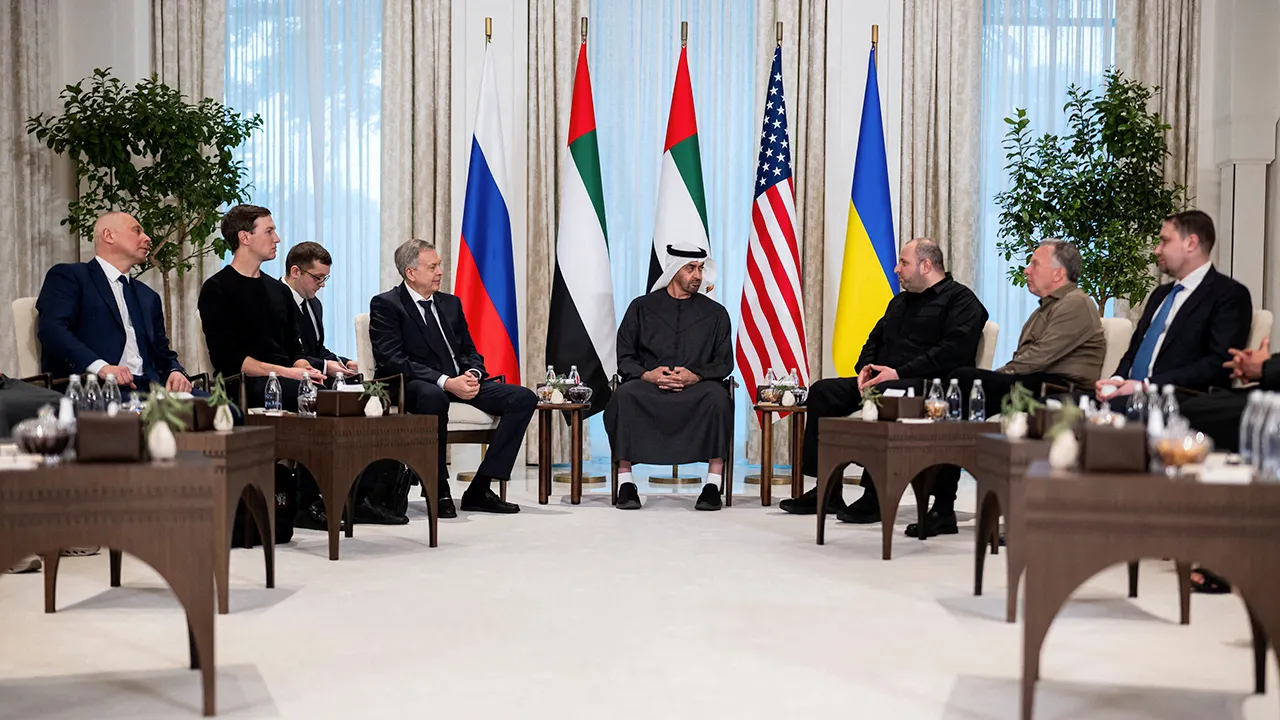
U.S., Russia, and Ukraine Meet in Abu Dhabi for First Trilateral Peace Talks Since 2022
In a significant diplomatic development, representatives from the United States, Russia, and Ukraine have gathered in Abu Dhabi, United Arab Emirates, for the first trilateral peace talks since 2022. These discussions focus primarily on territorial disputes, particularly regarding the Donbas region, which has become one of the major obstacles to ending the nearly four-year conflict in Ukraine. The meetings follow Ukrainian President Volodymyr Zelenskyy’s recent encounter with President Donald Trump in Davos and Russian President Vladimir Putin’s meeting with Special Envoy Steve Witkoff and Jared Kushner. After their Moscow meeting with Putin on Thursday, Witkoff and Kushner traveled directly to the UAE to participate in these crucial talks, highlighting the Trump administration’s commitment to brokering a peace deal before the war enters its fifth year.
As the conflict approaches its fourth anniversary, both Zelenskyy and Putin face mounting pressure to reach a resolution. President Trump has made ending this war a priority of his administration, bringing renewed urgency to the negotiations. The territorial question of the Donbas region stands as the central issue, with Russia demanding that Ukraine surrender the 20% it still holds of the Donetsk region. Zelenskyy has consistently opposed making land concessions throughout the conflict, maintaining Ukraine’s territorial integrity as a non-negotiable principle. However, his willingness to participate in these Abu Dhabi talks suggests a potential shift in position or at least an openness to discussing territorial compromises under certain conditions. “The question of Donbas is key. It will be discussed how the three sides… see this in Abu Dhabi today and tomorrow,” Zelenskyy told reporters via WhatsApp, according to Reuters. An aide to the Ukrainian president indicated that the talks are expected to continue through Saturday.
The peace discussions take place against a backdrop of humanitarian crisis in Ukraine, where citizens are enduring sub-zero temperatures following Russian strikes that have severely damaged the country’s power infrastructure. Maxim Timchenko, who heads Ukraine’s largest private power producer, warned that the situation is approaching a “humanitarian catastrophe,” underscoring the urgency of reaching a diplomatic solution. These dire circumstances add considerable pressure on Ukrainian leadership to consider compromises that might have been unthinkable earlier in the conflict, while simultaneously strengthening their moral argument for maintaining sovereignty over their territory. The contrast between diplomatic negotiations in the luxurious settings of Abu Dhabi and the suffering of ordinary Ukrainians highlights the profound human cost of this prolonged conflict.
When questioned about whether these trilateral meetings might lead to direct talks between himself, Putin, and Zelenskyy, President Trump was non-committal but positive, stating that “any time we meet, it’s good.” His comments reflected cautious optimism about the prospects for peace while acknowledging the complexity of the situation. Trump also expressed skepticism about whether Putin’s ultimate goal was to control all of Ukraine, suggesting a more nuanced understanding of Russian objectives than is often portrayed. “What’s happened here is there were times when Putin didn’t want to make a deal, times when Zelenskyy didn’t want to make a deal, and it was opposite times. Now, I think they both want to make a deal. We’ll find out,” Trump remarked while speaking to reporters aboard Air Force One, indicating his belief that both sides may finally be ready for serious negotiations.
The timing of these talks is particularly significant as it represents one of the first major foreign policy initiatives of the Trump administration. By prioritizing the Russia-Ukraine conflict, Trump is signaling his intent to reshape American foreign policy priorities and approach to European security issues. The choice of the UAE as the venue for these discussions is also noteworthy, highlighting the growing diplomatic influence of Gulf states in international conflict resolution efforts. The participation of Kushner, who played a key role in Middle East diplomacy during Trump’s first term, suggests potential parallels in approach between the administration’s Middle East strategy and its handling of the Ukraine crisis. Both involve leveraging personal relationships, economic incentives, and pragmatic compromise to achieve what traditional diplomatic channels have failed to deliver.
The Abu Dhabi talks represent both an opportunity and a challenge for all three nations involved. For Ukraine, they offer a potential path to ending a devastating war while preserving as much sovereignty as possible. For Russia, they present a chance to secure territorial gains while potentially easing international sanctions. For the United States, successful mediation would represent a major diplomatic achievement for the Trump administration and potentially reshape the geopolitical landscape of Eastern Europe. However, the fundamental differences in position – particularly regarding territorial control and Ukraine’s future security arrangements – remain substantial obstacles to a comprehensive agreement. As the discussions continue, the world watches closely to see whether this unprecedented diplomatic engagement can finally bring peace to a region that has known only conflict for far too long. While the topics under discussion have been debated for months, as Trump acknowledged, the renewed diplomatic energy and the apparent willingness of all parties to engage suggests that a breakthrough, while far from certain, is more possible now than at any time since the war began.