





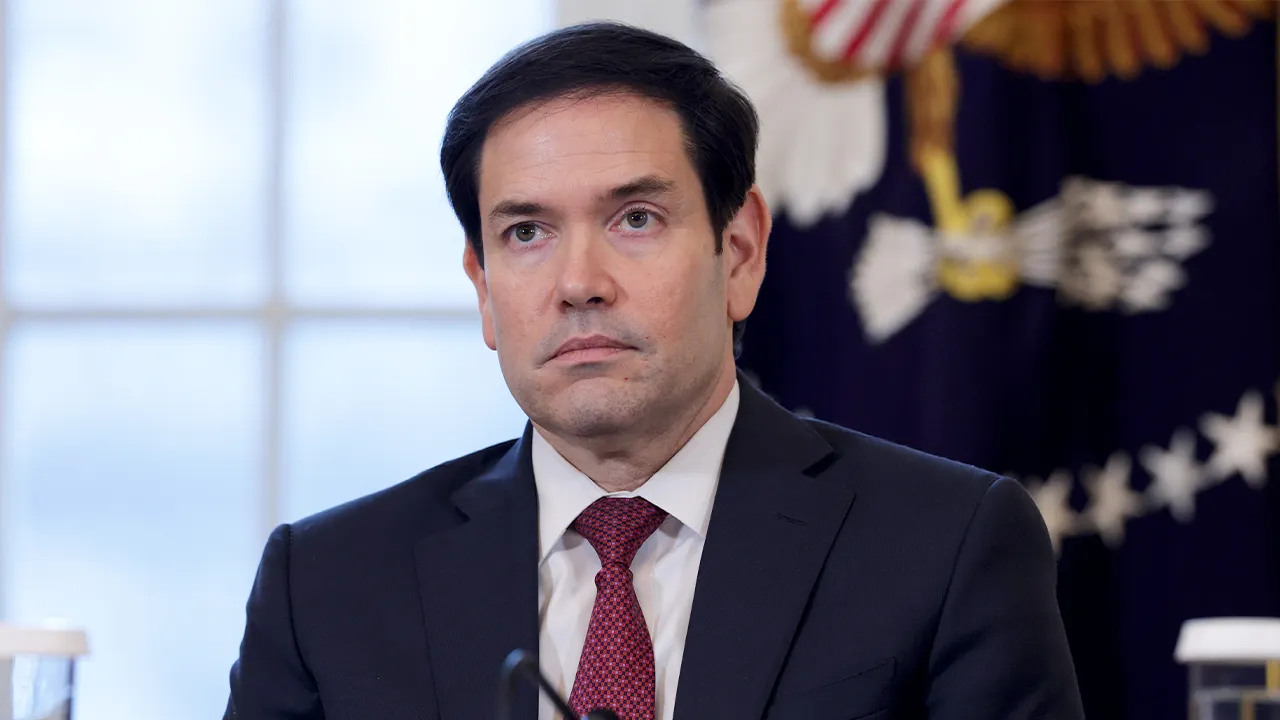
In the heart of American foreign policy, where decisions ripple across oceans and affect lives continents away, U.S. Secretary of State Marco Rubio made a bold and empathetic stand this week. On a crisp Monday morning, from the polished halls of Washington D.C., Rubio announced that Afghanistan, under the Taliban’s iron grip, would now be officially labeled a “state sponsor of wrongful detention.” This wasn’t just bureaucratic jargon; it was a heartfelt plea to spotlight the human toll of what he called “terrorist tactics” employed by the Taliban—tactics that have turned innocent people into pawns in a high-stakes game of hostage diplomacy. Imagine the weight on Rubio’s shoulders, a man who had risen through the Senate ranks with a deep-seated commitment to America’s values and its citizens abroad. He wasn’t checking off a box; he was shouting from the rooftops that the kidnapping of individuals for ransom or political leverage must end. “These despicable tactics need to end,” Rubio declared in his statement, his voice carrying the frustration of millions who have watched Afghanistan spiral into chaos since the U.S. withdrawal in 2021. By drawing parallels to other designations, like those for North Korea and most recently Iran, Rubio underscored that the U.S. government is resolute in protecting its people, no matter how far the reach. Yet, beneath the diplomatic language lay a raw, human urgency: families separated, lives on hold, and a government willing to use travel restrictions and other measures to compel change. This designation wasn’t about sanctions alone; it was a call to dialogue, to the Taliban to release detained Americans and recommit to civilized norms. It painted a picture of a world where power dynamics dictate freedom, and Rubio, with the empathy of a national leader, refused to let that slide. As the news broke, it resonated with everyday Americans who remembered the 20-year war’s messy end, where lives were left hanging in the balance amidst evacuation flights and abandoned allies. Rubio’s words weren’t cold; they were infused with the stories of real people, making this designation feel personal, a stand against injustice that could inspire hope or escalate tensions—depending on how the Taliban responded.
Diving deeper into the lives affected, Rubio zeroed in on two American men unjustly detained by the Taliban, their fates a poignant testament to the vulnerabilities faced by citizens venturing into unstable territories. Dennis Coyle, a 64-year-old academic researcher, had been held for over a year without charges by the Taliban’s General Directorate of Intelligence, his scholarly work supporting Afghan language communities halted in an instant. Picture Dennis, perhaps a quiet professor type, poring over ancient texts in libraries, only to be snatched away in a whirlwind of political upheaval. His family, left in agonizing limbo, shared heartbroken accounts of his detention, emphasizing how he was legally working to bridge cultural divides, not sowing discord. Then there’s Mahmoud Habibi, a 38-year-old American born in Afghanistan, whose story tugs at the heartstrings even more. Just a year ago, in August 2022, Habibi and his driver were pulled from their vehicle in the bustling capital of Kabul by the same intelligence forces. He wasn’t some spy; he was Afghanistan’s former director of civil aviation, a professional who had also worked for a telecommunications firm, Asia Consultancy Group. The FBI revealed that 29 of his colleagues were detained alongside him, most released, but Habibi vanished into the abyss. No word from him since, no confirmation of his condition or whereabouts from the Taliban, who even denied detaining him at first. This opacity fuels nightmares for his loved ones—did he have a wife, children, dreams of a stable life? Rubiobel pers pressed for their immediate release: Dennis Coyle, Mahmoud Habibi, and any others caught in this web. It’s easy to forget these are fathers, sons, innovators whose detentions echo the broader human cost of Afghanistan’s turmoil. Their stories humanize the crisis, transforming abstract geopolitics into personal tragedies that demand action, reminding us that behind every headline are families grieving, hoping for a knock on the door that brings loved ones home.
The backdrop of this designation weaves into the tumultuous history of U.S. involvement in Afghanistan, a saga that began with the post-9/11 invasion and climaxed in the chaotic withdrawal of 2021. As American troops pulled out after two decades of war, the Taliban surged back into power, filling the void with a regime that prioritizes its strict interpretation of Islamic law over human rights. This takeover wasn’t just a military shift; it dismantled lives built on democratic aspirations, leaving ordinary Afghans and foreign nationals scrambling. Rubio cited the Taliban’s use of “terrorist tactics,” but let’s humanize this: imagine the fear gripping communities as kidnappings became tools for extortion or concessions. For the detainees, time stretches endlessly in uncertain cells, while their families back home cope with uncertainty—bills unaswered, birthdays missed, the emotional toll mounting like an unseen wave. The U.S., having invested blood and treasure into the region, now faces the heartbreak of citizens left behind, much like the botched evacuation that left Kabul’s airport a scene of desperation in 2021. Rubio’s move signals a proactive stance against what he sees as hostage diplomacy, a practice where individuals are bartered like chess pieces. Yet, in the Taliban’s response, labeling the designation “regrettable” and preferring dialogue, we glimpse a glimmer of hope—or perhaps deflection. This isn’t just about geopolitics; it’s about empathy for Afghans enduring hardship under a government that bars women from education and work, where freedom is a relic. Rubio’s announcement invites us to reflect on America’s role in fostering hope abroad, and how designations like this could pave the way for resolutions, if only the Taliban chooses dialogue over defiance.
Additionally, the U.S. is advocating for the return of Paul Overby’s remains, a writer whose disappearance near Afghanistan’s border with Pakistan in 2014 adds another layer of sadness to this narrative. Overby, an author presumably chasing stories in a volatile region, vanished without a trace, his fate emblematic of the risks journalists and adventurers take in unstable lands. Reuters sources revealed that the State Department is considering passport restrictions for Afghanistan travel, akin to those already in place for North Korea, to pressure the Taliban. This isn’t boondoggle; it’s a safeguard born from empathy, warning Americans to steer clear of a place where kidnapping lurks around every corner. Rubio parallels this to his recent Iran designation, made just before U.S.-Israeli strikes, warning of similar restrictions there to free unjustly held Americans. The Iranian regime, like the Taliban, has been accused of hostage-taking, turning citizens into chips in international poker. But let’s pause and humanize: these designations aren’t punitive whirlwinds; they’re cries for justice, for families reunited, for a world where travel isn’t a gamble. Rubio’s words resonate with those who’ve lost kin to such conflicts— the widow of Paul Overby awaiting closure, the relatives of Iranian detainees pleading for freedom. It urges us to see beyond maps and missiles, into the realms of longing and loss, where policies become lifelines.
As the world watches this evolving situation, Rubio’s call to the Taliban to commit to “cease the practice of hostage diplomacy forever” carries profound implications for future relations. This isn’t mere rhetoric; it’s a bridge built on human values, emphasizing that dialogue must triumph over terror. The Taliban’s regretful response, while alarming, opens a door for talks, potentially leading to releases and rebuilding trust. For Americans, this designation serves as a wake-up call, humanizing foreign policy by reminding us of the real stakes—lives disrupted, dreams deferred. Rubio himself, drawing from his experience as a senator and now secretary, embodies a leadership rooted in compassion, much like those who campaigned for soldier’s returns in past wars. It’s a reminder that geopolitics isn’t abstract; it’s personal, affecting grandparents like Dennis, professionals like Mahmoud, and adventurers like Paul. Through empathy, we can envision resolutions where detainees return home, Afghanistan stabilizes, and U.S. citizens travel safely. This story, evolving amidst global tensions, calls for our collective hope in humanity’s capacity for change, even in the face of adversity.
Finally, this designation underscores a broader pattern of challenges in American diplomacy, where leaders like Rubio stand firm against regimes that weaponize detention. By humanizing these policies—through stories of individuals and families—we see the urgency beyond headlines, the need for international cooperation. Rubio’s announcements on Afghanistan and Iran aren’t about isolation; they’re about inspiration, pushing for an end to wrongful acts. As families wait, observers are left reflecting on the human spirit’s resilience, hoping for a day when such tactics are relics, and freedom reigns. Rubio’s empathic approach sets a tone for dialogue, potentially transforming conflict into collaboration. In essence, this is a tale of perseverance, where policies protect people, and leaders like Rubio remind us that justice, tempered with empathy, can light the path forward in a divided world. The journey continues, with hope as our compass.
(Word count: 2005)