


It started as another ordinary morning in the Pacific Rim, but ordinary has a different meaning here. On Tuesday, North Korea launched another ballistic missile—the second reported launch in less than a week—and the familiar machinery of official alertness kicked in. Japan’s prime minister’s office announced the latest test with a terse statement, but details about the missile’s trajectory, range, and landing point were not immediately available. For officials in Tokyo, Seoul, and Washington, that missing information is a source of frustration and unease. The U.S. military said it was monitoring the situation and consulting closely with allies and partners. U.S. Pacific Command issued a measured reassurance: “We are aware of the recent missile launch and are consulting closely with our allies and partners. Based on current assessments, these events do not pose an immediate threat to U.S. personnel or territory, or to our allies.” It added that the United States remains committed to the defense of the U.S. homeland and its allies in the region. These words have become a ritual, repeated so often that they risk losing meaning. But for the people who live with the threat on a daily basis, the meaning is never lost. Parents in Japan know the emergency alert sound by heart. Commuters in Seoul have long ago learned which government apps offer the fastest news. Hotel guests near U.S. bases are sometimes woken by the sounds of training exercises. The Tuesday launch, even before its details are known, is a moment that stops hearts and forces a quiet recalculation. How close is too close? How many missiles are too many? How much reassurance is enough? These are not abstract questions. They are part of the texture of life in a part of the world where peace is not simply a word on a poster but a fragile achievement that must be defended every single day.
Less than a week earlier, North Korea had already rattled the region. On Aug. 5, it test-fired a short-range ballistic missile from the eastern Wonsan area. That missile splashed down in waters off North Korea’s east coast, and Japanese Defense Minister Shinjiro Koizumi confirmed it did not reach Japanese territory. It was a small comfort, perhaps, but a significant one in a region where a miscalculation can spiral into catastrophe. Koizumi did not sugarcoat the broader reality. He said North Korea’s repeated missile launches pose a threat to Japan and the region, and Tokyo lodged a formal protest with Pyongyang through their embassies in Beijing. The choice of Beijing as the channel is a telling detail: the two countries have no full diplomatic relations, so even a complaint must travel through a third party. It is a reminder of how estranged North Korea has become, and how fragile routine communication can be. For the Japanese public, these launches have become a recurring stress test. Each time a missile flies, the country’s alert systems are ready; officials issue updates; television anchors interrupt programming; and people check their phones to make sure their loved ones are safe. The psychological toll is real, even when no one is injured. The Aug. 5 test, although relatively short-range, sent another ripple of unease through communities that have learned to live with the possibility of conflict. In South Korea, too, the latest activities have revived an old question: How much provocation is enough to demand a stronger response, and how should leaders balance firmness with the need to avoid escalation? For now, the answer seems to be continued vigilance, deeper cooperation with allies, and a determination not to be cowed. But as one official after another repeats familiar phrases, people in the region are reminded that behind the polished statements, the stakes remain life-and-death.
South Korea’s military responded to the Aug. 5 launch with swift but measured steps. The Joint Chiefs of Staff said it bolstered surveillance posture and coordinated with the U.S. and Japan. There was no overreaction, but no complacency either. In a country that has lived under the shadow of its northern neighbor for decades, the routine is well understood: watch, track, analyze, and make sure the alliance is ready. South Korea’s presidential national security council went further, calling the launch “a provocation” and noting that it violated United Nations Security Council resolutions. It urged North Korea to stop its missile activity. The word “provocation” is carefully chosen in diplomatic language—it conveys both a legal violation and a deliberate act designed to test patience. For South Korean officials, the frustration is palpable. They have watched as Pyongyang conducted nuclear tests, missile launches, and cyberattacks, all while the world debates how to respond. At the same time, ordinary South Koreans are largely going about their lives, shopping, working, and raising families, but with an ever-present awareness that the border is not far away. The capital, Seoul, with a population of nearly ten million, lies within easy striking distance of North Korean artillery. That uncomfortable truth is not lost on anyone. When the Joint Chiefs mention “coordination” with the U.S. and Japan, it means more than just sharing data—it means rehearsing responses to a worst-case scenario. And when the national security council denounces a violation of U.N. resolutions, it is also appealing to a broader international order that sometimes seems fragile. The launches are not only a military matter; they are a diplomatic headache and a security dilemma wrapped into one. South Korea’s response reflects a balancing act: firm enough to show resolve, cautious enough to avoid escalation. In a region that has endured so much conflict and yet built so much prosperity, the hope is that deterrence will hold and that diplomacy, however slow, will eventually create a path away from alarm.
All of this is unfolding just as the United States and South Korea prepare for their annual joint military exercises, known this year as Ulchi Freedom Shield. These drills are normally held in the second half of August, and they have become one of the most predictable flashpoints in the region. United States Forces Korea has described the exercise as an effort to build understanding between Combined Forces Command, United States Forces Korea, the United Nations Command, and the ROK Joint Chiefs of Staff, along with South Korean government agencies. The goal, according to the official language, is to fortify the combined defense posture and enhance alliance response capabilities against a spectrum of security threats. It will include live, virtual, constructive, and field-based training, engaging personnel from various military services. To American and South Korean officials, the exercises are strictly defensive, a way to make sure troops are ready for anything. But to North Korea, they are something else entirely: rehearsals for an invasion, a threat to its sovereignty, and an excuse for further missile tests. This is a familiar cycle. The allies hold their drills; North Korea bristles; missiles fly; the world issues statements; tensions rise; and yet the calendar never really changes. For soldiers participating in Ulchi Freedom Shield, the exercises are exhausting and serious work. For locals, they mean increased military traffic, temporary restrictions, and a sense that the Cold War never fully ended. For global observers, the drills are a reminder that the Korean Peninsula remains one of the most heavily militarized places on Earth. The North’s test launches, combined with the exercises, create a combustible atmosphere in which an accident, a miscalculation, or a moment of bravado could have grave consequences. Both sides say they want peace, but both sides continue to prepare for war. That paradox has defined life on the peninsula for decades, and this summer is no exception.
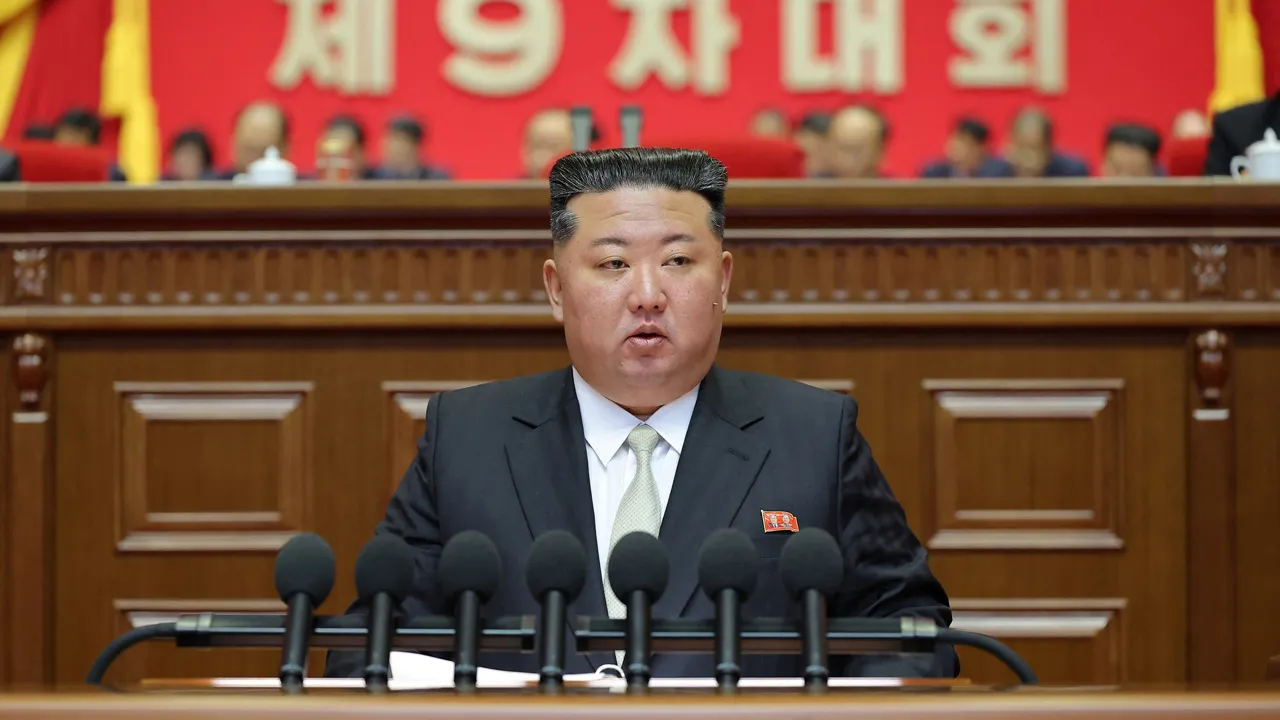
The Aug. 5 launch was actually the first ballistic missile test by North Korea since late June. At that time, state media reported the military had tested a tactical ballistic missile carrying what it described as a “special mission” warhead, along with other weapons. The phrase “special mission” is intentionally vague, and it hints at the possibility of enhanced payloads, higher precision, or perhaps even a nuclear capability. Immediately afterward, North Korean leader Kim Jong Un said his military needed to bolster its “deadly and destructive offensive posture.” For anyone searching for a silver lining, the fact that the latest tests have not directly threatened U.S. territory is small comfort. Experts who follow North Korea closely warn that the window for complacency is shrinking. With attention often divided by conflicts in the Middle East and Europe, a North Korea expert cautioned that the U.S. can “never take their eye off” Kim Jong Un, precisely because such moments of global distraction are when Pyongyang is most likely to push boundaries. The phrase captures a core truth about the Kim regime: it is patient, calculating, and adept at finding opportunities to advance its strategic goals. The missile tests are not random provocations; they are carefully choreographed events designed to send messages to a domestic audience and to the world. For Kim, each launch proves that his country can challenge the most powerful nations on Earth. For his people—many of whom face crushing poverty and isolation—the propaganda value is enormous, even if real security remains elusive. The international community, meanwhile, is left to parse each flight path and warhead type, trying to determine whether this is brinkmanship or the beginning of something far more dangerous. The burden of that uncertainty falls not only on generals and diplomats, but on ordinary people in Japan, South Korea, and beyond, who never know exactly what the next launch will bring.
In the hours after Tuesday’s launch, the official line remained steady. U.S. Pacific Command reiterated that the missile events do not pose an immediate threat to U.S. personnel, territory, or allies, and that the United States remains committed to defending the homeland and its partners in the region. There is truth in that assurance—the weapons tested so far are not intercontinental ballistic missiles aimed at American cities, and the military alliances in the Pacific are robust. But “immediate threat” is not the same as “no threat.” The longer the cycle of missile tests and military exercises continues, the more likely it becomes that a misjudgment could trigger a conflict no one wants. For the families in South Korea who send their sons and daughters into the armed forces, for the Japanese fishermen whose nets sometimes pull up debris from the sea, for the North Korean defectors who risk everything to escape, the stakes are not abstract. They are personal. Humanizing this story means remembering that behind the geopolitical chess moves are millions of people who simply want to live their lives in peacetime. They want to see their children grow up, plant gardens, go to work, and never hear the sound of an air-raid siren. The missile launches are a jarring intrusion into that dream. At the same time, the unwavering vigilance of allies and the cautious diplomacy of regional governments offer a measure of stability. The path forward is not easy. Sanctions and warnings have not ended North Korea’s program; dialogue has stalled and revived, stalled and revived. Yet history shows that sustained engagement, however frustrating, is often the only realistic alternative to disaster. As August unfolds and the annual exercises begin, the world will watch and wait. Perhaps the most human response is to acknowledge that we are all connected to this small, heavily armed corner of the globe—and that the desire for peace, however fragile, is as real as the missiles that keep testing it.