





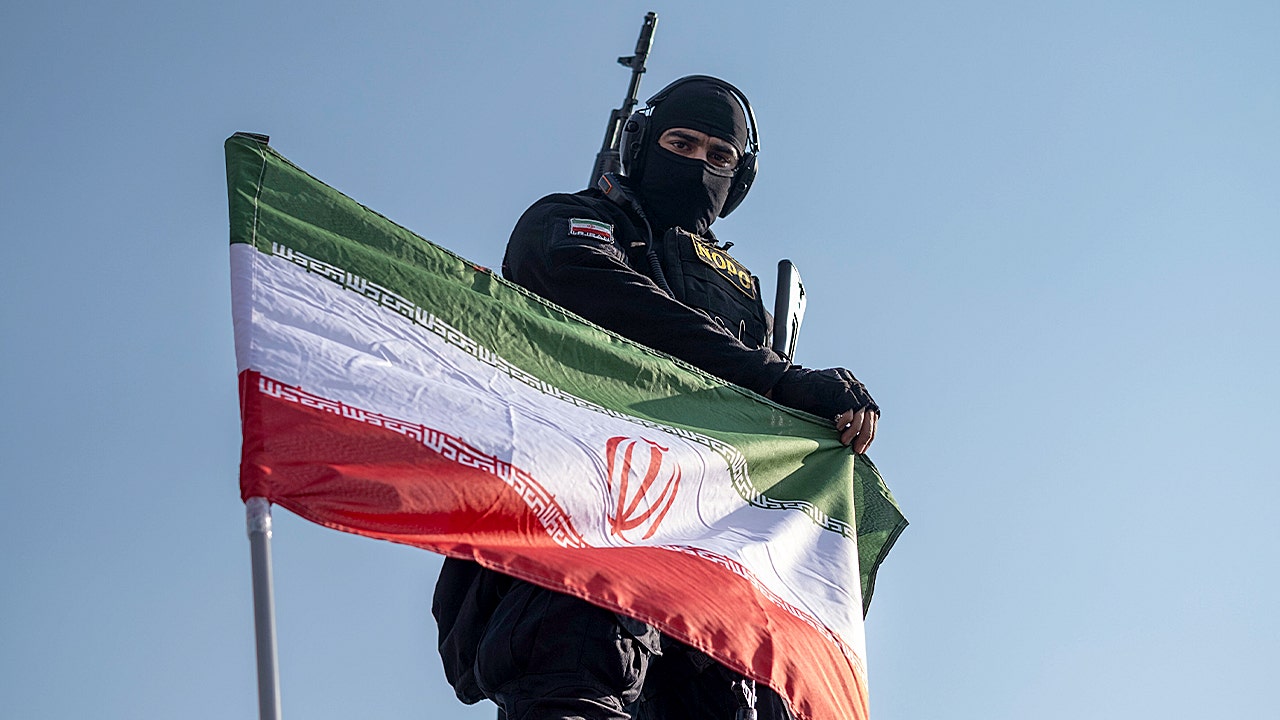
In the shadowed corridors of Tehran, where the echoes of a devastating strike still reverberate through the crisp March air of 2026, a new chapter in Iran’s turbulent history unfolds. It was just days ago, on February 28, that a joint U.S.-Israel operation codenamed Epic Fury unleashed its fury upon a guarded compound in the heart of the capital, claiming the life of Ayatollah Ali Khamenei, the Islamic Republic’s Supreme Leader for decades. This ruthless act of annihilation, delivered by precision missiles that punched through fortified walls like angry fists, left the nation in stunned disbelief. Khamenei, the unyielding architect of the regime’s theocratic grip, had been a symbol of defiance against Western influence, often rallying crowds with fiery sermons that painted enemies as infidels. His sudden death, amid the escalating war with America and Israel, wasn’t just the end of a man—it was a gaping wound in the fabric of power, sending ripples that threatened to drown the regime in chaos. Enter Mojtaba Khamenei, the son and chosen heir, who, in a swift and orchestrated move, was elevated as the third Supreme Leader by the Assembly of Experts on March 8. Yet, whispers from Iranian state television claim he was wounded in the crossfire of this unrelenting conflict, a bullet perhaps grazing his resolve, though unconfirmed rumors swirl like dust devils in the desert. With his father gone, Mojtaba now embodies the regime’s survival, but he remains eerily silent, unhearing to the world since the war’s roar began. To shield this new figurehead from assassins lurking in the shadows—perhaps American spies or Israeli agents with vendettas— an elite force known as NOPO has been thrust forward. These black-clad warriors, Iran’s Counterterrorism Special Force, stand as the ironclad guardians, deployed not just to protect but to enforce order in a time of anarchy. It’s a tense ballet of protection, where every shadow could conceal a dagger, and NOPO’s arrival feels like a heavy cloak draped over the capital’s shoulders. Ali Safavi, a sharp-eyed analyst from the National Council of Resistance of Iran based in Paris, underscores the gravity: “With Khamenei gone, NOPO will now be protecting Mojtaba.” Yet, beneath this deployment lies a human element—a brotherhood of men, trained to kill or be killed, who now grapple with loss; some among them perished in the same strike that orphaned Mojtaba, their black uniforms stained with the blood of fallen comrades. This force, born from the ashes of revolution, isn’t impersonal; it’s a living entity, pulsing with loyalty forged in crucible-like drills and sacrifices. In the crowded bazaars and quiet alleys of Tehran, ordinary Iranians murmur fearfully about the sudden surge of NOPO troops, their presence a reminder that the regime won’t let fear fracture its hold. As families huddle indoors, avoiding the patrols that prowl like predators, one wonders if Mojtaba himself feels the weight of inheritance—the expectations, the enemies, the unfinished vendettas of his father. His rule, some experts warn, could be “his father on steroids,” a harder line drawn in the sand of ideology, where dissent is crushed like a fragile flower under boot. It’s a transition etched in uncertainty, with whispers of protests bubbling beneath the surface, only to be met by NOPO’s unyielding gaze. Humanly speaking, this isn’t just geopolitics; it’s the story of sons stepping into fathers’ shoes amidst the howl of war, where one man’s death begets another’s perilous ascent.
Delving deeper into NOPO’s origins reveals a unit that pulses with the raw heartbeat of Iran’s revolutionary spirit, a creation born not in some ivory tower of strategy but on the gritty battlegrounds of necessity. Formed in 1991, just over a decade after the Islamic Revolution swept away the Shah’s monarchy and birthed the Islamic Republic, NOPO emerged as the nucleus of the IRGC’s 28th Ruhollah Division—a name honoring Ayatollah Ruhollah Khomeini, the revolution’s founder whose vision of clerical rule still guides the nation. At its inception, it wasn’t glamorous; it was a practical necessity, a band of handpicked operatives trained for the grim task of hostage rescues, operations that demanded nerves of steel and reflexes honed in simulated crises. Imagine young recruits, many fresh from rural villages with dreams big as the Caspian Sea, undergoing brutal regimens under the scorching sun: scaling walls, defusing bombs, and practicing takedowns in dust-choked arenas. NOPO’s early days were humble, focused on countering external threats—like rogue terrorists infiltrating from neighboring lands or even internal saboteurs eyeing the regime’s soft underbelly. Ali Safavi, the NCRI official who knows these men like kin, recalls how the unit evolved from a small spearhead into a formidable entity, distinct from the broader IRGC. The IRGC, established in 1979 to defend the republic’s leadership from Western intrigue and domestic uprisings, is a vast military octopus; but NOPO is its sharpest tentacle, specialized and singular. By the late 1990s, as protests simmered—think of the 1999 student riots that shook Tehran University—NOPO was called upon to quell flames, deploying with a mix of force and flair. They weren’t just soldiers; they were enforcers, remembered for their black attire that blended with the night, moving silently to silence dissent. Over the years, NOPO’s history intertwines with Iran’s darker moments, like shadows on a mural of resistance. They’ve handled high-stakes rescues, freeing diplomats from kidnappers’ clutches, but also faced accusations of ruthlessness during crackdowns. In the January uprising of a decade past, NOPO reportedly opened fire on protesters, a bloody testament to their role in maintaining order. Sanctioned by the U.S. Treasury in 2021 for human rights abuses—targeting innocents, crushing voices—NOPO stands as a symbol of the regime’s iron fist. Yet, humanize them, and you see fathers and sons, men who believe they’re safeguarding a divine order, sacrificing holidays and hugs for a cause. Their loyalty, exclusive to the Supreme Leader, isn’t mere allegiance; it’s a pact sealed in blood, forged in shared hardships where a recruit’s first real test was staring down a loaded gun. Today, as they mourn comrades lost in the assassination strike, NOPO soldiers carry forward, not as machines, but as a brotherhood bonded by shared losses, their black-clad forms patrolling cities scarred by war, ready to pounce on any flicker of rebellion. In this human narrative, each member is a story: a former mechanic now wielding machine guns, a poet turned tactician, united in a web of duty that stretches back through Iran’s revolutionary tapestry, threading resilience into every thread.
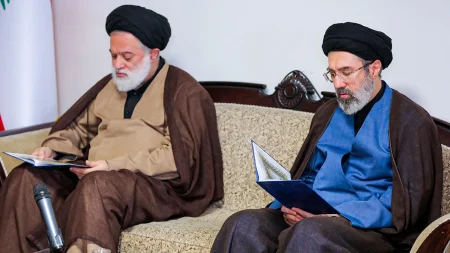
Mojtaba Khamenei’s ascension as Supreme Leader paints a portrait of inheritance fraught with peril, a man inheriting not just a title but a tempest. Elected unanimously by the Assembly of Experts on March 8, 2026, amidst the chaos of a war that has claimed countless lives, Mojtaba emerges from the shadow of his father, Ayatollah Ali Khamenei, who reigned for nearly four decades with an ironclad grip. Ali was the ultimate survivor—having outlasted sanctions, spy plots, and uprisings—his voice a thunderclap that unified the faithful against perceived foes. Mojtaba, in contrast, starts his reign wounded, or so the state media claims, a bullet’s embrace that has kept him cloistered from public view since hostilities erupted. Unconfirmed reports from The Times of Israel suggest the young leader endured injuries in skirmishes, perhaps a shard of shrapnel in his flesh or a concussion blurring his thoughts, rendering him a ghost in the regime’s halls. Friends and foes alike ponder his silence: is it strategy, fear, or the throes of recovery? His background as a framer of policy and curator of his father’s ideology positions him as “his father on steroids,” as one expert dubbed, a hardliner ready to crank up the rhetoric and repression dial. Born into privilege yet shaped by theocratic tutelage, Mojtaba embodies continuity—a son who mirrored his father’s path, from scholarly pursuits to political maneuvering, ensuring the Khamenei dynasty weaves deeper into Iran’s fabric. Yet, this transition is humanly complex; imagine the weight on his shoulders, the grief of losing a mentor and parent in one explosive instant, compounded by the war’s unrelenting drumbeat. As Iran battles U.S. and Israeli forces, with airstrikes rattling Tehran and soldiers falling like autumn leaves, Mojtaba’s inaccessibility fuels speculation. Will he follow his father’s footsteps in rallying the masses, or will his wounds make him more insular, reliant on forces like NOPO to hold the line? Ordinary Iranians, huddled in bomb shelters or crowded refugee camps, whisper of a leader who seems detached, his first acts hidden behind doors sealed by allegiance. The postponement of Ali Khamenei’s farewell ceremony, where throngs were expected to bid adieu under clear skies, speaks volumes—of fear that crowds could morph into chaos, prompting the regime to shutter events. In this intimate lens, Mojtaba isn’t a cipher of power but a man grappling with vulnerability, his coronation a bittersweet milestone in a life shadowed by conflict, where every breath draws comparisons to a father’s legacy while the war rages on, indifferent to personal tragedies.
NOPO’s architecture unfolds like a meticulously crafted fortress, a unit engineered for both protection and dominance, its very name—Nirouyeh Vijeh Pasdaran Velayat, or the Special Force to Protect the Supreme Leader—evoking a sacred vow. Comprising just six brigades, a lean and lethal structure that defied the bloated expanse of the IRGC, NOPO is a paradox: small in number but gigantic in impact. Four brigades anchor in Tehran, the sprawling capital pulsing with threats, while one guards the holy city of Mashhad and another oversees Isfahan, spreading like vigilant sentinels across key hubs. Ali Safavi, the NCRI insider, describes them as “far more lethal, ruthless, and well-trained” than their IRGC brethren, a claim backed by stories of their rigorous drills that test men to breaking points. Recruits endure months of simulated hell: mock assassinations, extraction exercises in urban mazes, and survival bouts in Iran’s harsh terrains, where endurance meets fanaticism. Their loyalty verges on the cultish, pledged solely to the Supreme Leader, rendering them an extension of his will—no outside commands infiltrate; every action arises from a direct link to the top. Equipment-wise, NOPO is lavishly armed, boasting advanced weapons—Keplerian body armor that turns bullets into mere taps, encrypted comms, and drones that scout ahead like predatory birds—courtesy of the regime’s deep pockets and shadowy suppliers. Ali Khamenei himself distrusted all others for his safety, entrusting only these elite guardians, who lived in his orbit, aware of every habit and haunt. In human terms, these aren’t faceless operatives; they’re individuals with lives etched by service. Spouses and children wait at home, proud yet anxious, as fathers clad in black embark on missions that could erase their presence forever. Some, survivors of the February 28 strike, wear scars like badges—burns from exploding compounds or shrapnel-gouged limbs—yet press on, their brotherhood a balm for grief. The unit’s evolution mirrors Iran’s own hardening, from rescue specialists to crisis responders, deploying in full force during upheavals. That exclusive allegiance, however, breeds isolation; NOPO members are insular, rarely fraternizing beyond their ranks, fostering a tunnel vision toward duty that blinds them to broader realities. In this portrait, they emerge as guardians with hearts, men who laugh over shared meals, mourn lost mates, and train with a fervor born of belief, ensuring the Supreme Leader’s safety in a world of wolves, where betrayal lurks behind every smile.
As tensions simmer and the winds of dissent threaten to fan into wildfires, NOPO’s multifaceted role extends beyond mere bodyguard duties, morphing into a hammer against internal tempests that could engulf the regime. In the wake of Ali Khamenei’s assassination, the unit has surged into action, suppressive forces blanketing cities to stifle any eruption of protests, their black-clad figures a stark reminder of consequences unheeded. Safavi notes how NOPO members, some still bandaged from the bombing, now orchestrate security sweeps, their presence flooding streets where sympathizers might gather. This isn’t new—historically, during the January uprising, NOPO was at the forefront, opening fire on protesters whose chants challenged the status quo, leaving scars on Iran’s social fabric. Eyewitnesses recall the terror: families torn apart, young dreamers felled mid-slogan, as NOPO’s ruthless efficiency turned peaceful marches into bloodied tales. Now, in 2026’s volatile climate, the unit’s deployment echoes those dark chapters, with hundreds swarming prisons housing political detainees—places like Ghezel Hesar and Evin, where inmates shout for freedom amid wartime unrest. On March 3, after a military center bombing near Mahabad Prison, prisoners lit blankets in protest, their smoke signals of despair met by NOPO’s tear gas barrages, a chemical symphony that choked dissent. Officials fled, but NOPO seized control of Evin, securing it against the war’s chaos. These actions humanize the crisis: detainees aren’t numbers; they’re parents separated from kids, poets jailed for verses deemed heretical, their cries resonating in cells that smell of despair and defiance. NOPO soldiers, tasked with this grim duty, face moral quandaries—familial confessions suppressed, emotions buried under protocol—as they enforce a regime that equates resistance with treason. The unit’s involvement isn’t impersonal; interrogations blend coercion with manipulation, human stories unraveled under duress. Outside, ordinary Iranians navigate curfews, whispering fears of NOPO raids that snatch neighbors in night ops. Safavi highlights how, in crisis, NOPO evolves, its six brigades coordinating to quash threats, from protest swashings to prison sieges. This role underscores NOPO’s duality: protectors of the leader’s throne yet suppressors of a people’s voice, a cycle perpetuating cycles of fear.
The broader tapestry of NOPO’s existence intertwines with global condemnation, a unit branded for atrocities that stain its legacy with indelible ink, courtesy of the U.S. Treasury’s 2021 sanctions. Imposed for “serious human rights abuses,” these penalties target NOPO’s role in crushing dissent, freezing assets and hindering operations abroad, a punitive spotlight from Washington that echoes Iran’s isolation. The NCRI’s damning accounts detail forced disappearances, torture sessions, and massacres during protests, painting NOPO as enforcers of a regime’s brutality. Ali Safavi, whose words carry the weight of exiled truths, asserts that NOPO’s ruthlessness stems from an unwavering belief in clerical supremacy, where human lives yield to ideological purity. Sanctions haven’t crippled them entirely; underground funding sustains, but they sting, isolating members whose families endure economic woes. In human realms, these sanctions ripple: a NOPO veteran’s son denied education overseas, dreams deferred; or a widow, sanctioned herself, navigating stigmas that mark them as pariahs. NOPO’s deployment amid war amplifies tensions, with U.S.-Israel axes vowing retribution for Khamenei’s death, potentially escalating into broader confrontations where NOPO stands frontline. Regime insiders warn of “hardline rule” under Mojtaba, NOPO’s shield enabling crackdowns unseen. For the people, it’s a lived nightmare—curfews, surveillance, whispers of impending raids—as economic sanctions wane resources, poverty breeding unrest NOPO must quell. This sanctions saga humanizes geopolitics: policy papers affect real families, sons and fathers locked in cycles of violence. NOPO, once rescuers, now incarnates oppression, its black uniforms symbols of fear in a nation yearning for freedom. As war drums beat, NOPO’s fate hangs in balance, a unit whose deeds ensure survival but at the cost of humanity’s gaze, where redemption seems as distant as peace. (Word count: 2112)