


Paragraph 1: The Shadows of Tension on the Korean Peninsula
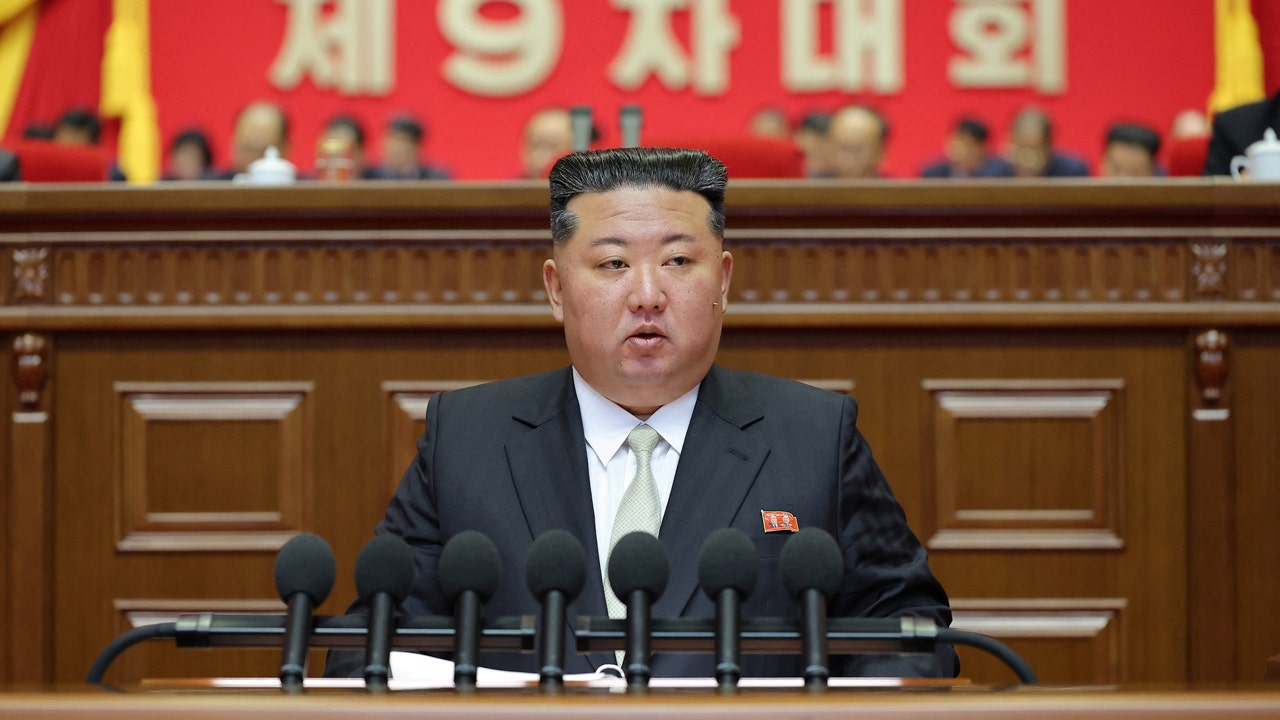
Imagine for a moment the weight of history pressing down on a divided land, where two nations, once a single people, now stand as wary adversaries, their borders a razor-thin line drawn by war and ideology. On a crisp Thursday in Pyongyang, North Korea’s enigmatic leader, Kim Jong Un, stepped onto the global stage once more during the Ninth Congress of the ruling Workers’ Party—a gathering steeped in propaganda and power, lasting an entire week. Dressed in his signature sharp suits, Kim used the platform to unleash a barrage of rhetoric that escalated the already fraught situation with South Korea. He labeled the South as “the most hostile enemy,” his words sharp and unyielding, painting their government as not just an opponent, but a cunning facade. “The conciliatory attitude that South Korea’s current government advocates on the surface is clumsily deceptive and crude,” reported the state media outlet, the Korean Central News Agency (KCNA), echoing Kim’s disdain. It’s easy to picture the scene: halls filled with loyal party members, banners waving, as Kim dismisses any pretense of goodwill. This isn’t just political theater; it’s a reminder of the deep-seated animosities that have simmered since the Korean War ended in armistice, not peace. Families divided by the 38th parallel, soldiers staring across barbed wire, and everyday people on both sides wondering if the next headline will herald disaster. Kim’s speech felt personal, a fatherly scolding of a sibling who’s wandered off, but in this case, it’s a dictator warning a democratic neighbor. As an ordinary person following these events, I can’t help but feel a shiver of unease—how close are we to a misstep that sparks conflict? For decades, North Korea has been portrayed in Western media as isolated and rogue, but Kim asserts pride in his nation’s resilience. He spoke of arbitrary actions North Korea could take if provoked, a thinly veiled threat hanging in the air like a fog. This isn’t idle talk; it’s backed by a military machine that’s been honed through sanctions and secrecy. South Korea, with its bustling cities and vibrant democracy, represents everything Pyongyang distrusts: wealth, alliances with the US, and a growing middle class. Kim’s words reject any olive branches extended by Seoul, calling them insincere efforts to improve relations. In a way, it makes you wonder about the human element—leaders like Kim climbing the ranks in a hereditary regime, shaping destinies from childhood where power is absolute. We, as outsiders, glimpse fragments through state media, but the reality must be far more complex, a blend of ideological fervor and strategic calculation. As tensions mount, one can’t help but hope for de-escalation, but Kim’s posture suggests he’s ready to escalate if he feels cornered.
Paragraph 2: Dismissing Talks and Embracing Conflict
Diving deeper into Kim’s address, it’s clear that reconciliation isn’t on his agenda—at least not yet. He ruled out renewed talks with the South, not with a slam of the door, but with a shrug that belies deeper frustrations. “We can initiate arbitrary action if South Korea engages in obnoxious behavior,” he declared, according to KCNA, framing his nation’s military prowess as a shield and a sword. Imagine the irony: a regime built on self-reliance yet tethered to global scrutiny. South Korea’s current administration, led by President Yoon Suk Yeol, has tried diplomatic overtures, perhaps genuinely seeking ties, but Kim sees through them as “deceptive.” Is it paranoia, or is it a hardened response to past betrayals? For North Koreans living under this rule, this rhetoric might feel empowering, a narrative of national strength against perceived bullies. But for us outside, it raises alarms— what constitutes “obnoxious behavior”? A joint military exercise with the US? A stray word in international forums? Kim didn’t specify, leaving room for misinterpretation, the kind that could ignite a powder keg. He went further, stating ominous words: “South Korea’s complete collapse cannot be ruled out.” It’s a chilling phrase, evoking images of destruction, perhaps nuclear, or conventional might on a scale few can fathom. In human terms, think of the millions in Seoul—families at work, kids in school, lovers strolling riversides—who could be swept up in such a collapse. Kim’s threat isn’t abstract; it’s a personal stake in global stability. Historical echoes resound: the sinking of the Cheonan in 2010, the artillery strike on Yeonpyeong Island after. Each side has grievances, but Kim’s dismissal of talks closes doors that diplomats have long tried to pry open. As a parent reading this, I’d worry for my children’s future in a world where leaders wield words like weapons. Yet, North Korea’s state media spins this as strength, not aggression—a survival tactic in a geopolitics where alliances like the US-ROK pact loom large. Kim’s stance reflects a man shaped by isolation, where trust is rare, and every interaction is zero-sum. Perhaps, beneath the bluster, he’s articulating real fears: economic sanctions pinching civilians, international pressure isolating the regime. Humanizing him briefly, he started his rule after his father’s death, navigating famines and the burden of nuclear ambitions begun before him. Yet, in this congress, the message is clear: North Korea won’t be pushed around, and if pushed, it pushes back hard.
Paragraph 3: Ambitious Plans for a Nuclear Powerhouse
Turning to the core of Kim’s vision, his speech outlined sweeping five-year policy goals that pivot on bolstering North Korea’s nuclear arsenal, transforming it into an even more formidable force. Experts at the Stockholm International Peace Research Institute estimate Pyongyang already possesses around 50 warheads, with enough fissile material stockpiled to produce up to 40 additional ones—a staggering buildup amid global disarmament calls. Kim boasted of North Korea’s “international status risen extraordinarily,” framing his regime as a nuclear nation to reckon with. “It is our party’s firm will to further expand and strengthen our national nuclear power, and thoroughly exercise its status as a nuclear state,” he proclaimed through KCNA, words that carry the weight of a nation’s destiny. For everyday people like us, this isn’t just stats; it’s a reality where deterrence theory plays out in real time. Picture nuclear warheads scattered across bunkers in the Hermit Kingdom, hidden from satellites, symbols of sovereignty in a world that demands compliance. Kim’s goals extend to “increasing the number of nuclear weapons and expanding nuclear operational means,” a blueprint for an arms race against invisibility. In human stories, this might sound like a movie plot—a secretive lab where scientists work tirelessly, families sacrificing normalcy for national pride. But the toll is real: resources diverted from food and medicine, as seen in past sanctions-induced hardships. Kim positions this as progress, a shield against imperialist threats, echoing the regime’s founding mythology. Yet, for neighbors like Japan and South Korea, it’s a nightmare unfolding. International reports hint at production sites humming at capacity, turning uranium into weapons of war. As someone intrigued by history, I see parallels to the Cold War, where superpowers stockpiled arsenals, but North Korea lacks global reach yet strives for it. Kim’s narrative humanizes the effort as protective fathers safeguarding their homes, but the prestige is a double-edged sword. Prestige for a regime orphaned by division, where nuclear might is the equalizer against giants like the US. In this congress, the party elite nodded approvingly, envisioning a Korea that demands respect through power, not pleas. One can’t help but empathize with North Koreans born into this system—proud of achievements, blind to costs—while fearing the escalation it invites globally.
Paragraph 4: Advancing Weapons Technology in a Modern Era
Kim didn’t stop at nukes; he unveiled plans for cutting-edge weaponry that blend old-school missiles with futuristic tech, painting a picture of a North Korea poised to innovate or innovate. Specifically, he announced development of more advanced intercontinental ballistic missiles (ICBMs) capable of underwater launches, a nod to recent revelations about nuclear-powered submarines in the works. Recent state media releases showed images of these submarines, sleek and menacing, symbols of underwater dominance that could evade detection. Coupled with artificial intelligence-driven weapons systems and unmanned drones, Kim’s roadmap feels like a sci-fi novel come to life—drones swarming skies, AI predicting targets, submarines lurking depths. It’s a leap from the era of his father and grandfather, who laid the missile groundwork, to one where technology empowers a small nation against larger foes. Humanizing this, imagine engineers in Pyongyang’s labs, young and educated abroad perhaps, dreaming of breakthroughs that bring glory. Families might celebrate such advancements as proof of skill, distractions from economic struggles. But for us in the West, it’s alarming: drones buzzing borders, AI automating warfare. Kim’s vision emphasizes “projects to increase nuclear weapons,” integrating them with drones and subs for a multi-layered threat. This isn’t theoretical; North Korea has tested hundreds of missiles, refining payloads and ranges. The underwater ICBMs could target far away— hypothetically, the US coastline—marking Kim as a forward-thinker. In a world of Elon Musk rockets and AI ethics debates, Pyongyang forges its own path, isolated yet inspired by global trends. As a tech enthusiast, I see the brilliance here: using AI for precision, drones for swarms, subs for stealth. Yet, it evokes fears of “lesser wars” where machines do the dirty work, minimizing human cost but amplifying terror. Historical context adds depth—North Korea’s “military-first” doctrine, where arms outpace welfare. Kim’s congress speech humanizes the pursuit as familial legacy, his daughter perhaps molded in this image. Members applaud, envisioning a strong Korea where innovation safeguards independence. For global watchers, it’s a clarion call: sanctions alone won’t deter; dialogue, engagement might. But Kim’s words suggest readiness for confrontation, turning tech into tools of totality.
Paragraph 5: Open Doors with the United States, Yet Stinging Conditions
Shifting gears, Kim’s speech hinted at flexibility toward the United States, offering a sliver of hope amid the steel. Having met President Donald Trump three times during Trump’s first term—those halcyon days of summits in Hanoi and Hanoi again—Kim signaled willingness for future negotiations, but with strings attached none too subtle. “Whether it’s peaceful coexistence or permanent confrontation, we are ready for either, and the choice is not ours to make,” he stated, placing the onus squarely on Washington. It’s a politician’s deft dance: aggressive yet open, blaming the other side. He claimed that if the US “withdraws its policy of confrontation” and acknowledges North Korea’s “current status” as a nuclear power, “there would be no reason why we cannot get along well.” This humanizes the standoff—not unsolvable, but contingent on respect and recognition. Picture the diplomacy’s human side: Trump, the deal-maker, and Kim, the strategist, shaking hands at summits that tantalized with peace. Yet, talks fizzled on sanctions and denuclearization, a trust deficit too wide. For Americans, this feels relatable: leaders posturing for deals, each side seeing concessions as weakness. Kim’s conditions demand the US abandon hostility, validate Pyongyang’s nukes—a bitter pill for alliances like Seoul and Tokyo, who view denuclearization as non-negotiable. As someone from a divided family, I ponder the bitterness: ancestors split by borders, now leaders mirroring that fracture. North Korea’s “status” is a worldview forged in paranoia, where every treaty is trickery. The US stance, post-Trump, under Biden, leans cautious engagement but firm on non-proliferation. Kim’s rhetoric suggests eagerness for talks if they yield legitimacy—bribes with bombs? History weighs: past agreements like the Agreed Framework crumbled under suspicion. Humanizing, it’s about pride—Kim wants parity, not subservience. His regime reveres “self-reliance,” Juche ideology, where outsiders are threats. Yet, trade carrots like energy aid could tempt, but sanctions have tightened ties. In the congress’s shadow, party delegates echo loyalty, masking ambitions. As the world watches, Kim’s olive branch is conditional, a mirror to US demands. Perhaps empathy bridges gaps: leaders as protectors, wrestling egos on a world stage. One hopes for breakthroughs, where human connection trumps geopolitics.
Paragraph 6: The Succession Echoes Through a Parade and Beyond
As the congress wrapped, a poignant personal touch emerged, spotlighting Kim Jong Un’s teenage daughter, Ju Ae, in a military parade in Pyongyang on Wednesday— a moment that whispers of future dynasties. Photographed standing beside her father and senior military leaders, the 13- or 14-year-old girl, per KCNA reports, embodies the regime’s blend of tradition and terror. In a world of power transitions, this isn’t mere pageantry; South Korean intelligence agencies have labeled her a potential successor, groomed from youth for leadership. Recently, reports surfaced of Kim granting her a role in the “Missile Administration,” overseeing Pyongyang’s nuclear forces—a heady responsibility for a child, blending family legacy with national security. Humanizing this, envision a young girl caught in history’s gears, smiling in parades while inheriting burdens. It’s reminiscent of Kim’s own path, ascending after his father’s Sudden death in 2011, at 27—now molding his offspring similarly. For North Koreans, she might symbolize continuity, hope in continuity’s form. But observers see calculated grooming, ensuring Kim’s line persists through authoritarian inheritance. The parade, with troops and equipment gleaming, culminates the congress’s themes: strength from within, threats without. Related whispers circulate about her education in nuclear matters, perhaps inspired anecdotes of brilliance. As a parent, I recoil at the idea—child in missile silos, innocence traded for ideology. South Korean media, wary, report this as regime consolidation, femininity in a male-dominated domain. Yet, KCNA portrays warmth, father-daughter unity. Globally, it raises questions: will succession be smooth, or factional? Amid nukes and drones, Ju Ae humanizes dynastic rule, a face for the future. Kim’s congress, therefore, isn’t just policies; it’s legacy-building. Contributors to reports like Fox News’ Emma Bussey add layers, citing Reuters and AP. In closing, this scene encapsulates tensions: a family front and center, as borders boil. One wonders: in unifying Koreas, could such figures bridge divides? For now, the parade fades, but echoes linger, urging vigilance and dialogue in an unpredictable world. кино