


Tehran today finds itself blanketed in an atmosphere of intense psychological suspension and heavy security as the city prepares for the July 9 burial of Supreme Leader Ayatollah Ali Khamenei. This looming event comes a staggering four months after his death on February 28, a lengthy interval that has profoundly disrupted traditional Islamic burial practices and ignited intense speculation among the ordinary Iranian public. Under standard Islamic jurisprudence, a body must be returned to the earth as swiftly as possible, ideally within twenty-four hours, to honor the natural journey of the soul and preserve the physical dignity of the deceased. The practice of chemical embalming is strictly forbidden under mainstream Islamic law, leaving ordinary citizens to whisper in bewilderment about how the leader’s physical remains have been preserved during the grueling summer heat. To bypass this theological restriction, the clerical establishment has operated in the shadow of exceptional religious exemptions, relying on high-tech, sub-zero refrigeration units—a cold-storage technique common to forensic morgues but highly unusual for a national leader of his stature. This unprecedented delay highlights the stark tension between sacred religious obligations and the raw, transactional needs of a state trying to manage a delicate transition of power. For the average Iranian, the cold preservation of their leader’s body is a striking symbol of a regime more concerned with political theater than the spiritual laws it claims to uphold. This prolonged state of limbo has transformed what should have been a deeply religious farewell into a highly engineered, secular waiting game, testing the patience of a population already exhausted by decades of ideological rigidity and state-mandated rituals.
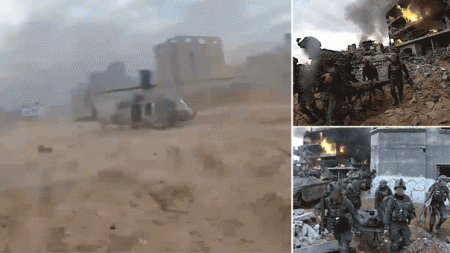
The primary reason for this extraordinary delay lies in the violent and destructive reality of his death during “Operation Epic Fury,” a targeted American bunker-penetration strike on his secure Tehran compound. This was not a peaceful passing in a quiet hospital bed, but a catastrophic military event that physically shattered the symbolic heart of the Islamic Republic’s thirty-six-year autocracy. The devastating force of the bunker-buster munitions used in the raid meant that there was virtually no intact body to recover or present to public view. Recovery teams spent weeks sifting through the pulverized concrete and steel, relying heavily on DNA matching to identify the remains of Khamenei and the inner circle of advisers who perished alongside him. This physical reality explains why the regime has repeatedly postponed the funeral, shifted the planned burial sites, and ultimately decided to keep the casket closed during the upcoming public viewings in Tehran and Qom. To present an empty or heavily compromised casket to millions of devoted followers would risk exposing the profound vulnerability of the regime to its enemies. By hiding the physical destruction of their leader behind a closed, heavily guarded casket, the ruling elite is attempting to shield the public from the horrifying effectiveness of modern military technology. It is a desperate effort to project an image of intact strength and continuity, even when the literal physical body of the leader has been reduced to fragments preserved in a forensic cooler.
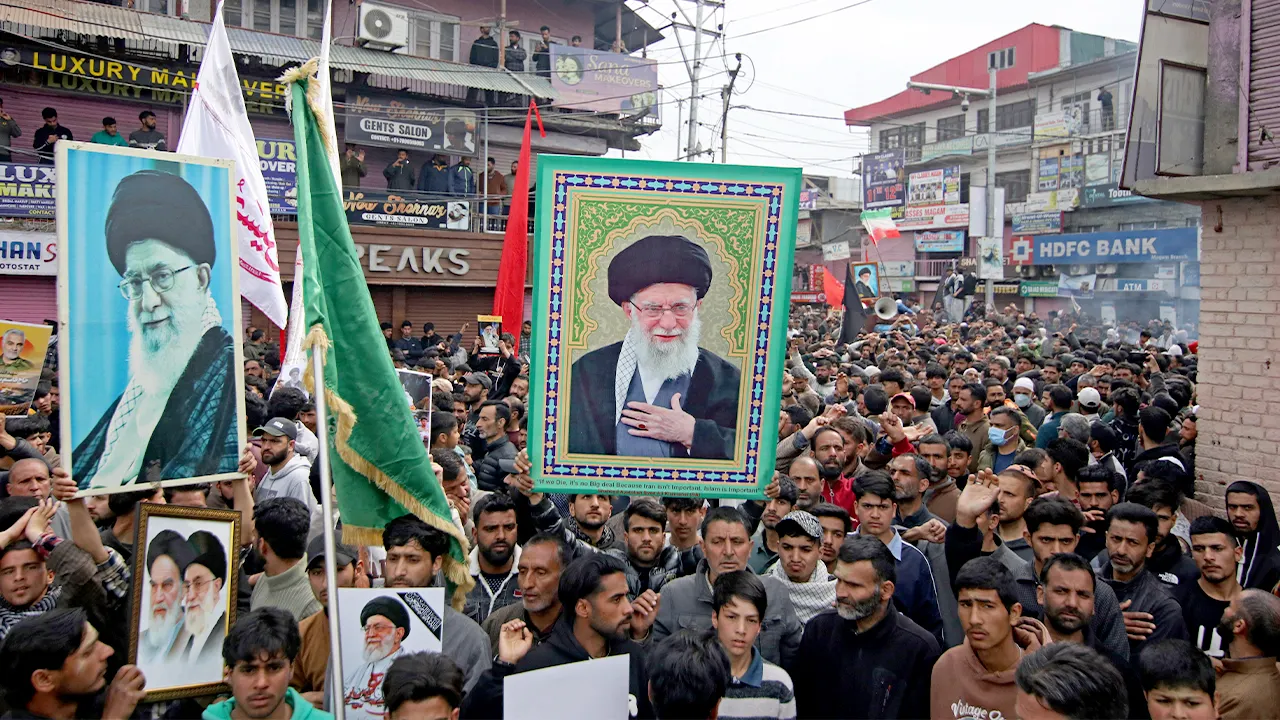
Attempting to convert this crushing military setback into a powerful display of geopolitical defiance, the state has launched a massive, coordinated propaganda campaign centered around the aggressive, retaliatory slogan, “We Must Avenge.” Under the direction of Yaqoub Soleimani, the deputy for cultural and educational affairs at the Martyrs Foundation, the funeral is being framed as a “national epic” designed to showcase the unbroken spirit of the Islamic Republic. The elaborate schedule begins with state-controlled public viewings over the weekend, leading into a massive, highly structured procession on July 6 in Tehran, where local officials claim they expect an astronomical turnout of fifteen to twenty million people, followed by a secondary march through the holy city of Qom. Analysts point out that the astronomical figures being distributed by state media—claiming that up to thirty-five million mourners will take to the streets and that over fourteen thousand international journalists have been credentialed—are not actual logistical projections, but rather carefully calculated psychological messages. These numbers are intended to signal to both domestic dissenters and foreign adversaries that the regime still commands absolute loyalty and can mobilize vast swathes of the population at will. For the global community, however, this highly manufactured spectacle is transparent; it represents an expensive, last-ditch effort to perform legitimacy on a grand scale, using the bodies of citizens as mere props in a state-directed drama of manufactured grief and geopolitical theater.
This monumental logistical effort is being orchestrated and enforced by the very security forces that have terrorized the Iranian civilian population for years: the Islamic Revolutionary Guard Corps (IRGC) and its volunteer militia, the Basij. The Basij has effectively hijacked the daily lives of Tehran’s citizens, converting major national highways into parking lots, declaring five consecutive public holidays, and dividing the capital into rigid administrative sectors to process busloads of state employees and provincial loyalists. This sudden display of state-organized care and heavy infrastructure coordination stands in agonizing contrast to the regime’s actions during the popular uprisings that swept the country in January. The very security apparatus currently handing out free food and coordinating crowd safety is the same force that shot down young protesters in the streets and subjected thousands of citizens to arbitrary arrest and torture. Furthermore, while the state spends millions of dollars on a lavish farewell for its dictator, it has systematically denied the families of the January protest victims the right to hold simple, private funerals, often arresting relatives who dared to gather at their loved ones’ graves. Holding these two stark realities side by side reveals the deep, heartbreaking hypocrisy of the modern Iranian state, where public grief is weaponized for political survival while private, genuine mourning is treated as a threat to national security.
Beyond the borders of Iran, the upcoming funeral serves as a glaring and embarrassing indicator of the regime’s severe diplomatic isolation and the shrinking footprint of its regional influence. Despite personal invitations sent by Iranian President Masoud Pezeshkian, including a direct appeal to Indian Prime Minister Narendra Modi, major world powers have unilaterally snubbed the event. India has opted to send a low-level, administrative delegation rather than its head of state, signaling a desire to protect its trade relationships without validating a politically vulnerable regime. The international guest list remains largely comprised of minor regional clients and lower-level diplomats, with Georgian President Mikheil Kavelashvili being one of the few formal heads of state confirmed to attend. For foreign policy experts in Washington and European capitals, this empty front row is a crucial economic and political readout, demonstrating that the recent war has left Tehran’s once-feared “Axis of Resistance” highly localized, fractured, and isolated. The lack of top-tier representation from powerful allies like Russia or China highlights the limits of Tehran’s geopolitical reach, showing that when the pageantry is stripped away, the Islamic Republic stands largely alone, viewed by its global partners as a volatile liability rather than a stable strategic ally.
As the July 9 burial approaches, ordinary Iranians are left to navigate a city blanketed in black banners and heavy military patrols, feeling a quiet but profound anxiety about what lies ahead. The passing of Khamenei marks the end of a thirty-six-year era, leaving behind a nation hollowed out by economic sanctions, rampant inflation, internal divisions, and the looming shadow of succession battles involving figures like Mojtaba Khamenei, who has spent years preparing to inherit his father’s mantle. This historic transition is a dangerous moment for the ruling elite, who must prove to a skeptical population and a hostile world that their authoritarian system can survive the loss of its central pillar. The grand speeches and the military flyovers offer no solutions to the daily struggles of the Iranian people, who must continue to live in a highly oppressive society under the constant threat of international conflict and domestic collapse. When the artificial refrigeration is finally turned off and the physical remains of the Supreme Leader are lowered into the earth, the true test of the regime’s endurance will begin. It is a test that will not be decided by the staged choreographies of the state funeral, but by the quiet, resilient determination of the Iranian people, who continue to dream of a future free from the suffocating grip of a dying autocracy.