


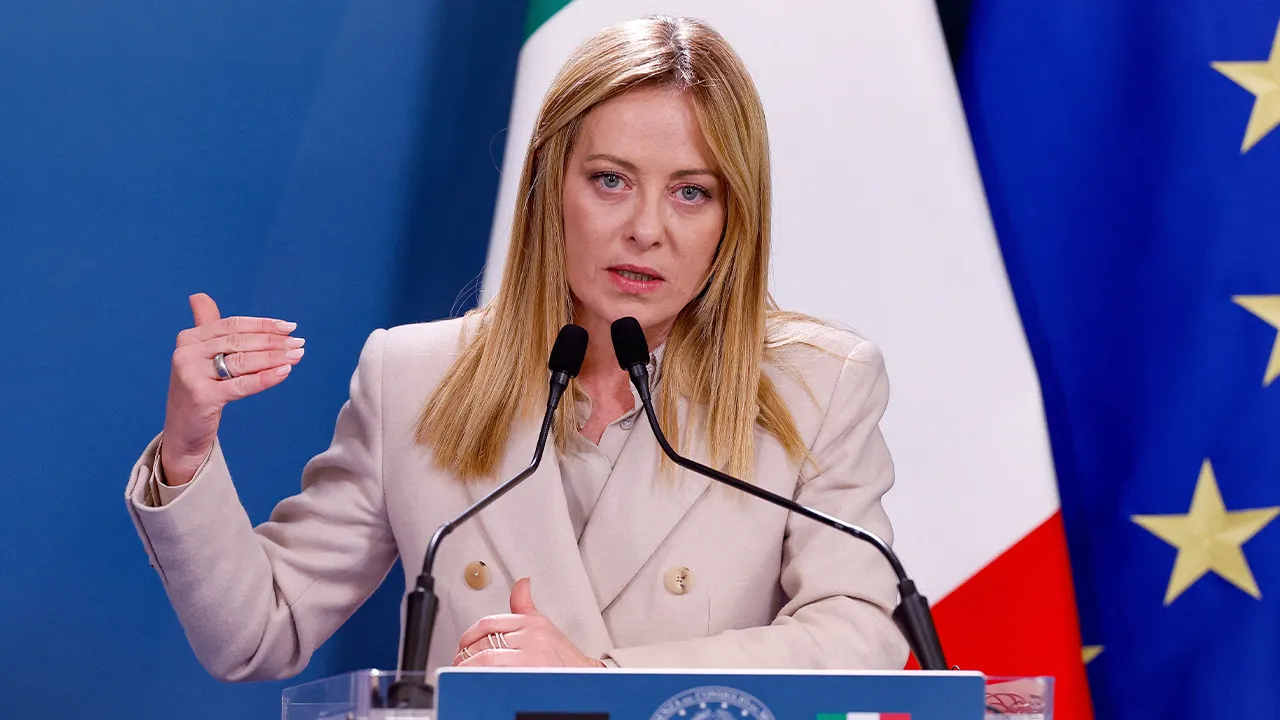
Italy’s Meloni Confronts Trump Over NATO Contribution Comments
In a moment of diplomatic tension, Italian Prime Minister Giorgia Meloni has publicly pushed back against former President Donald Trump’s characterization of NATO allies’ roles in Afghanistan. Following Trump’s suggestion at the World Economic Forum that NATO allies “stayed a little back, a little off the front lines” during the Afghanistan conflict, Meloni took to social media to defend her nation’s contributions and sacrifices. Her response underscores the delicate balance of maintaining transatlantic alliances while defending national honor, highlighting how casual remarks from major political figures can quickly escalate into international incidents that test long-standing relationships.
Meloni’s rebuttal centered on Italy’s substantial commitment following the September 11 attacks, when NATO activated Article 5—its collective defense clause—for the first and only time in the alliance’s history. She emphasized that Italy “responded immediately alongside its allies,” deploying thousands of troops and taking responsibility for Regional Command West, one of the most strategically significant areas in the international mission. This swift and comprehensive response, she noted, demonstrated Italy’s unwavering solidarity with the United States during a pivotal moment in modern history. The prime minister’s pointed response reveals how deeply NATO allies value recognition of their contributions to collective security efforts, particularly in conflicts initiated primarily to support American interests following direct attacks on U.S. soil.
The human cost of Italy’s commitment to the Afghanistan mission formed a central part of Meloni’s critique. She noted that 53 Italian soldiers lost their lives and more than 700 were wounded during nearly two decades of involvement in combat operations, security missions, and training programs for Afghan forces. These statistics represent not just numbers but families shattered, communities in mourning, and a nation that continues to honor sacrifices made in service of alliance obligations. By highlighting these losses, Meloni personalized what might otherwise remain abstract foreign policy discussions, reminding both domestic and international audiences that military commitments involve real human consequences that deserve acknowledgment and respect from all alliance partners.
The diplomatic ripples from Trump’s comments extended beyond Italy, unsettling other key U.S. allies including the United Kingdom and Denmark. British Prime Minister Keir Starmer and Danish Prime Minister Mette Frederiksen joined in expressing concern over the characterization of their nations’ military contributions. Senator Thom Tillis added context to the international toll of the Afghanistan war, noting that 31 allied nations fought alongside U.S. forces with significant casualties: 159 troops from Canada, 90 from France, 62 from Germany, 44 from Poland, and 43 from Denmark. These responses collectively highlight how comments that might be intended for domestic political consumption can have significant international implications, particularly when they touch on sensitive issues of national sacrifice and military honor.
In what appeared to be an effort to mitigate the diplomatic fallout, Trump later posted a message on Truth Social specifically praising British forces: “The GREAT and very BRAVE soldiers of the United Kingdom will always be with the United States of America! In Afghanistan, 457 died, many were badly injured, and they were among the greatest of all warriors.” This partial walk-back demonstrates the complex dance of international relations, where strong statements often require subsequent clarification or softening to maintain critical alliances. However, the specific focus on British forces without acknowledging other NATO allies’ contributions suggests an incomplete understanding of the breadth of international support the United States received during the Afghanistan conflict.
Meloni’s concluding remarks frame the issue within the broader context of the transatlantic alliance: “Italy and the United States are bound by a solid friendship, founded on a shared community of values and historical collaboration, which is even more necessary in the face of the many current challenges. But friendship requires respect, a fundamental condition for continuing to ensure the solidarity at the heart of the Atlantic Alliance.” These words serve as both a diplomatic reminder and a warning that even the strongest alliances require mutual recognition and respect to endure. As global challenges continue to mount—from Russian aggression in Ukraine to instability in the Middle East and strategic competition with China—maintaining cohesion within NATO remains vital for Western security interests, making episodes like this more than mere diplomatic spats but potential indicators of alliance health in an increasingly unpredictable world.