

Iran’s Airspace Reopens Amid Ongoing Tensions and Human Rights Concerns
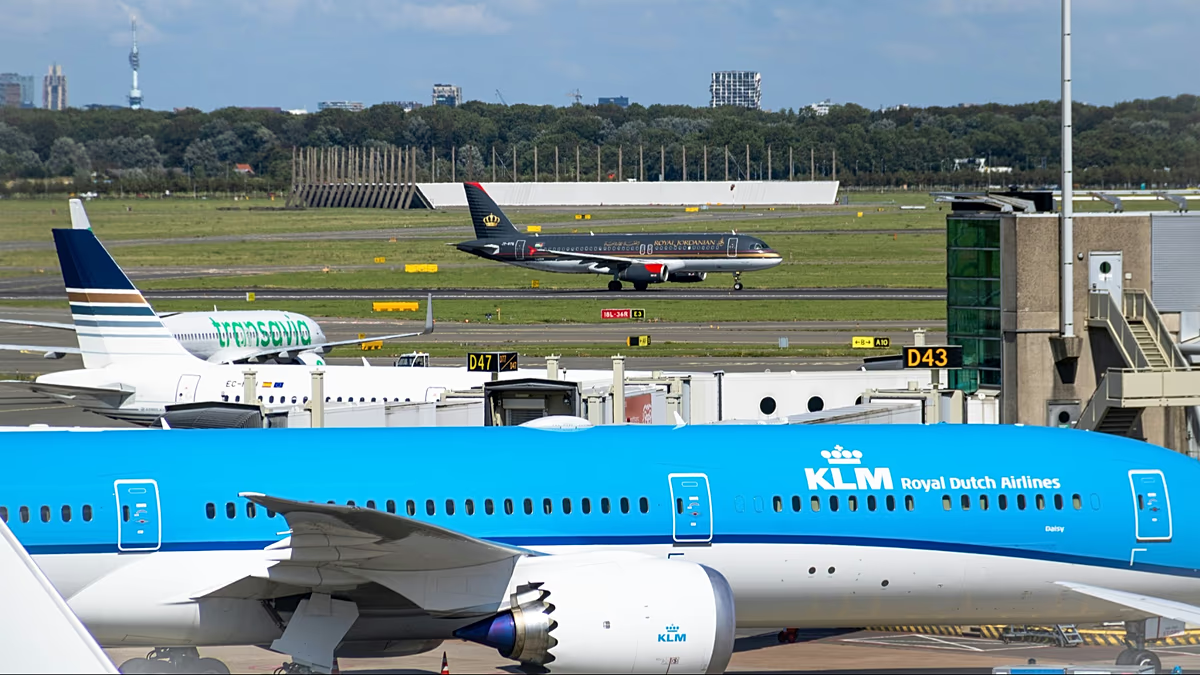
Iran reopened its airspace on Thursday following an unexpected overnight closure that lasted approximately five hours, causing significant disruption to flights across the region. Despite the reopening, most airlines continue to avoid Iranian airspace due to heightened security concerns and regional tensions. The aviation risk-monitoring organization Safe Airspace has issued its highest warning level—”One — Do Not Fly”—for Iran, citing the primary danger as potential misidentification by air defense systems during this period of elevated tension. This cautionary stance reflects the volatile situation unfolding both in Iran’s skies and on its streets, where widespread protests continue to challenge the regime’s authority and have resulted in a severe government crackdown.
The situation in Iran has captured the attention of U.S. political leaders, with President Donald Trump stating he had received information that the killing of protesters in Iran was “stopping.” However, this assessment was quickly contradicted by Senator Lindsey Graham, who asserted on social media platform X that all indications suggest the Iranian regime’s violent suppression of anti-government protesters is “still very much in full swing” with a death toll that continues to rise “by the hour.” This disagreement highlights the challenging nature of obtaining accurate information from Iran, where authorities have implemented a near-total internet shutdown, making it difficult to verify reports of ongoing violence and human rights abuses.
According to the U.S.-based Human Rights Activists News Agency (HRANA), which diligently tracks human rights violations in Iran, protests had continued for at least 18 consecutive days despite the internet blackout. HRANA’s comprehensive data painted a devastating picture of the situation: 617 protest gatherings across 187 cities, at least 18,470 arrests, and 2,615 confirmed deaths. The human toll of this crackdown is particularly heart-wrenching, with 2,435 of the deceased being protesters, including 13 children under the age of 18. These statistics represent not just numbers but individual lives cut short and families devastated in what appears to be one of the most severe government crackdowns in recent Iranian history.
President Trump has taken an increasingly confrontational stance toward the Iranian regime, canceling all meetings with Iranian officials and issuing stark warnings through his Truth Social platform. His message to protesters—”TAKE OVER YOUR INSTITUTIONS!!!”—represented a dramatic escalation in rhetoric, effectively encouraging revolution within the country. Trump’s declaration that “We are locked and loaded and ready to go” and his promise that “HELP IS ON ITS WAY” suggest potential U.S. military intervention, though the precise nature of any planned action remains unclear. His directive to “Save the names of the killers and abusers” with the warning that “They will pay a big price” indicates a potential future accountability process for those involved in human rights abuses.
The ongoing crisis in Iran represents a complex intersection of human rights concerns, geopolitical tensions, and international relations. The regime’s brutal suppression of protests has drawn widespread international condemnation, yet the government appears determined to maintain control through force and information restriction. The near-total internet shutdown serves a dual purpose: preventing protesters from organizing effectively and limiting the flow of information about government actions to the outside world. This information blackout makes it particularly challenging for international observers to fully assess the situation on the ground, though organizations like HRANA continue their vital work of documenting abuses despite these obstacles.
As the situation develops, the international community faces difficult questions about how to respond to the humanitarian crisis unfolding in Iran. The Trump administration’s aggressive rhetoric suggests potential direct intervention, which would mark a significant shift in U.S. policy toward Iran and could have far-reaching consequences for regional stability. Meanwhile, ordinary Iranians continue to face enormous risks in their pursuit of greater freedom and political change, with thousands paying the ultimate price for their participation in protests. The reopening of Iranian airspace may represent a small step toward normalcy, but the fundamental tensions and human rights concerns that have triggered this crisis remain unresolved, suggesting that Iran’s turbulent period of unrest may be far from over.