


Greta Thunberg Arrested in London During Pro-Palestinian Protest
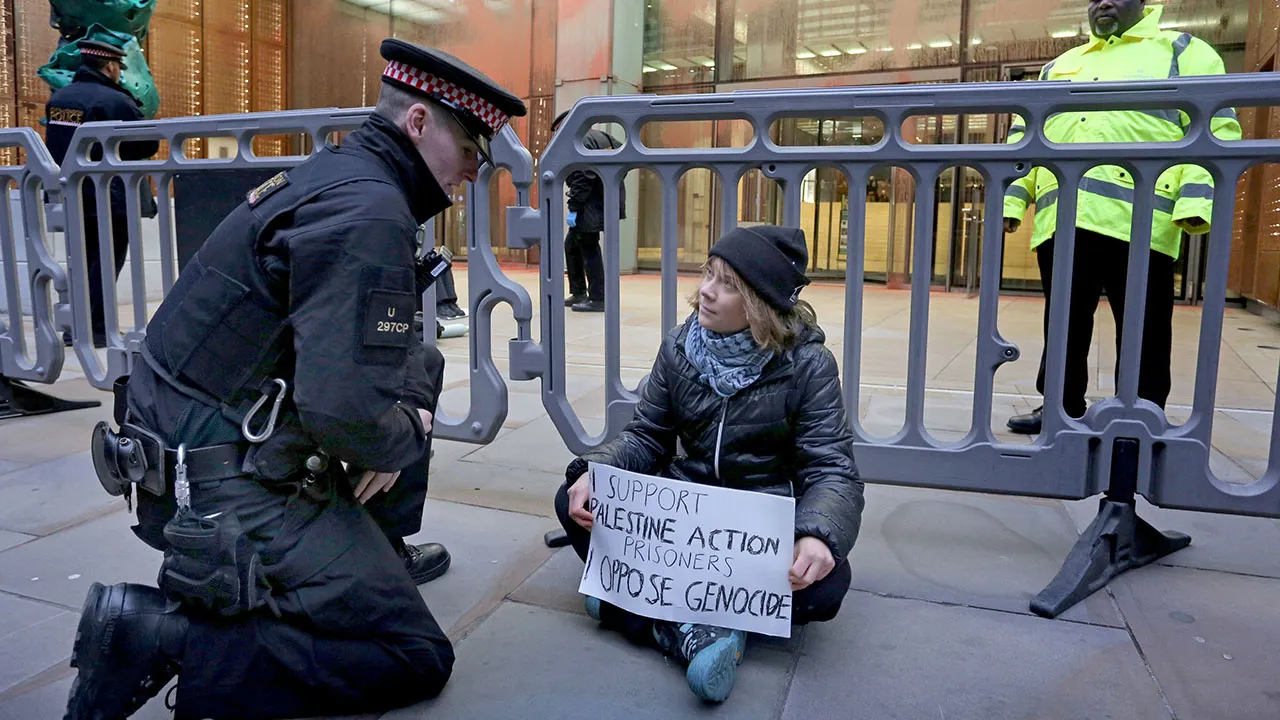
The well-known climate activist Greta Thunberg found herself in handcuffs once again, this time in London while supporting a cause that has increasingly captured her attention beyond environmental issues. The 22-year-old Swedish activist was arrested on Tuesday during a demonstration in support of pro-Palestinian activists currently on hunger strike in British prisons. Footage released by the protest group “Prisoners for Palestine” showed Thunberg holding a sign with a clear message: “I support Palestine Action prisoners. I oppose genocide,” referring to the ongoing Israel-Hamas conflict in Gaza. Though her detention was brief, with the group later confirming her release on bail, this incident marks another chapter in Thunberg’s evolution from purely climate-focused activism to broader human rights causes.
The protest that led to Thunberg’s arrest was part of a larger demonstration aimed at drawing attention to members of Palestine Action who are currently on hunger strike in British prisons. This organization has been officially banned in Britain as a terrorist group, adding significant legal complications to any public displays of support. Beyond Thunberg’s involvement, the day’s protests included two other activists who sprayed red paint in front of an insurance company’s London offices. According to Prisoners for Palestine, this particular insurer was targeted because of its business relationships with Elbit Systems, a defense firm with ties to Israel. The symbolic use of red paint—presumably representing blood—has become a common visual tactic in pro-Palestinian demonstrations worldwide.
The protest resulted in multiple arrests beyond Thunberg’s detention. Authorities took a man and woman into custody on suspicion of criminal damage related to the paint incident, while a third woman was arrested specifically for allegedly supporting a banned organization—a potentially serious charge under British counter-terrorism laws. The context for these demonstrations goes deeper than mere solidarity; eight members of Palestine Action are currently staging hunger strikes to protest their detention without bail as they await trial for charges stemming from earlier demonstrations. The situation has reportedly become dire for two of these hunger strikers who have refused food for 52 days and are reaching what Prisoners for Palestine described as a “critical stage, where death is a real possibility,” adding urgency to the protests.
Thunberg’s involvement in pro-Palestinian activism represents a broadening of her advocacy work beyond the climate crisis that first brought her international fame. Beginning as a solitary figure striking from school for climate action as a teenager, Thunberg has evolved into a global figure whose platform increasingly encompasses interconnected social justice issues. This arrest comes less than a year after she was acquitted by a London court in a separate case involving her refusal to comply with police orders during a climate protest that blocked the entrance to an oil and gas industry conference. That previous legal victory may have emboldened her to continue using direct action and civil disobedience as tactics across multiple causes, suggesting she sees connections between environmental justice and other human rights struggles.
The broader context of these protests reflects the increasingly polarized global response to the Israel-Hamas conflict that began with Hamas’s October 7th attack and the subsequent Israeli military campaign in Gaza. The term “genocide,” which appeared on Thunberg’s sign, represents language that has become deeply contentious, with pro-Palestinian activists frequently using it to characterize Israel’s actions while Israeli officials and supporters vehemently reject such characterization. By publicly aligning herself with this terminology and with an organization banned as terrorist in the UK, Thunberg has positioned herself firmly on one side of this divisive issue, potentially alienating supporters who may agree with her climate stance but disagree with her perspectives on the Middle East conflict or her methods of protest.
The incident also highlights the increasingly severe legal consequences faced by pro-Palestinian activists in various Western countries, where governments have taken stronger measures to restrict certain forms of protest related to the Gaza conflict. The fact that Palestine Action has been designated as a terrorist organization in Britain creates significant legal risks for anyone publicly supporting their cause. For activists like Thunberg, who has previously faced arrests and legal challenges primarily related to environmental protests, this represents a new frontier with potentially more serious consequences. As the hunger strikes continue and the condition of the imprisoned activists potentially deteriorates further, the situation may draw even more attention from international human rights organizations and other high-profile activists beyond Thunberg. This evolving situation reflects the complex intersection of free speech rights, anti-terrorism laws, and heated geopolitical conflicts that increasingly characterize activist movements in democratic societies.