


Georgian Protesters Draw Inspiration from Iranian Struggle for Democracy
In a remarkable display of transnational solidarity, protesters in the small European nation of Georgia are finding renewed hope and determination by watching Iran’s unfolding democratic movement. Despite the geographical distance between these nations, their citizens share a common struggle against authoritarian governance, creating an unexpected bond that transcends borders and cultures.
As Georgians continue their year-long protests following disputed parliamentary elections in 2024, they see reflections of their own democratic aspirations in the Iranian people’s courage. “When you walk through the demonstrations every day in Tbilisi, all people talk about is Iran,” explains Tinatin Khidasheli, Georgia’s former defense minister. “The heated debate shows how much it matters and how optimism is out on the streets due to developments despite controversies.” This connection runs deeper than political alignment—it represents a fundamental human solidarity. As Khidasheli notes, “Developments in Iran resonate in a very human way: if people can challenge a far more despotic and violent regime, it reinforces the belief that resistance in Georgia is not futile.” For many Georgians enduring freezing temperatures and facing potential violence from authorities, the Iranian example provides crucial emotional fuel to continue their fight.
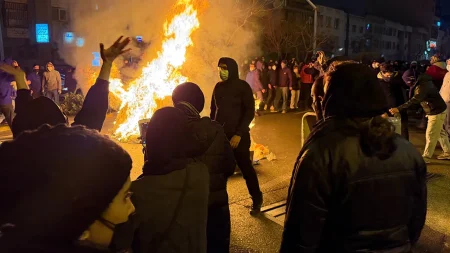
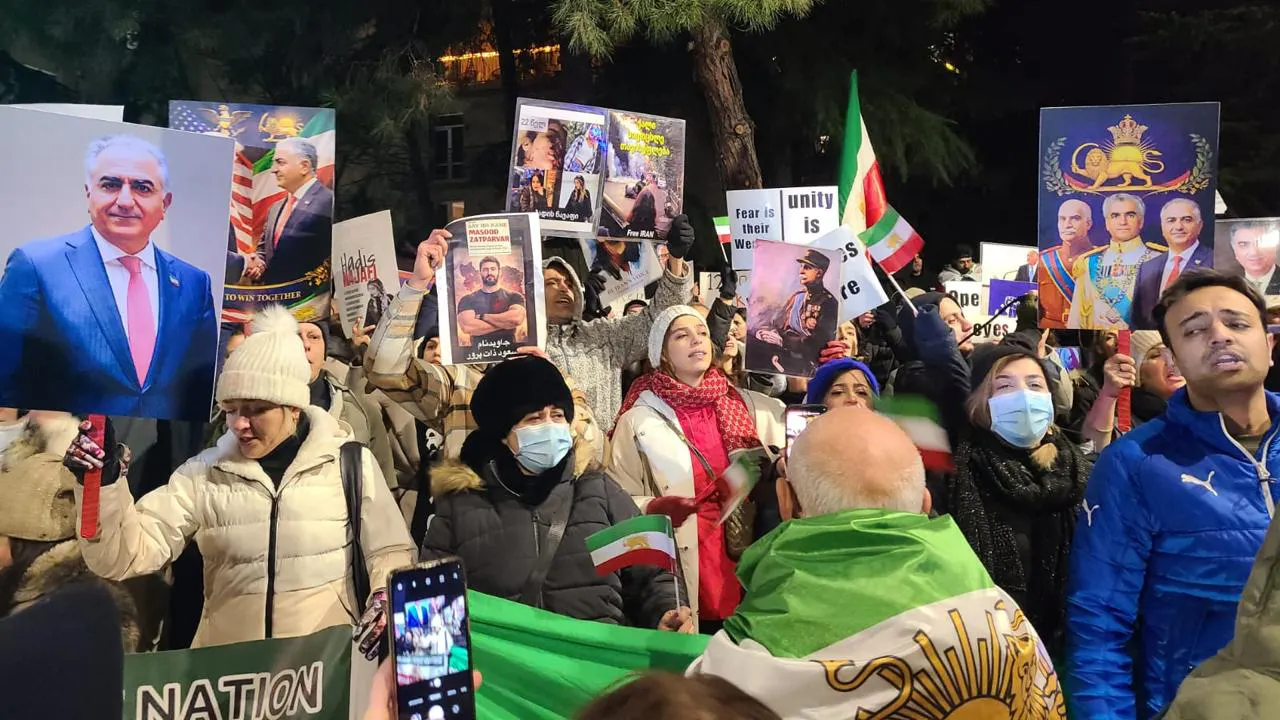
The Georgian protests began in October 2024 after the pro-Russia Georgian Dream party claimed electoral victory and subsequently halted the country’s efforts to join the European Union. This move directly contradicted widespread public sentiment, as polls consistently show overwhelming support for EU membership among Georgians. Prime Minister Irakli Kobakhidze’s decision to suspend the EU accession process ignited outrage, sending thousands of citizens into the streets of Tbilisi. The main Rustaveli Avenue has since become a focal point for demonstrations, with protesters expressing their anger at the government’s pivot away from Europe toward Russia. For many Georgians, this shift represents not just a policy disagreement but an existential threat to their national identity and future. Erekle Koplatadze, a 33-year-old protester who was detained for six days in November 2025, describes a growing sense of kinship with Iranian protesters since their uprising against economic mismanagement and regime corruption began in December. “You will see many Lion and Sun flags [Iran’s national flag until the 1979 Islamic Revolution] in front of Georgia’s Parliament. And there have been protests in front of the Iranian Embassy in Tbilisi,” he explains, noting the unprecedented scale of Georgian support for a foreign nation’s democratic movement.
The connection between these movements extends beyond symbolic gestures, reflecting genuine political and economic interdependencies. Ana Riaboshenko, co-founder of “Initiative Culture For Democracy,” emphasizes that developments in Iran directly affect Georgia and the broader region. “Its transformation from a terrorist state to a democratic government will significantly change the situation and indeed contribute substantially to the global power balance and economy,” she explains. Of particular importance is the potential disruption of the Russian-Iranian partnership, which could dramatically alter regional power dynamics. This relationship has real implications for Georgians, as the Georgian Dream government has strengthened bilateral ties with Tehran since the contested 2024 elections. A report by Civic IDEA, a Georgian NGO, revealed that nearly 13,000 Iranian companies are registered in Georgia, using it as a strategic transit point to evade international sanctions and channel funds back to Iran. This economic entanglement highlights the complex web connecting these seemingly separate democratic struggles.
While finding inspiration in Iran’s movement, many Georgian protesters also view it as a cautionary tale. “Many protesters see Iran as a warning sign of what happens when a consolidating dictatorship isn’t defeated soon enough,” explains Marika Mikiashvili, Foreign Secretary of Droa, part of Georgia’s largest democratic alliance. This perspective has gained urgency as the Georgian Dream government has implemented harsh anti-demonstration laws to suppress dissent, using disproportionate force and brutal tactics to quell unrest. The government has notably remained silent on Iran’s pro-democracy protests, offering no statements of support or condemnation of human rights violations by Iranian security forces. Meanwhile, the situation in Georgia itself has deteriorated significantly. According to Transparency International Georgia, since Georgian Dream’s election, 600 people have been arbitrarily detained, 300 protesters tortured or subjected to inhumane treatment, 1,000 citizens fined for political opinions, and 400 journalists arrested, beaten, or harassed. Human Rights Watch has documented numerous laws interfering with Georgians’ rights to peaceful assembly, including steep fines and abusive police tactics resulting in thousands of arbitrary detentions.
Despite these challenges, the mutual inspiration flowing between Georgian and Iranian protesters represents a powerful reminder of democracy’s universal appeal. As ordinary citizens in both countries risk their safety and freedom to demand accountable governance, they demonstrate that democratic aspirations transcend cultural, religious, and geopolitical differences. In Tbilisi’s crowded streets and Iran’s contested public spaces, people are united by a fundamental desire for self-determination and legitimate representation. Their parallel struggles highlight both the fragility and resilience of democratic movements in the face of entrenched power. As winter deepens in Georgia and the situation in Iran continues to evolve, protesters in both nations find strength in knowing they are not alone—that across borders and despite different contexts, their fight for basic democratic rights forms part of a larger global struggle for human dignity and freedom.