


Terror Attack in Australia Highlights Global Jihadist Resurgence
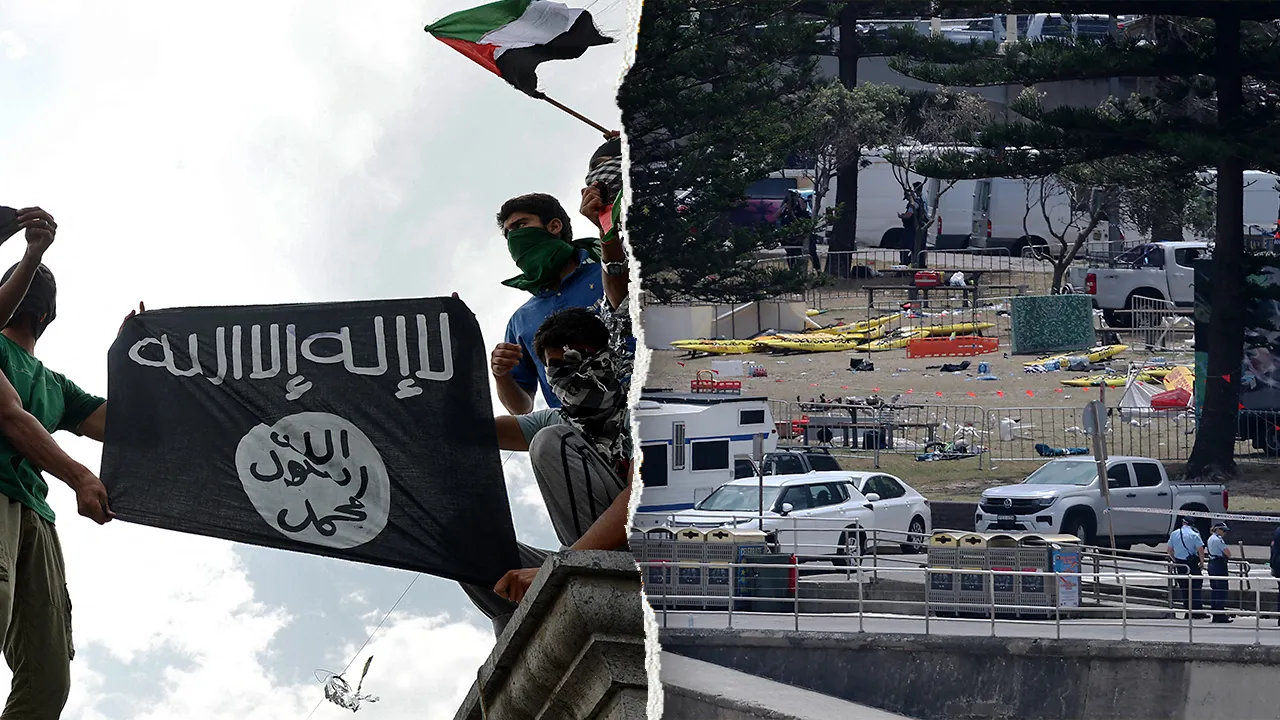
The recent terror attack in Australia has sparked renewed concern among intelligence officials and counterterrorism experts about the persistent and growing threat of global jihadist networks. Despite many Western governments portraying groups like ISIS as weakened or in retreat, experts argue this characterization dangerously underestimates the evolving nature of the threat. Bill Roggio, a senior fellow at the Foundation for Defense of Democracies and longtime tracker of jihadist movements, emphasizes this point clearly: “We’ve always been quick to declare terrorist organizations defeated and insignificant, and that couldn’t be further from the truth.” This Australia attack, according to Roggio, provides “absolute proof that the Islamic State hasn’t been defeated.” Despite losing its territorial caliphate, ISIS maintains the ability to recruit, indoctrinate, and inspire attacks worldwide. Roggio points to concrete evidence of ISIS’s continued strength, citing a UN report that identified approximately 2,000 ISIS fighters in Afghanistan alone—hardly the profile of a defeated organization.
The threat landscape has become increasingly complex and interconnected, extending far beyond ISIS to include other extremist groups like al Qaeda, which continues to operate in partnership with the Taliban in Afghanistan. Israeli officials have observed this pattern globally, noting that in the past year alone, terrorist plots have been attempted or disrupted across Europe, North America, and elsewhere. This signals not isolated incidents but rather a coordinated resurgence of jihadist activity. Corri Zoli, a research associate at Syracuse University’s Forensic and National Security Sciences Institute, highlights a particularly troubling trend: “Governments are on notice that there is a steep rise in the terrorist targeting of religious minorities, particularly those from the Jewish faith community and Israelis worldwide.” This targeting has accelerated significantly in the aftermath of the October 7, 2023, Hamas attack in Israel, which killed more than 1,200 people and has served as a catalyst for further radicalization.
The Israel-Hamas conflict has indeed become a powerful rallying point for extremists worldwide, providing what Roggio describes as “new life for people to attack Jews worldwide” and “a further reason to radicalize.” Intelligence officials report that extremist actors across the ideological spectrum are leveraging this conflict to inspire supporters, amplify propaganda, and justify attacks throughout Western nations. These organizations have demonstrated remarkable adaptability, combining sophisticated digital recruitment strategies with traditional on-the-ground networks. According to analysts at West Point’s Combating Terrorism Center, these networks are actively probing for vulnerabilities in Europe, Australia, Canada, and the United States, exploiting ideological ecosystems that facilitate the radicalization of individuals far removed from traditional conflict zones.
The Australian attacker’s background illustrates the persistent challenge of tracking and neutralizing threats before they materialize. Australian authorities had been aware of the attacker’s extremist tendencies since 2019, including his association with radical imam Wissam Haddad, who has repeatedly violated Australia’s racial hatred laws through his activities at the Al Madina Dawah Centre and within the Street Dawah Movement. The attacker also maintained connections to Isaac El Matari, a self-proclaimed Australian ISIS commander currently imprisoned for insurgency and firearms offenses. This web of relationships challenges the “lone wolf” characterization often applied to such attackers. As Roggio argues, “I disagree with that whole ‘lone wolf’ terminology,” explaining that even when individuals act alone, they typically operate within broader extremist ecosystems that provide ideological motivation, guidance, and validation for their actions.
The threat landscape is further complicated by geopolitical factors and migration patterns. Morgan Murphy, a national security expert and former Trump White House official, points to what he describes as “an unprecedented influx of unvetted, Islamist, fighting-age male migrants into both Europe and the United States,” creating what he characterizes as “a threat from within.” Murphy argues this internal risk undermines Western global leadership and diverts resources that should be directed toward defending freedom abroad, calling it “a national security disaster created by the shortsighted policies of leaders like President Obama and Chancellor Angela Merkel.” While this perspective represents one political viewpoint on the causes, the concern about internal security threats resonates across the political spectrum, with intelligence sources warning ominously that “Today is ISIS, tomorrow is Iran,” suggesting the diversity of threats continues to evolve.
The Australia attack serves as a sobering reminder that despite Western desires to move beyond the “war on terror” era, terrorist organizations remain determined adversaries. As Roggio bluntly states, “Just because we want to declare the war against terror over doesn’t mean it’s over. We wanted to end our involvement in these wars, but the enemy gets a vote. That’s what we just saw in Australia.” This reality check calls for continued vigilance, improved intelligence sharing, and a recognition that the threat from jihadist networks has not diminished but rather transformed. The challenge for Western governments is to adapt their counterterrorism strategies accordingly, acknowledging that while the nature of the threat has changed, its severity and persistence demand ongoing attention and resources. The human cost of underestimating this evolving threat—as tragically demonstrated in Australia—remains far too high to ignore.