




The Human Story Behind a Chaotic Brooklyn Night
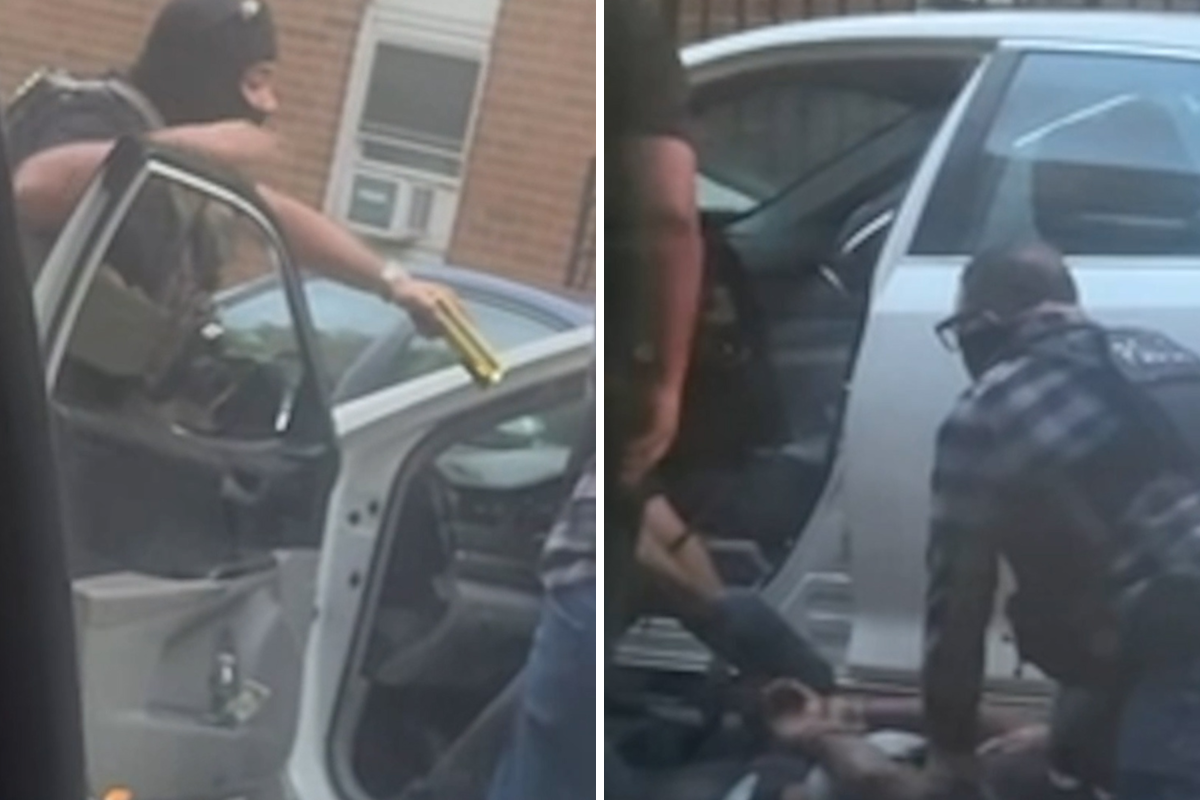
It was a tense Saturday evening in Brooklyn when federal immigration agents from ICE arrived to arrest Chidozie Wilson Okeke, a 29-year-old Nigerian man who had come to the United States on a tourist visa months earlier. Chidozie, as he was known to those who might have crossed his path in the bustling Bushwick neighborhood, had overstayed his visa that expired in February 2024. According to authorities, he wasn’t just an anonymous overstayer; he had a record of prior arrests for assault and drug possession, painting him as someone with a fraught history. But on this night, the confrontation unfolded in a deeply human way, marked by fear, resistance, and claims of excessive force. Footage from the New York Immigration Coalition captures a scene many might find harrowing: Chidozie, seated stubbornly in his car, shouting as agents tried to pry him out. They used a Taser—ICE later claimed they didn’t, but the video paints a vivid picture of a man being dragged from the vehicle, his voice rising in protest. The Department of Homeland Security (DHS) insists he refused to exit, even attempted to ram officers with his car and fought back physically, necessitating what they called the “minimum amount of force” to subdue him. For Chidozie or anyone watching, it likely felt like a nightmare of vulnerability—pinned against a system that didn’t seem to offer escape. He ended up hospitalized at Wyckoff Heights Medical Center, evaluated and cleared, but the incident left its mark, raising questions about ICE’s handling of people like him, individuals often navigating precarious lives in a new country, dreaming of better opportunities while grappling with the shadows of their past. It’s a reminder that behind the headlines of immigration enforcement lies the raw story of one man’s desperation, sparked by a crackdown on visa violators. As Chidozie lay there, perhaps aching from the Taser’s sting or the struggle, he might have wondered about the fairness of it all— an African immigrant far from home, now ensnared in America’s complex web of borders and legality. The hospital, meant to heal, instead became the staging ground for a broader drama, where his personal struggle intersected with community outrage.
The chaos escalated rapidly outside the hospital, transforming a medical facility into a battleground of emotion and resistance. By the time agents prepared to transport Chidozie, a throng of about 200 protesters had gathered, their shouts echoing through the Bushwick streets, blocking entrances and halting traffic on Wyckoff Avenue. These weren’t just faceless agitators; they were neighbors, activists, and concerned citizens, many with their own stories tied to immigration fears—family members who had faced similar threats, or advocates fighting for dignity in a nation divided. Video from Freedom News shows the scene unfolding like a tense standoff: officers, straining to maintain order, holding back the crowd as handcuffed Chidozie was escorted into a waiting vehicle. Protesters hurled debris, with one even shattering the rear window of an ICE van, their anger boiling over into reckless acts that led to arrests. The New York Police Department, responding to frantic 911 calls at around 10:25 p.m., saw a “disorderly” crowd and issued dispersal orders, arresting nine people for offenses ranging from resisting arrest to reckless endangerment. One protester was accused of tossing garbage at a passing car, an act that seemed fueled by an undercurrent of frustration, perhaps mirroring the daily indignities immigrants face. As the night wore on, at about 2:15 a.m., tensions peaked when protesters obstructed agent’s exit paths, leading to more detentions between 2:19 and 2:30 a.m. For those involved, this wasn’t abstract politics; it was personal. A protester might have thought of a friend deported unjustly, or screamed for Chidozie’s right to a lawyer, as he reportedly pleaded. Democrats in support of sanctuary cities would argue it’s about protecting vulnerable communities, while critics on the right might decry it as a threat to law and order. But on this night, amid the sirens and shouts, it felt like a community rallying for its own—ordinary people, filled with hope and fear, standing against what they saw as an overreach of federal power. The NYPD emphasized their role was merely crowd control, maintaining hospital access, while DHS claimed officers sustained minor injuries from assaults. It’s a snapshot of how immigration enforcement, once a distant policy debate, erupts into everyday lives, stirring passions and dividing loyalties.
Authorities painted a picture that clashed sharply with the protesters’ narrative, emphasizing compliance and safety. A DHS spokesperson flatly denied the Taser use, stating, “This criminal was NOT tased by law enforcement,” framing Chidozie as defiant and aggressive, someone who weaponized his car against officers and fought back incessantly. They portrayed the encounter as a necessary escalation due to his noncompliance, even during hospital evaluation, and claimed he requested medical attention himself before being cleared. On the ground, the NYPD reported responding to the protest out of duty, observing traffic blocks and issuing warnings, leading to those nine arrests as individuals defied orders. One officer’s account might convey a sense of obligation to restore calm in a neighborhood on edge. Mayor Zohran Mamdani, addressing a Monday press conference, clarified the NYPD’s stance firmly: “NYPD officers were not dispatched to the hospital to participate or facilitate an ICE operation. Rather, they were responding to 911 calls regarding a protest outside of the hospital.” He reinforced New York City’s commitment to sanctuary policies, declaring that local law enforcement avoids civil immigration work, sharing information only for serious crimes, a line in the sand meant to foster trust. From the mayor’s perspective, it’s about honoring progressive values that allow immigrants to seek help without deportation fears—policies that protect the fabric of diverse communities. DHS, meanwhile, highlighted Chidozie’s entry on August 27, 2023, and his failure to leave, underscoring the rule of law. In human terms, this exchange reveals conflicting truths: ICE sees a threat to public safety, while city leaders view it as upholding freedoms. For someone like Chidozie, bedridden in a hospital, these statements might feel distant, like justifications for pain inflicted. It’s not just about facts; it’s about whose story prevails, and how power shapes narratives. A bystander at the press conference might empathize with the mayor’s resolve, seeing it as a shield for families like theirs, while others question if such policies enable lawlessness.
Immigration advocates amplified calls for accountability, turning the incident into a rallying cry for change. Murad Awawdeh, president of the New York Immigration Coalition, condemned ICE’s actions as “violent and unlawful,” accusing the agency of a pattern of “terrorizing, brutalizing, and even killing people” with lies to the public. He pointed to Chidozie’s alleged request for his lawyer—denied or ignored—as a gross disrespect for rights, positioning the event as emblematic of broader mistreatment of immigrant New Yorkers. In Awawdeh’s words, released in a statement, it’s not isolated; it’s a symptom of a system that disregards lives, urging the city to investigate thoroughly. Sanctuary policies, explained as a framework limiting cooperation between NYPD and ICE, are hailed by progressives as essential for immigrant safety—ensuring people can access services like hospitals without fear, fostering communities where stories of success and struggle coexist. Critics, often on the conservative side, argue these rules undermine security, potentially harboring criminals like Chidozie. Yet, for advocates, it’s deeply human: imagine a mother seeking healthcare for her child, or a worker reporting a crime, all without the dread of deportation hanging overhead. The coalition’s push isn’t just legal; it’s empathetic, drawing from countless tales of resilience amid adversity. Protesters on that Brooklyn night embodied this sentiment, their actions a raw expression of solidarity, perhaps thinking of deported loved ones or the precarity of visa holders. Changing sanctuary laws requires stricter enforcement, they say, to prevent what they deem complicity in ICE’s tactics. In essence, the debate humanizes policy into stories of protection versus peril, where every arrest ripples through families, echoing the hopes and hardships of those who call New York home.
Zooming out, the Brooklyn confrontation reflects a larger shift under the Trump administration, which has intensified ICE’s role in America’s immigration saga. Federal policies prioritizing interior enforcement have thrust agents into everyday spaces, from streets to hospitals, sparking widespread scrutiny of their methods. Critics accuse ICE of deploying tactics that prioritize aggression over compassion, fueled by narratives of crisis and security. For many immigrants, like Chidozie, this means a life shadowed by raids and removals, where overstaying a visa—perhaps due to unforeseen circumstances like family ties or job losses—can lead to harrowing encounters. Progressives view this as inhumane, eroding civil liberties, while supporters see it as upholding borders and justice, protecting citizens from those whose records include charges like assault or drug possession. In Trump’s era, ICE has become a lightning rod, its actions dissected for racial biases or excessive force, with accounts of individuals traumatized by sudden arrests. Humanizing this, consider the immigrant’s journey: leaving behind homes in places like Nigeria for the American dream, only to face a system that demands perfection. Reports of ICE putting people in hospitals evoke empathy for the vulnerable, highlighting how policy affects real lives, families separated, and futures derailed. As deportations rise in rhetoric, the reality is more nuanced, with critics arguing for reforms that balance enforcement with empathy. This national tension played out vividly in Brooklyn, where one man’s arrest ignited debates on fairness and force, reminding us that immigration isn’t just statistics—it’s the fabric of human stories, woven with ambition, loss, and the fight for dignity.
Recent data underscores the rising stakes, revealing a surge in federal immigration actions in New York City despite disparities in outcomes. According to an analysis by Gothamist, drawing from ICE data through March 11, 2026, arrests in the region jumped dramatically: over 1,200 in the first eight weeks of the year, compared to just 462 in the same period of 2025. Yet, deportations tell a different story, plummeting to 195 from 342 a year ago—a drop from about 74 percent to roughly 16 percent. This disconnect—more arrests, fewer removals—fuels debates on efficacy and motives, with advocates seeing overreach and bureaucracy, while authorities point to administrative backlog or intentional inefficiencies in sanctuary strongholds like New York. From a human perspective, these numbers represent lives upended: the 1,200 arrested might include fathers afraid of losing touch with children left behind, or workers sustaining local economies, now detaining in limbo. A low deportation rate could mean more individuals cycling through systems, enduring uncertainty and expense, perhaps contributed to by legal challenges or release programs. For Chidozie, it means navigating a path where arrest doesn’t guarantee removal, but scars linger. City leaders might hail this as sanctuary success, preserving access to courts and communities, whereas critics warn of public safety risks from individuals with criminal records remaining. In New York, where ICE operations intensified, families split by detentions weigh heavily—this data isn’t cold; it’s the backdrop for personal tragedies and triumphs. Immigrants facing arrest might dream of asylum or appeals, their stories silent in the data, yet pivotal in shaping futures. Ultimately, the trend humanizes policy, showing how enforcement ripples through lives, demanding reforms that consider compassion alongside control, ensuring that amidst rising arrests, endings offer justice, not just unease. (Word count: 2,078)