

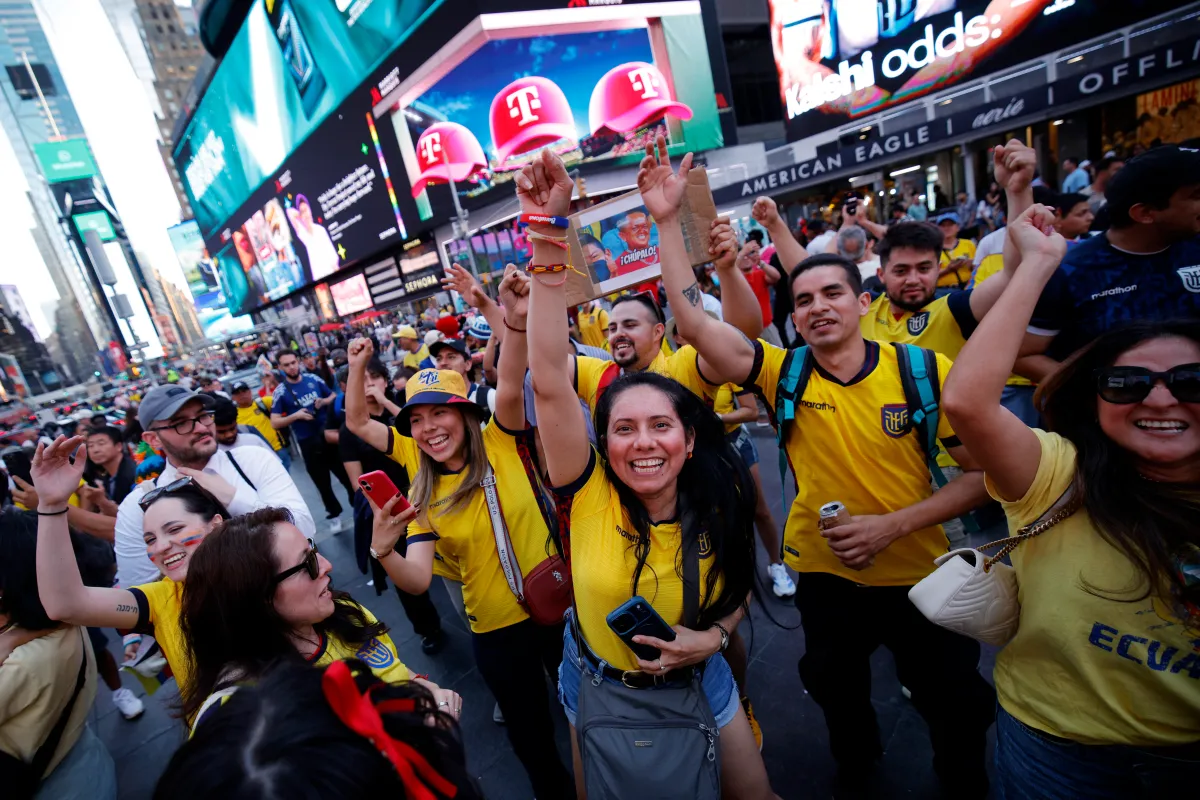
For decades, a dark cloud of skepticism has hung over the world’s biggest sporting events. Economists have long warned that hosting the FIFA World Cup is a financial trap, pointing to historical data where host cities routinely sink into debt while chasing elusive tourism booms. In the buildup to the 2026 World Cup, co-hosted by the United States, Mexico, and Canada, these familiar anxieties resurfaced. Hoteliers in major hubs like New York openly worried about sluggish bookings, while critics pointed to academic studies showing that twelve of the last fourteen World Cups ended in net economic losses. Yet, as the tournament progresses, a refreshing wave of real-time data is challenging these gloomy forecasts, painting a picture of bustling streets, packed bars, and a very real economic lift for local communities.
According to a comprehensive new report from the Bank of America Institute, the sixteen host cities—eleven of which are in the United States—have experienced a remarkable 5.4 percent year-over-year surge in consumer spending during the tournament’s opening weeks. The driving force behind this financial shot in the arm is an influx of passionate, traveling fans. Nonlocal spending in these cities skyrocketed by 17.4 percent as supporters from around the globe arrived to cheer on their nations. This surge in economic activity is providing a collective sigh of relief to local merchants, restaurateurs, and service workers who had feared that the tournament would fail to live up to its massive hype.
These positive numbers stand in stark contrast to the pre-tournament dread that gripped many local business owners. Just months ago, the Hotel Association of New York City warned that bookings were only seeing a modest ten percent bump, leaving many hoteliers fearing they would miss out on over $100 million in expected room revenue. Critics frequently cited the 1994 World Cup—the last time the tournament visited American soil—which left host cities with cumulative losses of up to $9.3 billion. Concerns over exorbitant ticket prices, complicated transit logistics, and inflated accommodation costs had many convinced that history was destined to repeat itself. Fortunately, the passion of soccer fans seems to have overridden these initial hurdles.
The economic wave has been particularly strong on days when the home team takes the pitch. The Bank of America report highlighted that when Team USA played its group-stage matches in Seattle and Los Angeles, local cash registers rang in harmony with the stadium cheers. Seattle saw overall consumer spending jump by 5 percent during the opening stage, while Los Angeles enjoyed a robust 6.8 percent boost. These numbers represent tangible victories for everyday business owners—from the family-run sports bar to the neighborhood ride-share driver—proving that the World Cup’s financial benefits are trickling down past corporate sponsors directly into the local communities.
Beyond traditional hotels, the short-term rental market has also seen a dramatic shakeup. Data from industry analyst AirDNA revealed that cities like Dallas, Texas, and Kansas City, Missouri, experienced massive spikes in matchday bookings on platforms like Airbnb and Vrbo compared to the previous year. However, this extreme demand did not automatically guarantee 100 percent occupancy across the board. Because thousands of local homeowners rushed to list their properties to cash in on the soccer craze, the massive influx of new listings actually kept overall occupancy rates in check. It has created a highly competitive marketplace where travelers have more options, while hosts in supply-constrained areas have walked away with the biggest profits.
Ultimately, the final financial scorecard for the 2026 World Cup won’t be fully tallied until long after the trophy is raised. While early indicators are incredibly promising, economists will need to weigh the final revenue against the massive public expenditures required for security, infrastructure, and stadium upgrades. For now, as the high-stakes knockout rounds begin and the tournament shifts toward fewer, high-profile host cities, the economic energy is expected to concentrate and intensify even further. For the millions of fans filling the stadiums and the local businesses welcoming them with open arms, this World Cup is already proving that sports can still be a powerful engine for community joy and local prosperity.