





The Viral Wave: Trump’s Playful Dive into AI Politics
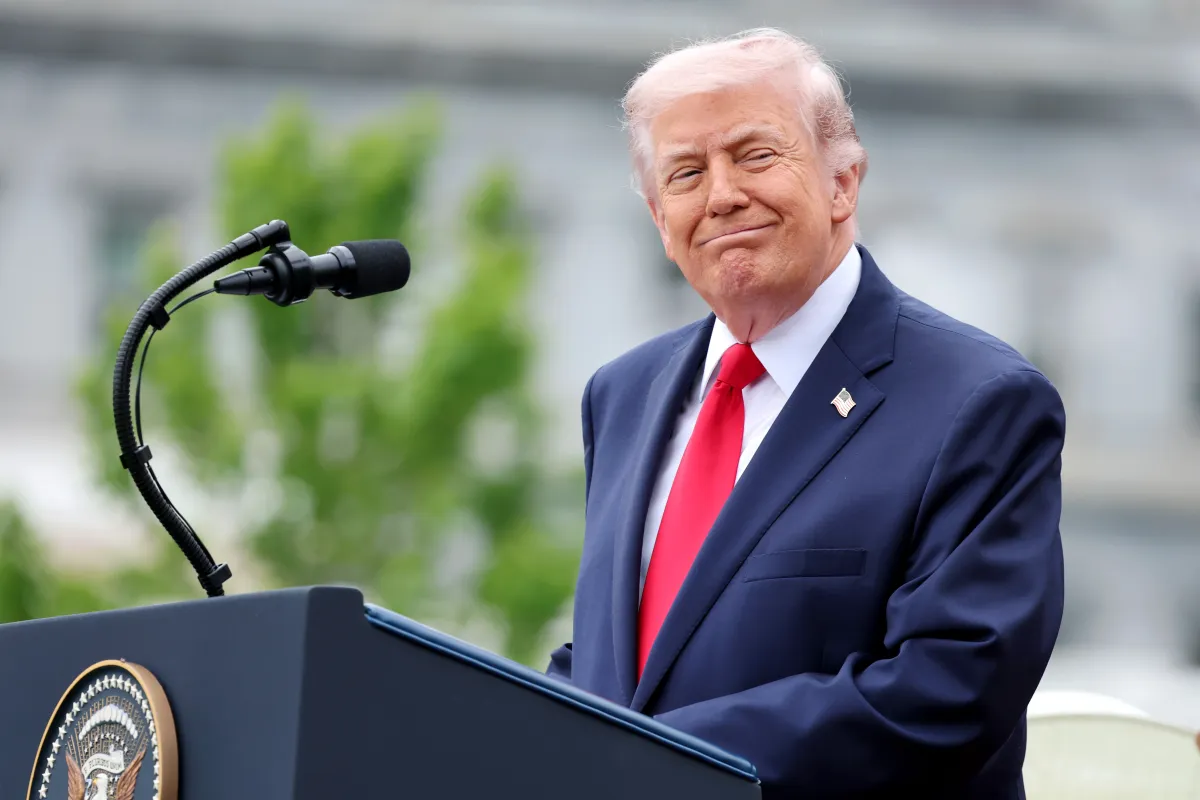
In the bustling world of digital politics, where social media platforms buzz like never before, President Donald Trump’s late Friday evening posts sparked a fresh wave of intrigue and controversy. It was around midnight when Trump, ever the master of timing his messages for maximum impact, fired off a series of eye-catching images on Truth Social. At the heart of it all was an AI-generated masterpiece that depicted the 47th president in a moment of sheer, unbridled leisure—lounging on a golden inflatable raft in the Lincoln Memorial Reflecting Pool, flanked by his trusted allies. This wasn’t just another post; it was a vivid visualization of governance with a wink, showcasing how advanced tools like artificial intelligence are reshaping the way leaders communicate their visions. Floating in that iconic water, Trump appeared relaxed yet triumphant, a thumbs-up signaling approval not just of the scene, but perhaps the audacity of blending fun with serious policy pitches.
As the images spread across feeds, they pulled viewers into a dreamlike scenario. Trump was shown reclining effortlessly, his grin wide and confident, as calm waters lapped around him. Beside the raft, Vice President JD Vance mirrored the gesture, his thumbs-up a nod to camaraderie and shared triumph. Not far off in the virtual splash zone were Secretary of State Marco Rubio and Interior Secretary Doug Burgum, each embodying the spirit of an administration at play yet ready for action. The Washington Monument stood tall in the background, a steadfast sentinel over this aquatic escapade, symbolizing the enduring power of American institutions. This wasn’t mere propaganda; it was a humanized portrayal of leadership as adventurous and approachable, turning the solemn National Mall into a stage for lighthearted optimism. By using AI to craft such scenarios, Trump was effectively inviting the public to imagine a future where high-level politics could be as effortless as a summer float. It humanized the often-stuffy world of presidential announcements, making them relatable and meme-worthy.
Yet, Trump’s pool party wasn’t a standalone stunt—it served as a launchpad for deeper narratives. Accompanying the fun floated images of the Reflecting Pool itself, transformed into what he called “American Flag Blue.” These depicted the basin filled with crystal-clear water, vibrant and pristine, evoking a sense of renewal and national pride. Proponents of the posts saw it as a promise of beautiful public spaces, while critics decried it as oversimplification. The pool, after all, stands as a symbol of reflection, where visitors ponder history and heritage. By coloring it patriotically blue, Trump was tying his vision to America’s core values, suggesting that his touch could clean up not just the water but the spirit of the nation. This approach humanized complex infrastructure talks, turning engineering feats into feel-good stories that ordinary Americans could latch onto.
The most biting edge of Trump’s message, however, came in a side-by-side comparison that took aim at his political nemesis. On the left, an image labeled “Hussein Obama” showed the pool in disrepair—murky waters choked with algae and debris, a caption insisting it reflected September 2012, under the previous administration. Paired against it, the right image bore “Trump” and a gleaming, soon-to-be-blue pool, heralding change. The text blasted: “This is what our Country was before, and after, ‘TRUMP!’” This wasn’t subtle; it was a direct swipe, painting Obama as neglectful and positioning Trump as the savior of forgotten landmarks. Viewers could almost hear the echo of presidential rallies, where such contrasts drove home messages of restoration. By humanizing this rivalry, Trump turned historical critique into a personal narrative of redemption, relatable to anyone who’s ever wished for a fresh start at home or work.
Backing up these visuals were solid plans for real-world action. Trump had announced the renovation back in April, eyeing a $1.5 million investment to overhaul the granite basin with an industrial-grade coating, aiming for that signature blue hue. This followed a major Obama-era fix from 2012—a $34 million project to deepen and regrade the area—but critics claimed it hadn’t aged well, with the water often hazy from minerals and maintenance woes. Trump’s push positioned him as the dutiful successor, ready to finish what others started. Work was already underway, officials noted, blending virtual hype with tangible progress. This humanized bureaucracy for the public, making massive undertakings feel personal and urgent, as if the president’s floating figurehead promised clarity and care for places they cherished.
Finally, the posts dovetailed neatly with the Department of the Interior’s unveiling of updated designs for Trump’s ambitious Triumphal Arch, a monument envisioned to honor national triumphs. Perched at Memorial Circle on Columbia Island, near the Potomac’s Virginia shore and opposite the Lincoln Memorial, this 250-foot-tall structure echoed classical icons like Paris’s Arc de Triomphe. Renderings showed ivory stone with golden eagles atop, lions guarding the base, and a winged Liberty figure soaring high—a symbol of American grandeur. It humanized the abstract concept of power, transforming it into a physical beacon of history and hope. For Trump, who thrived on grand spectacles, this was another way to cement his legacy, using AI previews to make distant dreams feel immediate and exciting. Together, these elements underscored his adept use of technology in politics, where imaginative images bridged policymaking and public perception, inviting everyone to dream big about America’s tomorrow.