


The Unlikely Triumph of “Niu Lai”: A Family’s Labor of Love Becomes a Box Office Miracle
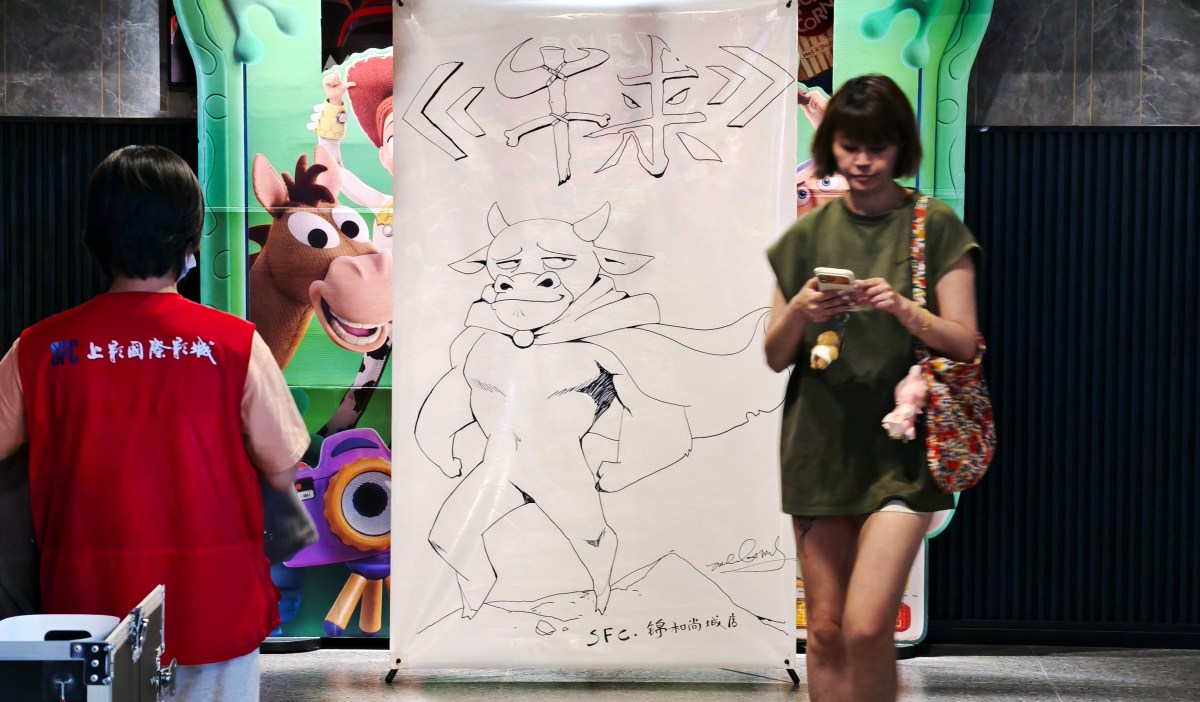
In the vast and often unpredictable landscape of Chinese cinema, where big-budget blockbusters and star-studded productions dominate the conversation, a quiet little film about a calf has defied all odds and captured the nation’s imagination. “Niu Lai,” a low-budget animated feature that was initially mocked for its laughably simple computer graphics, has become an astonishing box office phenomenon. The film, which cost a mere $200 to produce, has somehow managed to rake in over $5.9 million, a return on investment that would make any Hollywood executive weep with envy. But what makes this story truly remarkable isn’t just the money—it’s the heartwarming, human story behind the film’s creation. At the center of it all is a mother-son duo whose shared passion, perseverance, and unshakeable belief in their project turned a cinematic punchline into a symbol of hope, proving that sometimes the most unexpected stories can touch us the most profoundly. Theirs is a tale that reminds us that the soul of cinema isn’t always found in polished special effects, but in the raw, unfiltered passion that brings a story to life.
From Backyard Project to Viral Sensation: The Film’s Bumpy Ride to the Big Screen
The story of “Niu Lai” begins not on a lavish film set, but in the humble world of landscape design. Xin Yumeng, a 34-year-old landscape designer with no formal training in animation, spent over five years pouring his entire being into the project. Described as a family film, “Niu Lai” initially attracted nothing but online ridicule when its first trailer emerged, with its CGI effects being compared unfavorably to video games from the mid-1990s. When the film finally limped into theaters on August 5th, it opened to deafening silence, barely making $1,000 in its first ten days. For most filmmakers, this would have been the end of the road, a quiet disaster quickly forgotten by an industry that moves at breakneck speed. But something strange happened on the way to obscurity. Word of mouth began to spread, not about how terrible the film was, but about the sheer audacity of its existence. Social media users became intrigued by this peculiar little movie with its homemade aesthetic. It seemed that in a world of calculated marketing and carefully manufactured content, here was something refreshingly, honestly strange, and audiences couldn’t look away. What followed was a cinematic resurrection of biblical proportions, transforming a potential flop into a movement.
Behind the Animation: A Mother’s Words and a Son’s Devotion
What elevates “Niu Lai” from a quirky internet meme to a genuinely moving story is the intimate family bond at its core, one that feels more like folklore than a production meeting. This wasn’t a corporate board’s decision to create a children’s film; it was a highly personal project born from the filmmaker’s childhood and heritage. The titular calf is no random choice of animal—it’s a direct nod to the Chinese zodiac sign of Xin’s father, making the film a very personal tribute. For this family, the story was a way to stay connected to their roots and express their values to the world. While Xin handled the Herculean task of directing, modeling, animating, and even providing the male voice roles, his mother, Sun Lifang, brought the story to life in an entirely different way. She not only wrote the script but also voiced the female characters and composed and performed the ending theme song. Their voice recordings weren’t done in state-of-the-art sound booths but were captured in the quiet spaces of their own home. The result is a film that feels less like a product and more like a heartfelt letter constructed in a loving, creative writing exercise, blurring the lines between professionalism and pure, unadulterated passion.
The “So-Bad-It’s-Good” Phenomenon and the Audience’s Rebellion
The meteoric rise of “Niu Lai” offers a fascinating case study in modern consumer behavior and the shifting tides of digital culture. In an age of hyper-polished, artificial intelligence-driven (AI) content, there is a growing segment of the population hungry for something that feels undeniably human, even if that humanity is expressed through clumsy animations and somewhat janky framerates. As Li Qinyu, chief commentator at Chinese news outlet The Paper, astutely pointed out, the film’s viral spread could be driven by a “rebellion against traditional aesthetics.” In a media landscape where everything is optimized, filtered, and focus-grouped to death, “Niu Lai” stands out as a glorious anomaly—a relic of a bygone era of internet culture where raw creativity and sincerity trumped technical perfection. This is the era of “bad” media being reevaluated through the lens of irony and appreciating the sheer effort and emotion that went into it. By choosing to champion this film, audiences aren’t just watching a movie; they are collectively voting for a different kind of content, one free from the deadening sheen of corporate polish and algorithmic predictability.
From Social Media Meme to Global Icon: The Cultural Ripple Effect
The film’s influence has transcended the silver screen, spilling over into the digital arena and beyond in ways that no one could have predicted. Commentators have noted that the film offers a powerful antidote to our increasingly ailing attention spans. As it trended, it spawned a mountain of user-generated content, from memes to heartfelt video essays. Even Chinese police in Hefei, Anhui Province, jumped on the trend, using the lovable calf in a lighthearted traffic safety notice on social media, a sign that the film has truly entered the public consciousness. The meme-ification of the film has even reached international waters. In a charmingly absurd turn of events, a Malaysian blood donation center in Johor and the Dutch national railway operator, Nederlandse Spoorwegen, have both seized upon the “Niu Lai” character in their own social media posts. This global reach, born from a film that was almost universally derided at its premiere, is a testament to the universal language of wholesome determination and the internet’s insatiable appetite for a good underdog story, proving that a cheap film about a calf can travel further than any high-concept studio pitch. It solidifies the film’s status not just as a domestic anomaly, but as a global phenomenon worthy of study.
A Labor of Love and the Real Meaning of Success
Ultimately, “Niu Lai” isn’t just a financial windfall for its creators; it’s a stark reminder of the power of human connection in a high-tech world. In the end, the story of “Niu Lai” is a resounding testament to the power of family, resilience, and the simple joy of creating something, even if it’s not perfect. It’s a story about a son pouring his love for his father into an art form and a mother using her creative voice to add depth to that world. As the documentary of its production shows, the actual end product has become secondary to the profound human spirit behind it. When asked about the message they hope to share with younger viewers, Xin conveyed a sentiment that feels almost radical in its sincerity: “Children should develop a persevering and resilient character from a young age. They can’t let a little difficulty, a few setbacks, or even unfair treatment knock them down.” This straightforward, wholesome advice perfectly encapsulates the film’s massive appeal. In a world that often feels defined by irony and detachment, “Niu Lai” offers a genuine, unvarnished hug. As the lights come up in cinemas in Shanghai and Shenzhen, the journey of this intrepid little calf leaves a lingering question: if this is where sincerity and dedication can take you, what’s stopping the rest of us from taking a leap of faith? The world, it turns out, is ready for a run-in with a determined little cow.