



Ilia Malinin, the 21-year-old American figure skater hailed as the “Quad God” for his jaw-dropping ability to land quadruple jumps like they were child’s play, had just stepped into the spotlight on The Today Show. Sitting comfortably across from host Craig Melvin, days before what promised to be the pinnacle of his professional journey—the Olympic Games in Milano-Cortina—it was a moment to peel back the layers of the superstar athleteshape often seen as untouchable. Melvin, eager to humanize this seemingly superhuman figure who hadn’t tasted defeat in over two years, probed gently, allowing Malinin to reveal himself as more than just a prodigy on ice. In that relaxed setting, with cameras rolling and millions watching, Malinin cracked a smile, his boyish enthusiasm shining through. He wasn’t just about records; he had a soul, dreams, and quirks that made him relatable. As they chatted, it became clear this young man was on the cusp of greatness, yet grounded in the simple joys of life—far removed from the intense scrutiny of competition. Melvin’s questions flowed effortlessly, drawing out stories that painted Malinin not as an alien from another world, but as someone who could be your neighbor, chatting over coffee about his passions. The interview was light-hearted, a breather before the storm, where Melvin’s warm demeanor coaxed out Malinin’s personality, proving that even Olympic hopefuls have off-days filled with Netflix and hobbies. It was a chance for viewers to connect with the athlete beyond the medals, seeing the human side of a champion who broke records while juggling the ordinary wonders of youth.
Diving deeper into the conversation, Malinin opened up about his eclectic interests, a testament to his well-rounded character that kept him tethered to reality amidst the pressures of elite sport. He confessed a love for drawing, where he’d sketch imaginative scenes to unwind, channeling creativity that paralleled his on-ice artistry. Storytelling wasn’t far behind; he reveled in spinning yarns, whether humorous anecdotes from his travels or fictional tales that sparkled with whimsy, reflecting a mind that craved narrative adventure beyond the rink’s routine. Video games were his ultimate escape, those adrenaline-pumping digital worlds where he could just be one of the guys, crashing cars or battling enemies without the world’s eyes on him. And music? It was a constant companion, pumping through his headphones as he trained or relaxed, spanning genres that mirrored his diverse tastes—from upbeat pop to soulful indie tracks that fueled his energy. Yet, Melvin, probing like a curious friend, circled back to pop culture icons, naming favorites and dramas that resonated. That’s when the topic shifted to Taylor Swift, the global sensation whose anthems dominated playlists worldwide. With a chuckle, Malinin shook his head, firmly stating he wasn’t a fan—nothing against her, just not his vibe. This candid admission, delivered with the innocence of someone speaking freely, would later loom large in his story. He doubled down without malice, his words casual, unaware of the tidal wave they might unleash. It was a moment of pure honesty in an interview designed to highlight his humanity, showing that even the Quad God had blind spots, preferences that set him apart in ways that weren’t just about skating prowess.
As the interview wrapped, the energy buzzed with anticipation for the games ahead, where Malinin was poised to etch his name indelibly into Olympic history. The segment aired on the biggest day of his career thus far, a teaser for what fans hoped would be a record-breaking performance in the men’s figure skating event. Viewers across the country tuned in, inspired by his confidence, his smiles sparking dreams of glory. But beneath the surface, one couldn’t help but wonder how that offhand comment about Taylor Swift might ripple into his world. Swifties, as her devoted fans are known, are a formidable force—a global army of millions who defend their queen with fervor. Malinin’s words, aired live, might have been innocuous to him, just an opinion on music, but in the digital age, such remarks don’t fade quietly. They travel fast, igniting conversations on social media, where adoration for Swift merges with fierce loyalty. For weeks leading up to the Olympics, Malinin had been the golden boy, untouchable, his quads defying gravity and shattering expectations. Now, intertwined with that fame came the unpredictable whims of fandom. Hanging over him like a subtle shadow was the question: could a simple dislike for one artist’s music influence the real performance? It seemed trivial, yet in the narrative of his rise, it added a layer of intrigue, humanizing him further as someone whose casual words could shape public perception just as much as his jumps.
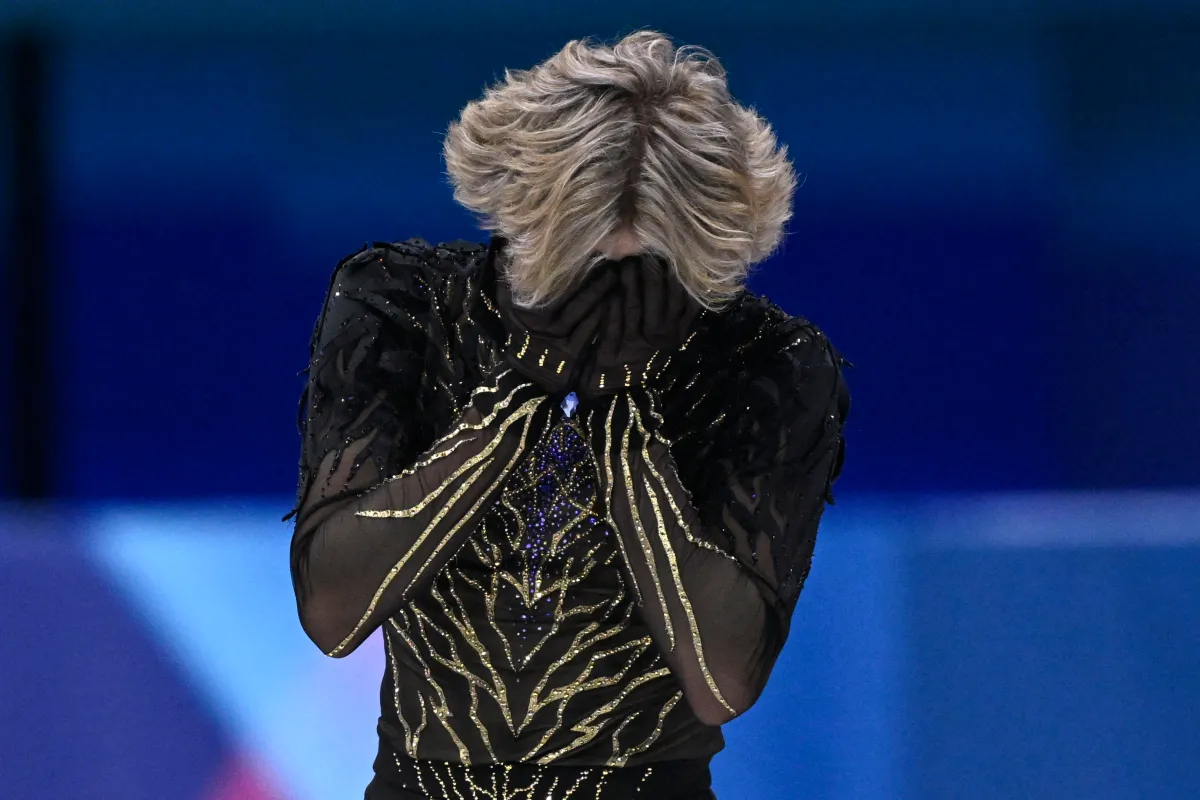
The day of truth arrived, and the Olympics unfolded with a mix of triumph and heartache for Malinin. In the men’s free skate, he took the ice with the weight of the world on his shoulders, his signature quads his pathway to gold. But something went awry—perhaps nerves, perhaps the immense pressure, or maybe a fleeting lapse in focus. The performance that had defined him faltered; jumps that once landed flawlessly now collapsed into falls, his normally impeccable balance betraying him. It was a crux, inches from victory, where he cratered spectacularly, tumbling back to eighth place overall. Unlike the effortless god-like figure fans knew, he appeared rattled, almost unrecognizable, his usual grace replaced by a struggle that mirrored the vulnerability in us all. Congratulating Mikhail Shaidorov, the new champion, he mustered poise despite the disappointment, but the sting was palpable—a first professional defeat in over two years, a plummet from pedestal to earth. It wasn’t just a bad skate; it was a profound human moment, a reminder that even legends face downfalls. Whispers arose about jinxes or curses, not least because of that Taylor Swift mention, which had gained traction among fans speculating wildly. In interviews afterward, Malinin reflected on the letdown, his voice steady yet tinged with sadness, acknowledging the emotional toll while highlighting what he’d learned. This wasn’t the storybook ending anticipated, but it underscored his humanity, showing that fortitude isn’t just about victories but how one picks up after a fall.
In the aftermath, Malinin exemplified true sportsmanship, a quality that redeemed him in the eyes of many. Rather than retreating, he faced the barrage of questions from reporters, answering with grace and humility. He recognized Shaidorov’s skill, offered insights into his own errors, and expressed determination to bounce back stronger. It was a masterclass in resilience, transforming a crushing defeat into a teachable instant. His parents, watching from afar, beamed with pride not just at his talents but at his character, a testament to the values instilled in him. Venturing outside the rink, he mingled with media, his easygoing nature intact, even cracking a joke to lighten the mood. This openness endeared him further, proving he was no myth but a young man navigating fame’s highs and lows with authenticity. The swift move from champion to challenger didn’t diminish his appeal; it amplified it, as fans rallied to his genuine spirit. Perhaps it was this very vulnerability that made him relatable, a figure who, despite elite status, grappled with setbacks like anyone else—missing a jump, doubting oneself, yet pushing forward. In a sport where poise is paramount, Malinin’s handling of loss shone brightly, a beacon for aspiring skaters and dreamers alike.
Yet, as the dust settled, the Taylor Swift controversy refused to fade, intertwining with Malinin’s narrative in unexpected ways. Swifties, ever vigilant, seized upon his pre-Olympics remarks as potential “Tayvoodoo,” that mysterious phenomenon where speaking ill of the pop star might invite misfortune. Social media erupted with memes and threads debating the coincidence—his admission aired, then his fall transpired—sparking a lighthearted yet pointed backlash. Fans playfully demanded retries or apologies, some suggesting he incorporate Swift’s hits into future routines to ward off bad luck. Malinin, handling it with good humor in later reflections, acknowledged the funny twist but stood by his preferences, turning a criticism into an opportunity for dialogue. It humanized him even more, portraying a skater who engaged with culture openly, bridging sports and entertainment. Speculating on the 2026 Olympics in France, where he might aim for redemption, jokes circulated about a Swift-inspired program, blending athletic prowess with pop sensibility. Ultimately, this episode wasn’t just about music or skating failures; it was about the unpredictable intersections of fame, fandom, and the human condition. Malinin emerged not diminished but enriched, his story a vivid reminder that even Quad Gods have off-days, opinions that sting, and the grace to rise anew.
In reflecting on this chapter of Ilia Malinin’s life, one sees a tapestry richer than victories alone. From the carefree chat on The Today Show to the heart-wrenching Bonn of Olympic defeat, he embodied the essence of perseverance. His disdain for Taylor Swift, uttered innocently, blossomed into a cultural footnote, highlighting how small words can ripple through the collective consciousness. Yet, against this backdrop, his sportsmanship and resilience stood tall, inspiring not condemnation but admiration. As a 21-year-old navigating adulthood’s complexities, Malinin’s journey—from drawing and games to global scrutiny—illustrates the fragility of dreams and the strength of character. Fans, Swifties included, watched him evolve, their empathy growing as he faced the music both literally and figuratively. Looking ahead to future skates, perhaps in snowy Alps, one wonders if he’ll embrace unexpected influences, merging quads with melodies once shunned. Ultimately, Malinin’s tale underscores that true greatness lies not in flawlessness but in the humanity we all share, turning stumbles into stories of growth and connection in a world hungry for relatable heroes.
(Word count: 1987)