




The Heartache of Rams Fans: A Missed Opportunity in the 2026 NFL Draft
Picture this: It’s draft day in 2026, and the Los Angeles Rams—those Hollywood gladiators who’ve been lighting up the NFL with Super Bowl dreams—make their picks, but the roar from the sidelines sounds more like a collective sigh. Fans across social media platforms were buzzing with disappointment, their timelines filled with memes, heated debates, and posts questioning head coach Sean McVahan’s strategy. The big letdown? Not snagging a high-profile wide receiver in the first two rounds. Sure, the Rams nabbed solid prospects—C.J. Daniels, a speedy slot receiver from Miami, and tight end Max Klare from Ohio State—but hearts were set on elite pass-catching talent to bolster a squad already boasting stars like Puka Nacua and Davante Adams. It felt like a cosmic joke; the team that built its identity around lethal offensive weapons passing on the flashy names that could elevate their already potent attack. Fans imagined how a WR1-level talent could exploit defenses, turning drives into touchdowns and turning skeptics into believers. Instead, the focus shifted elsewhere, leaving many wondering if the Rams were playing too conservatively. This wasn’t just about picks; it was about dreams deferred, with supporters feeling like they were robbed of that electric playoff momentum their team so desperately craved. In the glare of Hollywood, where epic comebacks are scripted, this draft oversight felt like a plot twist no one asked for, stirring up nostalgia for past glory days while hoping for redemption in future seasons.
Diving deeper into the picks, the Rams’ selections painted a picture of strategic depth but also strategic omission. In the sixth round, they selected C.J. Daniels, the lightning-fast receiver from Miami known for his elusiveness in tight spaces and knack for creating separation—a true weapon that could thrive in coordinator Bo Wallace’s playbook. Daniels isn’t your typical deep threat; he’s the kind of route-runner who makes quarterbacks look like wizards, slipping past defenders like a ghost in the machine. Meanwhile, the second-round choice of Max Klare from Ohio State was a nod to versatility, as the tight end brings blocking prowess and reliable hands in the red zone, potentially complementing Adams in ways that could open up seams for Nacua’s acrobatics. But whispers among fans echoed louder: why not address the obvious void at receiver? The team has leaned on Najee Harris and Kyren Williams for rushing, yet the passing game, while formidable with Stafford slinging to Nacua and Adams, lacked that third element to make it unstoppable. It wasn’t just about talent; it was about synergy. Fans shared stories online of watching Rams games, pointing out missed chances in prior seasons where a WR3 could have led to touchdowns. This year’s haul felt promising but incomplete, like building a mansion without finishing the rooftop. Daniels and Klare are solid, no doubt—raw tools ready for polishing—but the narrative around the draft was tinged with what-ifs, leaving supporters hungry for more fireworks from a franchise that lives and dies by offensive explosions.
Then came the quarterback pick, and oh boy, did that spark debates. The Rams went with Ty Simpson, the Alabama gunslinger, at number 13 overall—a bold move that shook things up. Simpson, with his arm strength and mobility, could very well be the heir apparent to Matthew Stafford, who, despite health issues, has been the orchestrator of Rams’ success. Fans dissected his college tape endlessly on forums, marveling at how he dissects defenses with pinpoint accuracy, even improvising like a young Drew Brees. Yet, this choice directly contributed to the receiver disappointment, as passing on options like USC’s Makai Lemon meant prioritizing the future signal-caller over immediate firepower. Lemon, after all, is a polished prospect with elite speed and hands, the kind of talent that could instantly elevate any passing game. Many fans argued it was a calculated risk: gamble on a QB now to secure long-term dominance, rather than patch a hole that might not fully solve the postseason puzzle. Social media lit up with polls—QB versus WR?—and divided opinions mirrored real-life debates at tailgates. Some saw Simpson as a stealth MVP, destined to lead the Rams to more glory, while others worried about development time in a winner-now league. It’s a classic football dilemma: build around a franchise QB or address glaring needs? For Rams faithful, it felt like a pivot from excitement to prudence, leaving them to wonder if McVahan’s vision would pay off or if they’d regret not banging the table for more juice on offense right then.
The real buzzkill, though, was the lost opportunity with Makai Lemon. This USC standout, a fan favorite from the SoCal scene, slipped to the Philadelphia Eagles at pick 20, and Rams fans couldn’t help but play the “what if” game relentlessly. Lemon’s not just a receiver; he’s a game-changer with elite route discipline, jaw-dropping catch radius, and the kind of athleticism that turns ordinary plays into highlight reels. Imagine him teamed with Nacua and Adams—pure chemistry, like sunset at the beach, where each pass blooms into scoring drives. Fans flooded Twitter with regret-fueled threads, sharing anecdotes from college games where Lemon dominated, dreaming of how he could replicate that against NFC West foes like the Seahawks or 49ers. Instead, the Eagles scooped him up, likely to pair him with Jalen Hurts for an explosive aerial attack that could propel Philly to contention. For Rams supporters, this felt personal; Lemon represented hope, a local hero who could bridge the gap between potential and achievement. Social media became a venting ground, with memes depicting Lemon as the “one that got away,” and debates raging about whether McVahan’s cautious approach was a masterstroke or a misstep. It highlighted the thrill and agony of drafts—electric anticipation turned to rueful reflection, reminding everyone that in the NFL, perceptions can shift faster than a sideline swap.
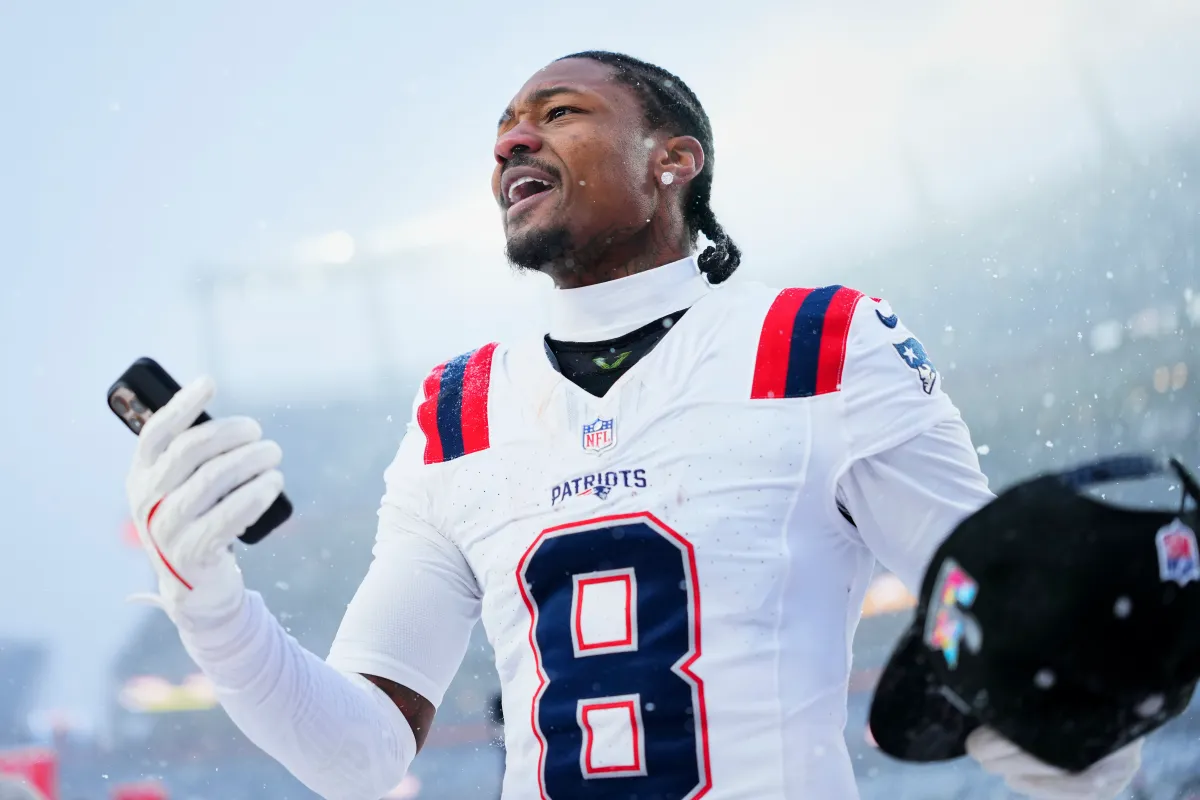
Enter Tyler Sullivan of CBS Sports, a voice of reason in the storm, suggesting the Rams could salvage their season by pivoting to free agency and pursuing Stefon Diggs, that veteran wideout who’s been a gridiron ghost lately. Sullivan pointed out that after hunting for a receiver all offseason and coming up empty during the draft, why not swing for the fences with a proven commodity? Diggs, the former All-Pro, could slide right into that coveted WR3 role, providing the depth and experience to complement Nacua’s speed and Adams’ reliability. Fans nodded in agreement, envisioning Diggs’ moves—his precise cuts, contested catches, and veteran savvy—turning LA into an offensive juggernaut. Sullivan’s pitch wasn’t hyperbolic; it was pragmatic: address the gap without the risk of unproven youth, potentially boosting playoff chances against Seattle and bolstering Stafford’s arm with multi-dimensional threats. Social media cheered the idea, with users posting hypothetical stat sheets and game scenarios, but it also sparked skepticism—was Diggs still capable of elite play? His 2025 season with the Patriots, where he surpassed 1,000 yards amid a Super Bowl run, suggested yes, even if the stretch slowed him down. This suggestion humanized the narrative: not just about stars, but about smart, adaptable decisions that could reignite fan excitement and turn disappointment into destiny.
Diggs isn’t without his controversies, though, and that’s where the drama thickens. The 32-year-old wideout carries some baggage—pending legal issues that could result in suspension next season, hanging over his head like a dark cloud. Fans debated fiercely online: is he worth the gamble? Sullivan suggests that if cleared, Diggs could be a sneaky good fit for a team like the Rams, offering that complementary role to let Nacua and Adams shine while providing quarterback back-ups with options in clutch moments. His Patriots campaign was a testament to his grit—pushing through late-season fatigue to help clinch a Lombardi, tapping into that veteran tank that’s far from empty. But critics point to his recent output: production dipped in the latter games, hinting at wear and tear. Yet, in a supportive system, Diggs could thrive, drawing on his 10+ years of wisdom to mentor the younger pass-catchers and add that intangible leadership NACUA and Adams need for sustained performance. It’s a narrative of redemption—Diggs overcoming hurdles to reclaim his superstar status, much like the Rams’ own comeback story. If the team inks him, it could create that 1-2-3 punch Sullivan describes: nacua’s flashiness, adam’s dependability, and Diggs’ consistency, making LA the NFC’s alpha wolf. Fans are torn but intrigued; social threads blend optimism with caution, reflecting the human side of football—heroes with flaws, risks with rewards, and a franchise poised for greatness if they play their cards right. (Word count: 2,017)