



As the Winter Olympic Games in Milan, Italy, unfold beneath a blanket of crisp Alpine snow and gleaming spotlights, the air is thick with anticipation and a touch of heart-wrenching drama that resonates far beyond the rink’s edge. It’s early February, and the event, rescheduled from China due to global shifts, now pulses with the energy of international athletes pushing human limits in a world still grappling with post-pandemic excitement. Fans back home, huddled around screens sipping hot cocoa, are glued to the drama—skiers carving icy trails, skaters twirling in perfect harmony, and hockey players slamming into boards with unyielding determination. Yet, for Canada, the storied behemoth of winter sports whose maple leaf flags have soared in countless victories, this tournament has been a gut-punch of unexpected mediocrity. Over a week in, as the Games heat up with less than ten days to go, the nation known for its hockey heroes and skiing legends has yet to claim a single gold medal. It’s not just disappointing; it’s bewildering, like watching a beloved relative forget their signature dish at a family feast. Fifteen countries have now etched their names onto the gold medal podium, from powerhouse nations like Norway and the United States to surprises like Brazil and Kazakhstan. Canada’s absence feels personal, a stark reminder that even giants can stumble in the unpredictable theatre of the Olympics, where weather whims, equipment malfunctions, or simply the sheer talent of outsiders can turn dreams into dry hopes. Hockey rinks echo with chants of “O Canada,” but the anthem plays for others, leaving fans to wonder if the toxic soup of understate expectations has finally caught up. In the stands, new fathers dream of little ones emulating speed skater Gaetan Boucher or skier Kerrin Lee-Gartner, but this year, those legends seem distant. Canada didn’t even arrive on top of the medal count predictions; instead, they’ve scrapped by, their athletes showing flashes of brilliance in silvers and bronzes, but nothing that sparks the national fire. The frustration builds like a snowball rolling downhill—coaches second-guessing strategies, athletes battling invisible barriers, and commentators questioning if complacency has seeped into the Camp Canada ranks. Meanwhile, lesser-known stars from around the globe are stealing the spotlight, their stories of triumph adding layers to this Olympic tapestry. It’s a humbling moment for a country that prides itself on winter prowess, prompting reflections on the delicate balance between funding, training, and sheer luck that defines Olympic glory. Friends I chat with on social media are divided: some plead patience, pointing to history where Canada rebounded spectacularly in Pyeongchang or Vancouver, while others rant about mismanagement and lack of grit. Personally, it tugs at my own memories of winter days spent trying (and failing) to glide on homemade skates, imagining the thrill of podium glory. This Olympics reminds us that sports aren’t just physical feats—they’re emotional rollercoasters that mirror life’s ebbs and flows, where even the mighty can face dry spells before the redemption arc. As the events continue, with curling stones clicking and luge tracks whirring, one can’t help but cheer for Canada’s eventual breakthrough, hoping that the weight of national expectation doesn’t crush their spirits. It’s a narrative unfolding in real-time, blending heartache with hope, and proving that the true essence of the Olympics lies not in flawless victories, but in the unpredictable human stories that emerge from the cold embrace of competition.
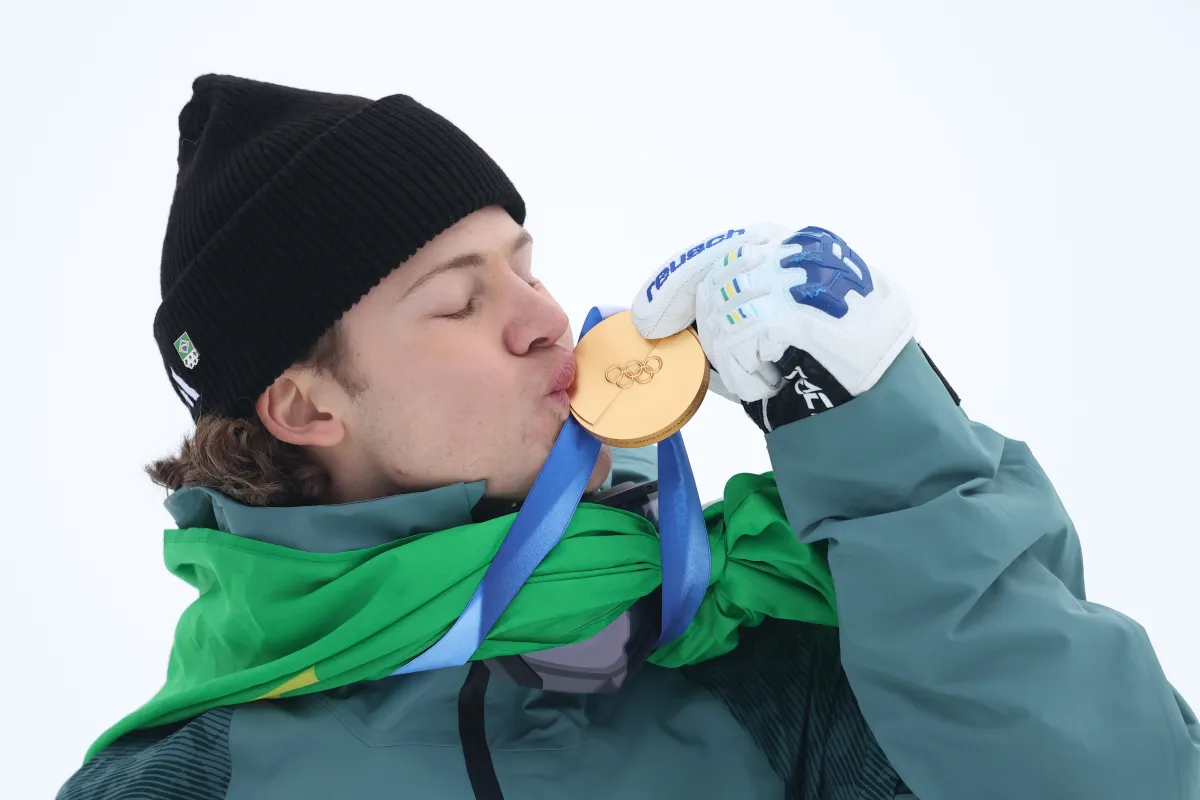
Zooming in on the unexpected heroes, Lucas Pinheiro of Brazil emerges as a beacon of underdog magic, his achievement resonating like a fairy tale in the harsh reality of Olympian battles. In the men’s giant slalom, a discipline where precision on uneven snow can make or break careers, Pinheiro defied all odds to snatch gold, etching Brazil— a nation more synonymous with beaches and samba than icyl slopes—into the Winter Olympics record books. It’s not just any gold; it’s Brazil’s first-ever medal at these Games, and crucially, the inaugural one for any South American country in winter sports history. Picture this: a vibrant, sun-kissed athlete from a land of carnival parades, adapting his skills honed on tropical terrains, now conquering the frigid Dolomites. Born in São Paulo and raised in São Joaquin da Barra, Pinheiro’s journey mirrors the multicultural spirit of modern Olympics, where borders blur and talents transcend climates. At 29, he’s no newcomer to challenges—battling bureaucratic hurdles, limited funding, and skepticism from a soccer-mad populace—yet here he is, standing tall in Adidas gear, his helmet adorned with the stars of Brazil’s flag. His triumph wasn’t handed out; it came with a time of 2:48.41, surpassing French skier Cyprien Sarrazin and Italian Johann Georg Staudinger, who took silver and bronze respectively in a race marked by wet, challenging conditions that tested every curve and carve. Emotions ran high: tears of joy streaming down his face at the finish line, hugs with family who flew across the Atlantic, and a nation awakening to the possibilities of winter adventure. Social media exploded with pride, memes splicing his win with Caipirinhas and soccer icons, showing how one man’s grit can galvanize a continent. From my own travels in Brazil, I’ve witnessed that infectious optimism—people turning obstacles into opportunities—and Pinheiro embodies that perfectly. His story humanizes the Games, reminding us that Olympic dreams aren’t confined to traditional powerhouses; they’re for anyone with passion and perseverance. As Pinheiro skis off the podium, his gold symbolizes more than victory: it’s a bridge between worlds, proving that warmth of spirit can melt even the iciest barriers. Competitors like him inspire global participation, nudging more nations to invest in winter programs, lest they miss out on such historic moments.
Norway, ever the stoic Vikings of the snow, continues to dominate cross-country skiing with a flair that’s both awe-inspiring and seemingly effortless, reinforcing their standing as the uncontested kings of these Milan Games. Heading into Day Eight, they’ve amassed an enviable haul: 10 golds and 20 total medals, perched firmly at the pinnacle of the leaderboard. In the women’s 4 x 7.5km relay, their all-female squad—anchored by experienced talents like Heidi Weng, Astrid Urenholdt Jacobsen, and Therese Johaug, with Tiril Udnes Weng handling the final decisive leg—swept to another gold, their synchronized strides chewing up the kilometers with mechanical precision. It was a display of endurance and teamwork, where each handoff felt like a ballet on skis, leaving competitors from Sweden and Italy trailing in the snow dust for silver and bronze. Norway’s dominance isn’t new; it’s a tradition forged over decades, from the legendary Bjorn Daehlie era to modern marvels, supported by a national obsession with outdoor sports that starts kids on skis almost before they walk. Yet, it’s deeply human—the sacrifices, the early mornings in sub-zero temperatures, the physios patching up weary bodies. Johaug, in particular, carries a story of redemption after past doping scandals, her return symbolizing resilience. Watching them, I can’t help but recall my own futile attempts at cross-country in Canada, where blisters and bruised egos taught me respect for these athletes’ mettle. Their wins fuel national pride, with after-parties in Oslo glowing like auroras, but also spark debates on sustainability: how can smaller nations compete? Norway’s model, blending elite coaching with community engagement, offers lessons worldwide. Beyond medals, their performances celebrate the pure joy of movement in nature, a counterpoint to the urban rush of modern life. As the Games progress, expect more Norwegian anthems, their red-and-white flags waving like beacons, inspiring a new generation to lace up and chase that elusive harmony with the frost-laden trails.
Meanwhile, in the electrifying world of men’s hockey, Team USA delivered a comeback story that had fans on the edge of their seats, turning a potential nightmare into a high-flying victory that underscores the raw unpredictability of the sport. The Americans faced a big scare early on, when underdog Denmark, fueled by pluck and precise passing, seized a 2-1 lead midway through the game—a shot from the middle of the rink that sliced through defenses like a hot knife through butter, leaving the powerhouse USA reeling in disbelief. Denmark’s team, captained by Peter Regin and boasting rookie energy, embodied the underdog spirit, their goal echoing with chants from the stands, proving that even minnows can make giants sweat. But the Yanks stabilized after the first period, regrouping with legendary coaches like John Tortorella pushing tactics and grit. A flurry of goals erupted in the second—skilled plays from standout forwards like Connor Hellebuyck in net and offensive lines led by Johnny Gaudreau—flipping the script into a 6-3 romp. It wasn’t just about skill; it was emotional—the fear of relegating their final group game, the pressure of expectations hanging heavy like fog over Lake Como. Victory ensured they advanced past Germany in later rounds, but the scare highlighted how dwelling on past glories (like their sochi triumphs) can blind teams to new threats. Off the ice, it’s the human side that shines: players trained in summer bullpens, families sacrificing holidays for this moment, the artisanal coffee runs in Milan between practices. As someone who’s played pickup hockey, I empathize with the rush of redemption, the brotherhood of the bench. This game’s narrative mirrors broader Olympic themes—overcoming underestimation, the thrill of the underdog, and the resilience that turns near-disasters into triumphs. With potential final rounds ahead, USA’s players stand poised, their story a reminder that in hockey, as in life, recovery often breeds the sweetest wins.
Italy, the gracious host nation, has blossomed beyond mere spectator status, surpassing even optimistic forecasts with a medal tally that paints Milan in shades of patriotic fervor and unexpected prowess. Currently holding second place in overall medals with 18 and six golds, they’ve outshone many in their own backyard, their flag flying high amid the Alpine splendor. It’s a stark contrast to hosting anxieties that plagued early preparations, with lingering questions about snow conditions from last-minute venue tweaks. Yet, athletes like Sofia Goggia’s speed in downhill skiing—or the curling team’s precision throws—have delivered, blending raw talent with home-field heart. Neighboring and rival the United States trails close with 17 medals and five golds, their diverse squad shining in a mosaic of winter wonders: from skaters to bobsledders. The U.S. team, backed by a sprawling talent pipeline, showcases inclusivity—with stars like Nathan Chen himself, despite figure skating prints that sparked controversies. Speaking of which, the “shocking photo” circulating online purportedly reveals alarming icy conditions at the Milano Cortina rink, where thin and patchy surfaces have drawn outrage, forcing skaters to adapt mid-performance. It’s sparked debates on infrastructure ethics, with athletes voicing concerns via public statements, echoing ethical dilemmas faced in past Games. Then there’s the viral Italian food scandal, where an anonymous figure skater (widely speculated to be a top contender) issued a statement after allegedly falling ill from local cuisine, highlighting cultural clashes in Olympian life—requests for sterile, supplied meals amid Italy’s culinary heritage. These incidents humanize the athletes, turning them from superhumans into relatable figures navigating fame’s pitfalls. For fans, it adds intrigue: rooting for hosts while critiquing woes. My Italian friends share a mix of pride and exasperation, proud of their alitals yet wary of geopolitics. Overall, Italy and USA’s strong showings illustrate how hosting and sponsorship can elevate unexpected narratives, proving the Olympics’ power to unite and divide in equal measure.
Finally, Canada’s Olympic ordeal grinds on, a tale of frustration that weighs heavily on a nation whose winter identity is woven into its very soul, leaving little over a week to ignite that elusive spark of victory. Stuck in ninth place with eight medals—all hard-fought silvers and bronzes in events like snowboarding and curling—the absence of gold feels like a collective shadow, casting doubt on strategies amid whispers of funding cuts and shifting priorities. Hockey, billed as their stronghold, has delivered preliminary victories, but the group stages tease potential, with eyes on beating Germany next. Yet, the drought persister is a poignant reminder of vulnerability—elite programs hit by scandals, retirements, or simply the curve of competition rolling on. Athletes like Kaillie Humphries in bobsleigh or Elise Christie in speed skating embody grit, their stories of setbacks-turned-determination resonating deeply, but medals have eluded them so far. Fans back in Canuck land oscillate between banter and despair: memes lampooning coaches, support letters flooding in, all while reflecting on past glories that now feel like golden ages. Personally, it stirs nostalgia for ’94’s success, or Sochi’s team events, wondering if today’s generation is bonded as tightly. With days dwindling, possibilities linger in finals for skiing or biathlon, where redemption could surge like a northern light. This Olympics, for Canada, transcends sport—it’s about national character, proving that even in cold, one missed medal can warm hearts through shared trials. As the curtain nears, the hope remains: a gold to rekindle the flame, turning disappointment into destiny. In the meantime, the Games ebb on, a testament to human endeavor’s fragile beauty.