


The Unyielding Dominance of Canada’s Golden Boys
In the frosty arenas of Milan and Cortina, where the 2026 Winter Olympics felt like a grand stage for hockey’s elite, Team Canada strode in with an air of invincibility that was hard to ignore. Picture the Maple Leaf emblazoned on jerseys worn by some of the NHL’s brightest stars, from the electrifying playmaking phenom Connor McDavid, the versatile wizard Nathan MacKinnon, the young sensation Macklin Celebrini, and the legendary Sidney Crosby—arguably the deepest talent pool ever assembled for this quadrennial spectacle. These players weren’t just athletes; they were ambassadors of a hockey-crazed nation, carrying a tradition of Olympic gold that stretched back decades. Canadians watching from living rooms and cozy pubs back home could hardly contain their excitement, their hopes soaring as the red and white team rolled through group play unbeaten, scattering goals like confetti and building an aura of confidence that made every victory feel predestined. Yet, beneath that veneer of supremacy lurked the nagging truth that in tournaments like this, adversity is the true test of a team’s mettle. It wasn’t just about talent; it was about heart, resilience, and the ability to dig deep when the unexpected strikes. As the quarterfinals approached against a scrappy Czechia side, the pressure mounted. These weren’t just games; they were moments that could define legacies. Fans imagined their heroes—McDavid jetting into open spaces with his silky moves, Crosby orchestrating the symphony from the back—facing off against skilled Europeans who hungered for their own slice of glory. The Czechs, led by luminaries like the goalie Lukáš Dostál and sharpshooter David Pastrnak, brought grit and tactical nous, reminding everyone that hockey’s global nobility demanded respect. In the stands, a mix of Olympians from other nations and families bundled in parkas cheered the clashes, their breaths visible in the cold air, creating an electric atmosphere that pulsed with anticipation. For Canada, this was more than a match; it was a narrative in the making, one where the favored sons would either cement their legacy or face the humbling sting of defeat. As the puck dropped, the buzz around the Winter Olympics extended beyond the rink—analysts from ESPN lamented the event’s waning “buzz,” calling for bold changes to recapture the public’s imagination, perhaps by modernizing formats or blending more international flair. But on the ice, it was all about the primal thrill of man against man, puck against stick. This Canadian squad embodied more than skill; they carried the dreams of a nation, and in that moment, every pass and check felt like a heartbeat in the chest of hockey fandom.
The Opening Onslaught and a Fierce Czech Rebuttal
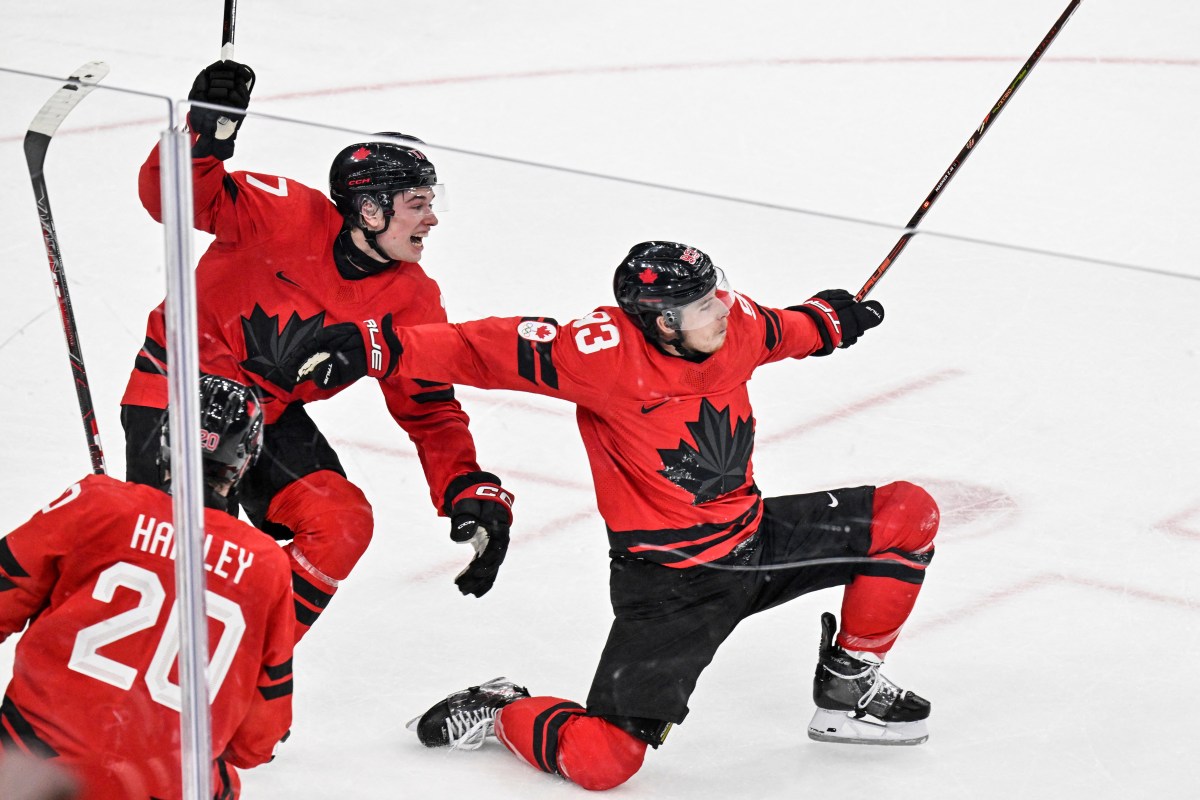
The quarterfinal battle erupted with the ferocity of a blizzard, as Canada sought to assert their dominance from the first whistle. In the opening minutes, the crowd’s roar echoed like thunder, especially when youngster Macklin Celebrini—barely 19 and already a dynamo—slashed through defenses to bury a wrist shot past weathered veteran Lukáš Dostál. At just 19, Celebrini wasn’t just scoring; he was symbolizing the torch being passed to a new generation, his glee palpable as he raised his arms, skates sliding in celebration on the frozen canvas. But hockey, as any fan knows, is a fickle mistress, and Czechia refused to roll over. Lukas Sedlak, a gritty forward with the tenacity of a bulldog, chopped one past Canada’s beleaguered netminder, tying the score and sparking Czech chants that reverberated through the arena. Then, the knight in shining armor—or at least in a shark-like Red Wings uniform—David Pastrnak unleashed his sniper’s prowess, riffing a wrister that bulleted into the net, flipping the script entirely. Czechia’s bench erupted in joyful disbelief, their players thumping chests and hollering in Czech, the underdogs savoring the sweet taste of turning the tides. Canadian fans, who had traveled from afar with flags and face paint, felt a twinge of unease, their chants fading into murmurs as the scoreboard blinked 2-1 in favor of the Europeans. Pastrnak, with his larger-than-life presence and playoff pedigree, became the hero of the moment, his goals not just shots but statements: “We’re here, and we’re dangerous.” The game’s early back-and-forth encapsulated the beauty and brutality of Olympic hockey, where lightning-quick transitions punished mistakes and rewarded bravery. Emotions ran high; imagine the parents of these young stars watching from safe havens, hearts in throats, or the Czech community back home celebrating as if the Cup had been won. This wasn’t scripted—Canada’s unflappable facade cracked slightly, revealing the vulnerability beneath. As the period wound down, whispers of doubt crept in, but Canada’s leadership core, with McDavid directing traffic like a maestro, steadied the ship. It was a reminder that true excellence shines not in perfection but in adaptation, and this clash was far from over.
Reigniting the Fight in a Period of Mounting Tension
As the second period unfolded, the tension coiled tighter than a wound spring, the air thick with the scent of urgency and possibility. Canada, stung by the first-period reversal, poured fuel on their offensive engine, pushing the pace and probing for weaknesses in Czechia’s disciplined ranks. Nathan MacKinnon, the dynamic force of the Colorado Avalanche, became the linchpin, weaving through defenders with acrobatic flair before slamming an equalizer past Dostál—a goal that wasn’t just about points but about restoring faith in the room. The score now knotted at 2-2, the game transformed into a psychological chess match, where every shift felt like a standoff between empires. But the Czechs, fueled by home-ice determination, weren’t done; they tenaciously defended their lead when they had it, their forecheck disrupting Canada’s rhythm. Fans in the stands, a tapestry of red and white interspersed with blue jerseys, leaned forward, popcorn forgotten, as shifts ended in exhaustion and exultation. The atmosphere crackled with energy, officials skating frantically to keep up, while distant calls for Olympic reforms echoed in broader discussions—perhaps shortening tournaments or incorporating digital innovations to draw younger crowds, as some analysts pushed for after the event’s perceived lack of “buzz” highlighted by ESPN. Yet, on the ice, it was raw human drama: players crashing into boards, gloves flying in scrums, sweat freezing on brows as the mercury dipped. Celebrini, the rookie marvel, grew into his role, his youthful energy galvanizing teammates like McDavid, whose brilliance shone in assists that threaded needles. For Canada, this period was about resilience—answering adversity not with panic but with poise. Emotions swirled; imagine the coaches pacing the bench, barking strategies, or the wives and children of players back home clutching phones for updates. The game wasn’t just physical; it was an emotional odyssey, where defeats and rallies tested character. As the period climaxed, the score remained tied, but Canada’s fire hadn’t dimmed—it had evolved, forging a bond that promised more thrills ahead.
The Nail-Biting Third and the Overtime Prelude
The third period arrived like a storm cloud, darkness descending as both teams battled in the crucible of sudden-death implications. With just under four minutes on the clock and the game still deadlocked, Czechia unleashed a stunner: Ondrej Palat, the seasoned warrior in his dotage, flicked a wrister that snuck through traffic and past Canada’s goalie, giving the Czechs a fleeting 3-2 edge. The arena erupted in Czech delight, horns blaring as the underdogs tasted victory’s nectar, their dream of upsetting the hockey titans suddenly within arm’s reach. Canada’s bench was stunned, players’ faces masks of disbelief—how had the script flipped so dramatically? But in that crucible of doubt, leadership emerged: Nick Suzuki, the Montreal Canadiens’ steady captain, stepped up with icy coolness. With 3:27 remaining, he deflected a precise point shot from blueliner Devon Toews, the puck kissing his stick and deceiving Dostál to knot it once more. Suzuki’s goal wasn’t just a tally; it was a lifeline, a moment of human grit showcasing the spine required to claw back. In overtime’s shadow, the tension peaked, emotions raw as families held breaths and fans chanted anthems. This wasn’t merely sport; it was the pinnacle of endurance, where fatigued bodies defied limits. The game’s ebb and flow mirrored life’s uncertainties, with Canada’s comeback symbolizing hope against odds. As spectators imagined the final buzzer’s agony or ecstasy, the period underscored hockey’s drama— Crossover news swirled, like the Seahawks contemplating a $7 Billion stadium decision post-Super Bowl, reflecting big gambles in sports. But here, it was personal: players like Marner lurking in the wings, ready for destiny.
The Historic Overtime Miracle and an Immortal Moment
Then came the denouement, the piece of Olympic lore etched in history: Overtime in a 3-on-3 format, where ice amplified every stride and error cost cherished. Space yawned open like a chasm, and Mitch Marner, the Golden Knights’ elusive waif, seized it with ballet-like grace. Skating as if on air, he danced past defenders, his stickwork a symphony of deceit, before burying a silky backhand under Dostál at just 1:22—the fastest overtime goal ever in an Olympic game featuring NHL talent. The arena detonated in Canadian euphoria, horns, and screams piercing the void, while Czech shoulders slumped in bittersweet anguish. Marner’s triumph wasn’t just a goal; it was redemption, rewriting his narrative from sometimes-questioned clutch to immortal hero. Imagine the elation: teammates mobbing him in a pile of joy, tousled hair and jubilant shouts, or the fans’ rapturous hugs echoing the national pride swelling nationwide. This was human triumph—Marner’s journey from doubter to darling, fueled by quiet determination amidst the chaos. The win, a 4-3 thriller, cemented Canada’s survival, their first real adversity embraced, forging steel in their character. Broader sports echoes resonated, like calls for the Browns to trade for a Pro Bowl QB as Shepard Sanders’ heir, reminding that legacies hinge on bold moves. Here, Marner’s strike felt seismic, a catalyst for gold.
Reflections on Resilience and the Road to Glory
In the aftermath, Canada’s overtime escape breathed life into their quest, transforming potential disaster into testament of grit. This wasn’t just a victory; it was a masterclass in rolling with punches, leaning on emerging pillars like Suzuki’s deflection wizardry, Celebrini’s youthful fire, and Mc David’s orchestration, even as Crosby nursed uncertainties from an injury. The game reshaped narratives, Marner’s goal a beacon of destiny amid Olympic splendor. As semifinals loomed against Sweden, Finland, or Switzerland—the lowest seed from the other bracket—the team emerged scarred but stronger, their unity unyielding. Fans pondered if this adversity ignited the spark needed, with broader reforms in hockey’s tapestry hinting at evolution. Yet, in this Italian winter, Canada’s saga pulsed with promise, a human epic of triumph over trials, poised for podium pastures. The Olympics, with its waning buzz, found renewal in such moments, reminding that greatness blooms from resilience, not just talent. As the Games pressed on, this win wasn’t an end but a chapter, propelling maple dreams toward eternal gold.