


With the 2026 midterm elections fast approaching, a highly charged political atmosphere is setting the stage for crucial gubernatorial battles across the United States. Historically, the political party occupying the White House faces a steep uphill battle during midterm cycles, as voters frequently use these elections to voice their frustrations with the sitting president. This year is proving to be no exception. Rising national economic anxieties, driven by the persistent cost of living and escalating gas prices linked to international conflicts, have chipped away at President Donald Trump’s approval ratings. Seizing on this shift in public sentiment, Democrats are going on the offensive, eyeing key governorships currently held by Republicans, even as they fight to defend their own territory in states that supported Trump in the last presidential election.
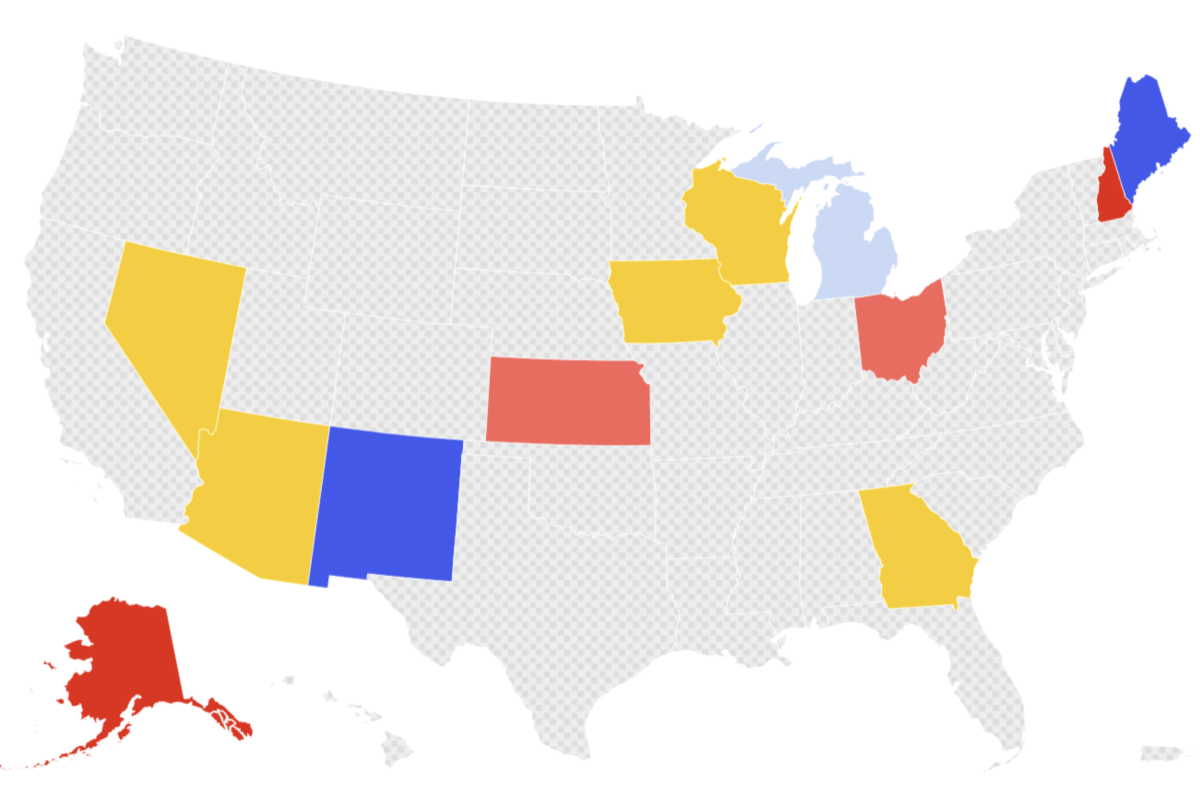
Forecasters and analytical models highlight Kansas as the seat most likely to change hands in November, which is a major concern for Democrats. Incumbent Democratic Governor Laura Kelly, who managed to secure victories in 2018 and 2022 by bridging partisan divides, is term-limited and cannot run again. Because Kansas typically leans heavily Republican, prominent groups like the Cook Political Report and Sabato’s Crystal Ball have categorized the race as “Lean Republican,” making it the only state projected to flip parties. Prediction markets mirror this outlook, giving Republicans a distinct advantage of around 70 percent. This leaves Democrats with the difficult task of finding a candidate who can replicate Kelly’s unique bipartisan appeal, with state Senators Ethan Corson and Cindy Holscher among those competing in the upcoming August primary.
Beyond Kansas, the battle for control of state capitols is concentrated in five high-stakes toss-up states: Arizona, Wisconsin, Georgia, Iowa, and Nevada. These battlegrounds present a mix of defensive struggles and prime pickup opportunities for both parties. In Arizona, Democratic Governor Katie Hobbs is seeking reelection in a state that backed Trump in 2024. While Hobbs maintains a modest lead in early head-to-head polling against potential Republican challengers like U.S. Representative Andy Biggs, her success will likely depend on whether she can win back Hispanic voters, a crucial demographic that showed signs of shifting toward the Republican column in recent elections. Meanwhile, Wisconsin’s race is wide open following Democratic Governor Tony Evers’ decision not to seek a third term, setting up a competitive environment where prediction markets currently give Democrats a slight edge ahead of the August primaries.
In Georgia and Nevada, local dynamics are testing the limits of recent political shifts. Georgia, which has not elected a Democratic governor in more than twenty years, is seeing a highly anticipated matchup between former Atlanta Mayor Keisha Lance Bottoms, a Democrat, and Republican healthcare executive Rick Jackson. Early polling gives Bottoms a promising lead, but actual turnout—particularly among Black voters in the Atlanta metropolitan area—will ultimately decide if she can flip the seat. In Nevada, incumbent Republican Governor Joe Lombardo is widely regarded as the most vulnerable Republican governor in the country. Standing as a moderate in a swing state, Lombardo is locked in a tight race with Democrat Aaron Ford. Early polls show the two candidates virtually tied, making Nevada a critical test of whether a moderate Republican can survive a shifting national political tide.
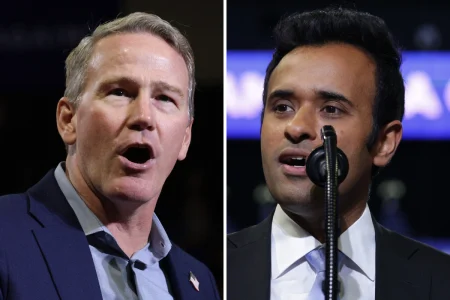
Perhaps the most surprising developments are unfolding in Iowa and Ohio, two former Midwestern swing states that have trended steadily Republican over the last decade. A recent highly regarded New York Times/Siena College poll revealed that Democrats are highly competitive in both states. In Iowa, Democratic state Auditor Rob Sand holds a narrow one-point lead over Republican businessman Zach Lahn, supported by growing local frustration over the economic impact of agricultural tariffs. In Ohio, where incumbent Republican Governor Mike DeWine is term-limited, a statistical dead heat has emerged between Democrat Amy Acton, the state’s former health director, and Republican businessman Vivek Ramaswamy. The competitive nature of these races has energized the Democratic Governors Association, which is actively campaigning on promises to lower everyday household costs.
As the midterms draw closer, the political landscape remains highly fluid, and the upcoming late-summer primaries will go a long way in defining the final matchups. While the Republican Governors Association aims to capitalize on national economic grievances, Democrats are banking on localized messaging and hoping that voters’ concerns over Washington-led instability will work in their favor. How these races ultimately turn out will depend on shifting voter turnout patterns, fluctuations in the president’s approval ratings, and the overall health of the economy. With control of critical state policies on the line, both parties are preparing for a fierce, down-to-the-wire fight to the finish line this November.