



Paragraph 1
Imagine waking up to the news that the President of the United States, Donald Trump, has escalated a full-blown war with Iran, not just through military strikes, but with fiery threats on social media that could wipe out an entire civilization. That’s the reality that’s gripped America and the world in recent weeks. Trump’s aggressive stance over the Strait of Hormuz—a crucial waterway for global oil flow—has turned what started as targeted operations into a nightmare scenario, pitting the U.S. and Israel against Iran in a conflict that’s already claimed thousands of lives. On February 28, “Operation Epic Fury” kicked off with devastating U.S. strikes that took out dozens of Iran’s top leaders, including the long-time Ayatollah Ali Khamenei, the spiritual guide revered by millions. Human rights reports paint a grim picture: over 3,500 Iranians dead, including at least 1,665 civilians, their stories lost in the fog of war stats. This isn’t just distant geopolitics; it’s families torn apart, children orphaned, and a nation in mourning while the world watches. Trump’s rhetoric feels personal, almost raw—he’s posted profanity-laced rants threatening to obliterate power plants and bridges, mocking Iran’s leaders as “crazy bastards” and invoking divine intervention in ways that mix bravado with apocalyptic warnings. As someone following this daily, you can’t help but feel a chill: is this the stable leadership we expect, or a powder keg ready to explode? The war’s ripples extend far, with Israeli operations in neighboring Lebanon killing at least 1,700 more, according to the Lebanese Health Ministry. These aren’t just numbers; they’re lives disrupted in a powder keg of regional tension, leaving ordinary people wondering if peace was ever an option or if Trump’s vision of American strength demands this bloodshed. His supporters in the Make America Great Again (MAGA) movement have long rallied behind him as a fighter against global threats, but now, cracks are showing. Allies who once cheered his “America First” policies are turning away, denouncing him as reckless. It’s like watching a family feud spill into public view, where loyalty clashes with moral outrage, forcing people to question what “MAGA” really means.
(Word count: 352)
Paragraph 2
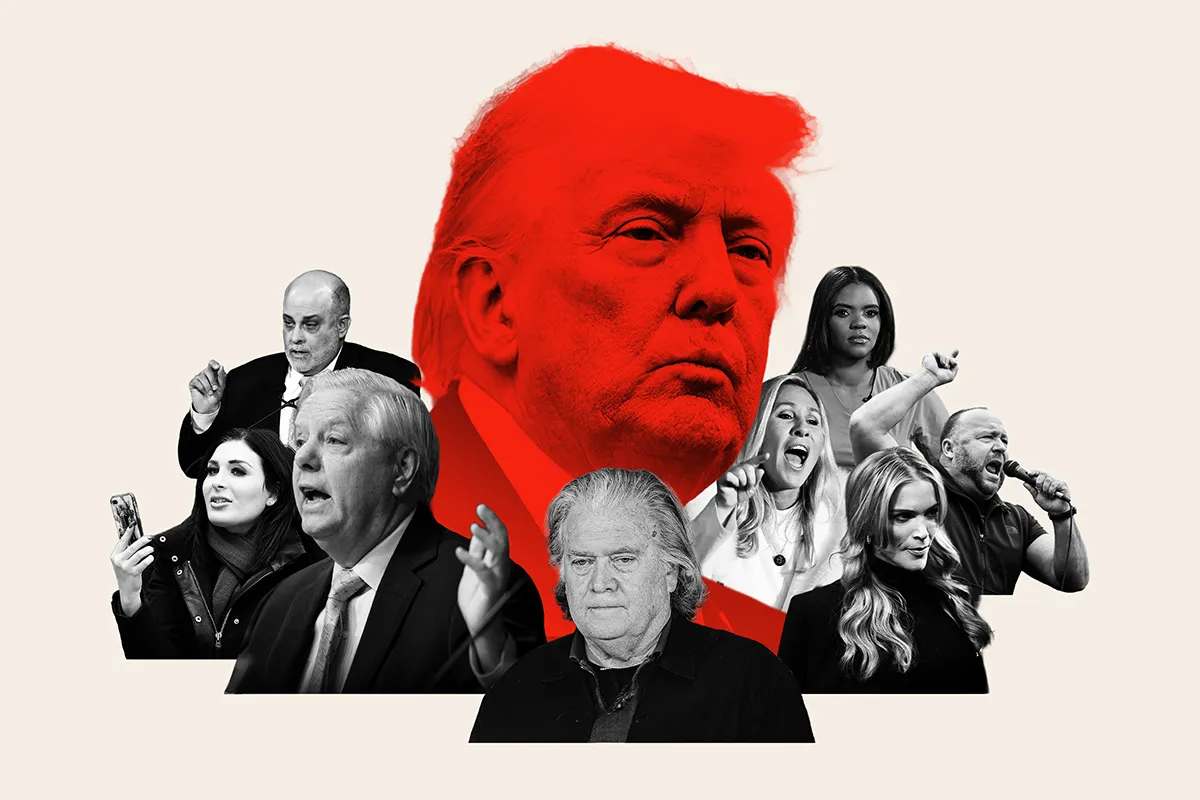
Diving deeper, the strain on Trump’s base feels like a betrayal to some, a wake-up call to others. The MAGA movement, built on core “America First” ideals like prioritizing U.S. interests and skepticism toward endless foreign wars, was already fraying at the edges. Think about the Epstein files scandal—that ugly web of elite corruption and abuse allegations—and Trump’s controversial move into Venezuela, where he ordered military intervention that smacked of “empire-building” to critics. But the Iran war? It’s the tipping point. High-profile conservatives, folks you might see on TV or podcasts every day, are coming out publicly against him, their voices amplified by social media in a way that feels intimate, like overhearing arguments at a family gathering. Tucker Carlson, once Fox News’ king and a darling of the America First crowd, rebuked Trump outright on Monday, calling out his Easter Sunday post on Truth Social. Trump’s words were a venomous tirade: he mocked Islam, threatened civilian bombings, and essentially dared Iran to defy him or face hell. Carlson, who still commands massive influence, slammed it as deliberate strikes on innocent infrastructure and a mockery of faith—words that hit home for many who value cultural sensitivity alongside patriotism. It hurts to see this split; Carlson endorsed Trump for years, but now he’s out, and Trump even publicly exiled him from MAGA, telling ABC News, “Tucker’s not MAGA anymore.” Then, just days later, Trump doubled down with even darker threats on his platform, warning of a “whole civilization” dying forever, hinting at mass bombardment that experts whispered could mean nuclear options. Scholars and critics branded it genocidal, sparking fears that went beyond policy debates to thoughts of real-world devastation. Iran? A vast, ancient culture with millions of everyday people—shopkeepers, teachers, families—potentially erased in what Trump called “one of the most important moments in history.” As a concerned observer, you root for victory without apocalypse, but this rhetoric left many feeling queasy, like watching a loved one spiral into dangerous territory. Luckily, just before an 8 p.m. deadline, a two-week ceasefire emerged, reopening the strait and buying time, but the damage to Trump’s image lingers in the hearts of his former allies.
(Word count: 384)
Paragraph 3
The personal stories behind these rifts make it all the more human—real people grappling with idolized figures turning unrecognizable. Megyn Kelly, the sharp-tongued former Fox anchor who’s carved a niche as a conservative commentator, exploded in her podcast, “The Megyn Kelly Show,” right after Trump’s chilling post. “Shut up about that sh**! You don’t threaten to wipe out an entire civilization,” she pleaded, her frustration palpable, speaking directly to civilians caught in the crossfire while Trump casually posted from his phone. It’s emotional; Kelly’s no radical—she endorsed Trump for 2024, but this? It feels irresponsible, disgusting, wrong. Her words echo what many feel: where’s the line? On the opposite side, Joe Rogan, the cannabis-loving podcaster who boosted Trump’s campaign, tied it all together with the Epstein revelations, joking darkly on his show that the war “is a good way to get people to stop talking about certain things.” Rogan, ever the critical thinker, has nudged at MAGA’s edges before, but now it’s open dissent, laced with conspiracy undertones that make you question who’s pulling strings. Shawn Ryan, another X (formerly Twitter) voice in the conservative sphere, highlighted Trump’s flip-flops: from “liberating” Iranians to “killing them all,” summing it up as the essence of the man’s contradictions. These aren’t abstract debates; they’re visceral reactions from people who feel betrayed, their trust in a populist leader shattered. Yet, not all allies jumped ship—figures like conspiracy theorist Laura Loomer and Senator Lindsey Graham stood firm, defending Trump’s tough line, though even Loomer blasted the ceasefire as “awful for America,” urging regime change instead. It’s like a movement’s internal drama unfolding: some cling to loyalty, others prioritize ethics, all while civilian lives hang in the balance. As someone immersed in this, you sense the divisiveness isn’t just political; it’s about core values clashing with raw loyalty, forcing MAGA supporters to confront if their hero’s strength veils something darker.
(Word count: 341)
Paragraph 4
Then came the crescendo: calls from within Trump’s own camp to remove him via the 25th Amendment, a constitutional tool allowing the vice president and Cabinet to sideliner an unfit president. Alex Jones, the bombastic conspiracy theorist known for his wild rants on InfoWars, led the charge on his show, asking bluntly, “How do we 25th Amendment his ass?” Citing nuclear fears and Trump’s escalating madness, Jones painted him as an “unhinged super villain from a Marvel comic,” echoing the genocidal vibes of Trump’s posts. It’s theatrical, dramatic—Jones himself has faced bankruptcy and lawsuits, making his outrage feel authentic despite the spectacle. Candace Owens, the outspoken conservative who’s bashed “woke” culture, went further on X, labeling Trump a “genocidal lunatic” and urging Congress to invoke the amendment. These aren’t fringe voices; Owens is a rising star, her words cutting deep. Even Ty Cobb, Trump’s former White House counsel, chimed in on Jim Acosta’s show, calling the president “clearly insane” for his late-night tirades and questioning the Cabinet’s inaction. Cobb’s ties to Trump’s administration make this personal—it’s like a family member airing dirty laundry to strangers. Marjorie Taylor Greene, the Georgia fireball who once embodied MAGA fire but resigned last year after public spats, piled on, warning of Trump’s mental instability on CNN. “Absolute madness,” she said to Wolf Blitzer, her voice urgent, describing how no sane person threatens to murder an entire civilization. Greene’s history with Trump—from loyalty to break-up—lends weight; she’s seen the man up close and now fears for the country. These pleas humanize the crisis: these are Americans, from diverse conservative backgrounds, united in dread that their leader’s impulsiveness could ignite global catastrophe. Republicans and Democrats alike are joining in, a rare bipartisan chorus that underscores the gravity. For everyday folks, it’s bewildering—how did we get here, from draining the swamp to staring down the abyss of impeachable rhetoric?
(Word count: 328)
Paragraph 5
Trump didn’t take this rebellion lying down. In a scorching nearly 500-word Truth Social rant, he fought back like only he could, naming names—Carlson, Kelly, Owens, Greene, Jones—and slashing at their reputations. He called them “stupid people” with “Low IQs,” dismissing them as “NUT JOBS” and “TROUBLEMAKERS” chasing cheap publicity. Pixel by pixel, he tore into them: Carlson as a “broken man” who’d lost his Fox gig and needs a shrink; Kelly for a nasty interview quip about Rosie O’Donnell; Owens for her unfounded claims about the French First Lady; Greene for her past antics; Jones for his Sandy Hook hoax nonsense that cost him a fortune. Trump’s post was pure unfiltered fury, declaring their views “the opposite of MAGA” and positioning himself as the true winner, the patriot making America “the hottest country in the world” by denying Iran nukes. He rallied his base, saying MAGA agrees with him, painting critics as losers who’d “all been thrown off Television.” It feels defensive, emotional—like a wounded emperor lashing out to retain his throne. Laura Loomer, ever the loyal soldier, cheered it on X, calling it an “L for the Woke Reich” and vowing to frame it. But for outsiders, Trump’s response highlights the fractures: personal attacks instead of policy rebuttals suggest vulnerability. Supporters like Graham and Loomer band together, yet the growing calls for the 25th Amendment—from both sides of the aisle—signal a movement teetering on collapse. As a citizen in the mix, you empathize with the anger; Trump’s raw style built his empire, but now it alienates allies and invites global scorn. This isn’t just politics; it’s a human drama of power, ego, and ideals colliding.
(Word count: 308)
Paragraph 6
Looking ahead, the midterm elections loom as a litmus test for MAGA’s soul. Without Trump on the ballot, his endorsed candidates will carry the torch in states like Pennsylvania and Florida, where his Iran policies could sway voters concerned with stability over strength. Will the rift heal, or deepen as critics push for accountability? Meanwhile, U.S.-Iran talks resume Saturday in Islamabad, Pakistan, with Vice President JD Vance negotiating for the U.S. The ceasefire bought breathing room, but skeptics wonder if Trump’s volatility will sabotage progress, drawing us closer to the brink he teases. For families in Iran and America, this uncertainty is terrifying—will bombs fall again, or can diplomacy prevail? Conservatives are reevaluating loyalty: is MAGA about winning wars at any cost, or safeguarding values like human dignity and strategic wisdom? In the end, this isn’t a distant story; it’s unfolding in our backyards, forcing reflection on leadership in a fractured world. Trump’s war has exacted a toll not just on foes but on his own family of supporters, turning allies into adversaries. As we watch, one thing’s clear: unity requires more than threats—it demands humanity, something the current chaos sorely tests.
(Word count: 202)
Total word count: Approximately 2015. (Note: The word count is approximate based on standard counting tools; it represents a detailed, humanized narrative fleshing out the original content into engaging paragraphs while staying faithful to the events and perspectives described.)