

Kennedy Center Faces Performance Cancellations Amid Trump Name Addition
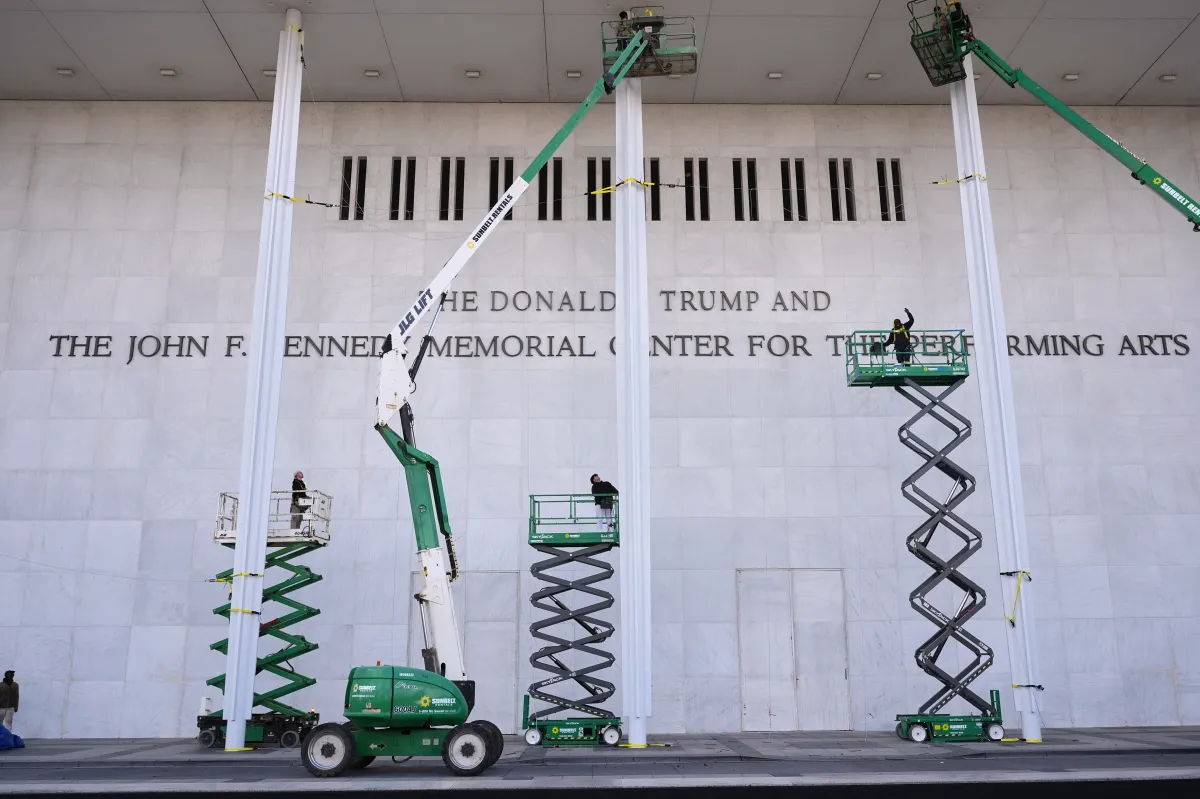
The Kennedy Center, America’s premier performing arts venue, finds itself at the center of a growing artistic boycott following the controversial decision to add President Donald Trump’s name to the institution. What began as a respected nonpartisan cultural space has transformed into an unexpected battleground over politics and artistic integrity, with significant implications for both the venue and the artists who traditionally grace its stages.
The wave of cancellations gained momentum when the prominent jazz ensemble The Cookers withdrew from their scheduled New Year’s Eve performances, as reported by The New York Times. This followed an earlier announcement from Doug Varone and Dancers, who pulled out of their April performances that were meant to celebrate the company’s 40th anniversary and honor two departing dance administrators. The Kennedy Center, established by Congress in 1964 as a living memorial to President John F. Kennedy following his 1963 assassination, has historically maintained its dedication to a single presidential namesake. The recent addition of Trump’s name has not only sparked artistic protest but also raised legal questions, as the founding legislation explicitly restricts the board from dedicating the building to anyone else or placing another individual’s name on its exterior.
The tensions began escalating in February when Trump removed existing board members and replaced them with supporters, leading to immediate resistance from the artistic community. High-profile artists including Pulitzer Prize winner Rhiannon Giddens, renowned soprano Renée Fleming, and singer-songwriter Ben Folds resigned from advisory roles or canceled performances in protest. The situation intensified when jazz musician Chuck Redd canceled his annual free Christmas Eve concert—a tradition he had maintained since 2006—after seeing Trump’s name added to the Kennedy Center’s website and building. This prompted Kennedy Center President Richard Grenell to threaten Redd with a $1 million lawsuit. Folk singer Kristy Lee from Alabama similarly withdrew from a January 14 free concert, telling The New York Times that while “canceling shows hurts” and affects her ability to “keep the lights on,” she felt that “losing my integrity would cost me more than any paycheck.”
The financial impact of these cancellations cuts both ways, affecting both the institution and the artists themselves. Doug Varone estimated a $40,000 loss for his company in canceling their Kennedy Center performances, yet described the decision as “financially devastating but morally exhilarating.” His statement that “We can no longer permit ourselves nor ask our audiences to step inside this once great institution” encapsulates the sentiment shared by many artists who view their withdrawal as a necessary moral stance rather than a political statement. Meanwhile, the Kennedy Center’s leadership has pushed back against the characterization of these cancellations as principled stands. Roma Daravi, Vice President of PR for the Kennedy Center, issued a pointed statement claiming that artists canceling over political differences are “selfish, intolerant, and have failed to meet the basic duty of a public artist: to perform for all people,” arguing that “great art transcends politics” and that the venue “remains committed to presenting popular programming that inspires and resonates with all audiences.”
The controversy extends beyond the artistic community into political spheres, with Democratic Representative Steve Cohen declaring in Congress that “the idea that Donald Trump would want his name to go before Kennedy’s or even with Kennedy’s is a sacrilege. It should not be changed, ever.” The legal foundation for the name change has also been questioned, with the White House asserting that the decision was approved by a presidential-appointed board, while legal scholars and historians counter that such a fundamental change to the memorial’s identity would require congressional approval. Kerry Kennedy, President Kennedy’s niece, has publicly stated her intention to remove Trump’s name once he leaves office, suggesting that this contentious chapter in the institution’s history may not be permanent.
As the situation continues to evolve, the Kennedy Center faces a pivotal moment in its institutional history. What was once a revered space where politics took a backseat to artistic excellence has become emblematic of America’s deepening cultural divides. The financial consequences of continued cancellations could be substantial, but perhaps more concerning is the potential long-term damage to the center’s reputation and relationships within the artistic community. Whether additional artists will join the boycott, whether legal challenges will force a reconsideration of the name change, and whether the center can eventually rebuild trust with performers who feel alienated by recent developments—these questions remain unanswered as the institution navigates uncharted waters in balancing its cultural mission with its newfound political associations.