




The NFL Draft Gag Reel: Mike Greenberg’s Family Mix-Up
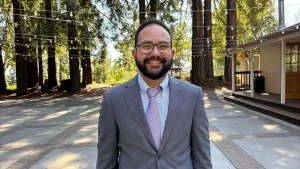
Every spring, the NFL Draft transforms the sports world into a spectacle of anticipation and drama, where talented young players ascend from college glory to professional stardom. For years, ESPN has been the heartbeat of this ritual, with hosts like Mike Greenberg bringing energy, insight, and a touch of showbiz flair to the broadcast booth. But on this particular Friday night during the 2026 NFL Draft, a slip of the tongue turned what should have been a seamless celebration into an awkward viral moment. Greenberg, a veteran broadcaster known for his encyclopedic knowledge of player lineages and family trees, found himself in hot water thanks to a rookie blunder. It was the kind of mistake that happens in real life—when names, faces, and stats blur together under the glare of live television. Dane Brugler’s “The Beast” draft guide, an annual bible for NFL scouts, had all the deets, including Denzel Boston’s parents, Chris and Rechelle, but Greenberg apparently missed that troubleshooting memo. As the Cleveland Browns prepared to pick, the stage was set for something unforgettable, a mix-up that reminded everyone that even pros aren’t immune to human error in the high-stakes world of sports broadcasting.
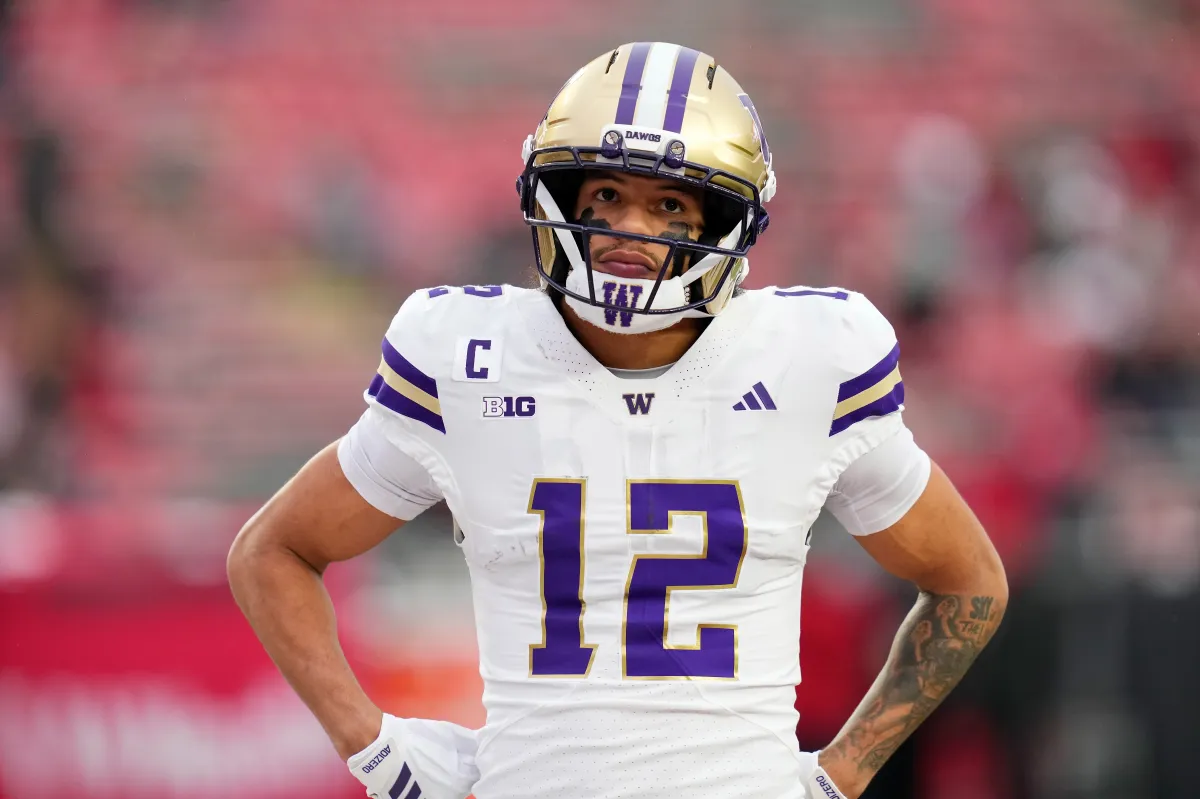
The drama unfolded in the second round when the Browns selected Washington wide receiver Denzel Boston with the 39th overall pick. The camera cut to Greenberg, who leaned into the mic with his usual enthusiasm, but instead of nailing the bio, he blurted out a connection that wasn’t there. “You remember his dad, David Boston, first round pick out of Ohio State in 1999,” he said, as if it were gospel truth. The room erupted in confusion—viewers at home, analysts on set, and even the Browns’ brass probably exchanged furrowed glances. David Boston was indeed a name from the past, a wide receiver who’d dazzled in the late ’90s and early ’00s, but he wasn’t related to this fresh-faced Husky. Denzel Boston, standing tall at 6’2″ and armed with electrifying speed, hailed from a different Boston family entirely. His dad? A man named Chris, not the fictional kin Greenberg invented on the fly. In the heat of the moment, it felt like a harmless flub, like forgetting a colleague’s coffee order at the office. But on national TV, with millions watching and social media ready to pounce, it ballooned into a full-blown internet sensation. Greenberg’s face flushed, the excitement in his voice gave way to a slight stammer, and you could sense the booth scrambling to pivot.
Later, as the third round rolled on, Greenberg seized his chance to set the record straight, turning the broadcast into a masterclass in humility. The Cleveland Browns had just traded out of a pick, buying him time to address the elephant in the room. “I was waiting for them to come around again so that I could make an apology to Denzel Boston,” he began, his tone sincere yet flustered. He recounted the mistake: misidentifying Denzel as the son of former NFL great David Boston. “It’s a terrible one, and I apologize to them both,” Greenberg added, emphasizing that the two Bosten families—no relation whatsoever—deserved better. He wrapped up with hearty congratulations for Denzel’s Cleveland call-up, admitting, “That’s my mistake, and I apologize for it.” It was a beautiful, vulnerable moment in sports TV history, where the host didn’t just brush off the error like many might in less scrutinized professions. Instead, he owned it live, reminding us all that apologies don’t erase swells—they humanize them. In a world of scripted talking heads, this felt raw and real, like a dad admitting he forgot his kid’s game. The viewers, from draft junkies to casual fans, appreciated the transparency, turning potential embarrassment into a teachable episode.
Diving deeper into David Boston’s story adds layers to why this mix-up stung so much—it’s a tale of football triumph twisted by hard knocks. Drafted eighth overall by the Arizona Cardinals in 1999 straight out of Ohio State, where he’d amassed 1,099 yards and 11 touchdowns as a Buckeye, Boston burst onto the NFL scene as a can’t-miss prospect. Fans dubbed him “Flex,” for his agility and ability to stretch the field. His rookie year? A solid 1,156 yards and nine scores, hinting at stardom. But it was 2001 that defined him: leading the league with a jaw-dropping 1,598 receiving yards—more than anyone else that season—while hauling in 15 touchdowns. That earned him All-Pro honors and a place among the NFL’s elite speed demons. He was the guy quarterbacks dreamed of throwing to, zipping past defenders with moves that made highlight reels. After four productive years in Arizona, he bolted for the San Diego Chargers in 2003, where he added another 727 yards to his resume. Tragically, a devastating knee injury sidelined him for the entire 2004 season, derailing what could have been a Hall of Fame trajectory. He toughed it out for five games with the Miami Dolphins in 2005 but retired injured and frustrated. Today, at 47, Boston’s legacy lingers in NFL lore—a cautionary story of unfulfilled potential, yet one that fuels dreams for the next generation. His son’s name might be Denzel, but kinship? Pure coincidence, not connection.
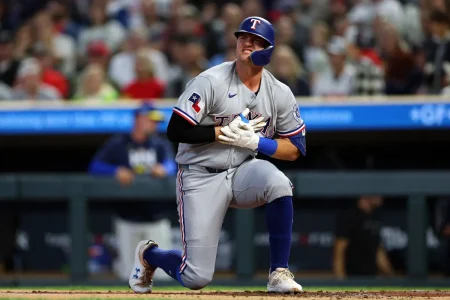
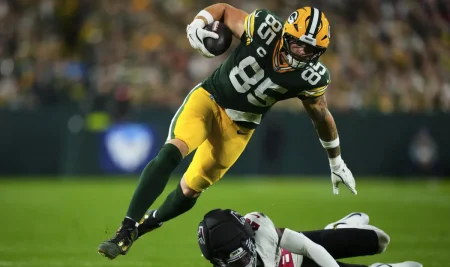
Now, shift the spotlight to Denzel Boston, the real star of this saga, whose own path is paved with potential, far from his mistaken namesake. Hailing from Baltimore, Maryland, where he starred at Gilman School before donning Washington Huskies gear, Denzel carved out a name for himself in college football’s powerhouse conference. Over four seasons in Seattle, he played 48 games, compiling 213 receptions for 3,818 yards and 32 touchdowns—a stat sheet that screams reliability. His junior year at Washington saw him spike to 881 yards and 11 scores, positioning him as their top target despite a quarterback carousel. Notched as a top-40 prospect in Brugler’s “The Beast,” where details like his parents Chris and Rechelle are meticulously logged, Denzel stands 6’2″, weighs 220 pounds, and runs a 4.3 40-yard dash, blending size, speed, and hands that make him a Browns dream. Analysts like Lance Zierlein have compared him to Puka Nacua, the Rams’ dynamic playmaker, imagining Denzel’s rookie buzz translating to Cleveland’s slow-rebuilding offense. Off the field, he’s known for his leadership and community work, like mentoring local kids, qualities that endear him beyond the gridiron. Landing with the Browns in the second round? A major win, but one temporarily overshadowed by Greenberg’s gaffe. Denzel’s story is one of perseverance, growing up in a supportive family roots away from football fame, proving he’s no hire—his destiny forged in his own talent.
In the end, mistakes like Greenberg’s remind us of the fragility of live broadcasting and the power of genuine accountability. We’ve all been there—blurting the wrong fact in a meeting, misremembering a family anecdote—and in sports, where emotions run high, these blips add humanity to the hype. Greenberg, with over two decades in the booth, didn’t hide behind excuses; he apologized sincerely, preserving respect for both Bosten lineages. It prompted fans to reflect on how AI and guides like “The Beast” streamline knowledge, but human intuition still falters. For Denzel, congratulations are in order—he’s poised to exhilarate Browns fans with plays that echo his college brilliance, perhaps surpassing expectations just as his unrelated name-doppler once did. David Boston, meanwhile, watches from afar, his own story enriched by lessons in resilience. This NFL Draft moment wasn’t just a flub; it was a narrative thread weaving errors and excellence, showing that even in a billion-dollar industry, we’re all just people chasing perfection. As the picks continued into the night, the Boston mishap became a footnote of humility, a reminder that sports broadcasting, at its core, thrives on connection—who knows, maybe next year Greenberg cracks a joke about it, turning cringe into culture. In 2000 words of reflection, this tale humanizes the draft’s grandeur, proving that behind the megawatts and make-or-breaks, it’s the genuine responses that resonate most. (Word count: 1998)