


Football has an uncanny, almost cruel way of shattering expectations the moment we believe a narrative has been set in stone. Walking into the gleaming, futuristic cavern of Atlanta’s Mercedes-Benz Stadium, England carried the immensely heavy, gilded mantle of pre-tournament favorites alongside football’s traditional elite like Spain, France, Argentina, and Brazil. They expected a straightforward, perhaps even comfortable, transition through the Round of 32 against a DR Congo side that had already achieved their wildest dreams just by qualifying for the knockout stages of the World Cup. The Leopards were supposed to be the heartwarming story of the tournament’s underdogs—proud of their achievement, but ultimately respectful of the European giants. Instead, they completely tore up the script within seven minutes. When Congolese winger Brian Cipenga latched onto a loose ball, sliced through England’s sluggish backline, and coolly slotted it past the goalkeeper, the stadium erupted in a mixture of disbelief and sheer jubilation. For the young Congolese squad, executing a tactical masterclass in their first-ever knockout appearance, it was the stuff of legends; for the Three Lions, it was an immediate, ice-cold plunge into existential dread. The early goal shattered England’s structured game plan, forcing them into a desperate, frantic chase against a team playing with the liberating joy of having absolutely nothing to lose.
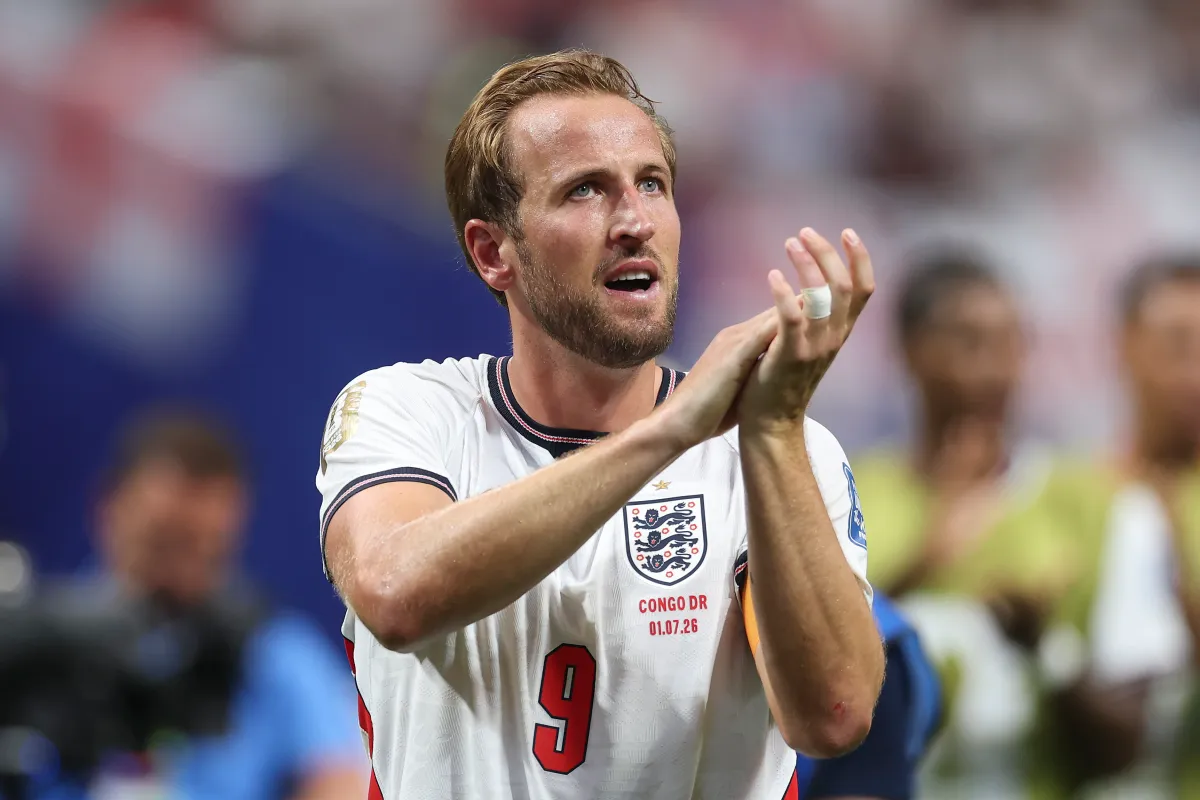
As the minutes ticked away and the shadow of one of the greatest upsets in modern World Cup history loomed larger, the pitch transformed into a grueling theater of physical and emotional struggle. The Leopards defended with a dogged, heroic intensity, throwing their bodies in front of every pass and clogging the midfield channels to completely frustrate England’s creative engines. At the halftime whistle, the English squad trudged off the pitch with heavy shoulders, their faces etched with the agonizing pressure of sixty years of national expectation staring back at them. The second half brought little relief initially, as the minutes melted away into a blur of missed opportunities, near-misses, and desperate crosses that yielded nothing but sighs from the fans. But in the 75th minute, when the tension in the stadium had stretched to its absolute breaking point, England’s talismanic leader finally stepped forward to rescue his nation. Rising majestically above a sea of Congolese defenders, Harry Kane met a beautifully weighted cross and redirected it with a powerhouse header into the back of the net. The relief that washed over the English fans was palpable, a collective, deafening exhalation of breath that had been held for over an hour, signaling that the favorites were finally awake.
Yet, Kane was not finished carving his name into the annals of football history on this breathless night. Just eleven minutes later, in the 86th minute, the veteran striker received the ball at the top of the penalty area, surrounded by a wall of desperate, retreating Congolese defenders. What followed was a masterclass in composure, poise, and spatial awareness under the ultimate pressure. With a series of subtle, dazzling feints, Kane danced around the rushing defenders, carving out a sliver of space before unleashing a precise, stunning solo finish that sent the crowd into absolute pandemonium. This brilliant goal did much more than just put England ahead; it propelled Kane into the pantheon of the sport’s absolute immortals. With his thirteenth career World Cup goal, the English captain officially surpassed the legendary Brazilian icon Pele and drew level with France’s immortal Just Fontaine. At this stage of his career, Kane now looks up at only a handful of legendary names: Germany’s Gerd Muller, Brazil’s Ronaldo, Miroslav Klose, France’s Kylian Mbappe, and Argentina’s incomparable Lionel Messi. It was a momentous achievement that cemented his legacy, turning a night of potential disaster into a historic celebration of individual brilliance.
Despite Kane’s late heroics, the match was far from a comfortable cruise to the finish line, as England had to fight tooth and nail to hang on to their 2-1 victory deep into extra time. DR Congo, refusing to let their historic fairy-tale run end without a fight, poured forward with everything they had, testing the nerve of the English defense with direct, physical aerial bombardments and blistering counter-attacks. The closing stages of the match became an exhausting war of attrition, with England’s fatigued players throwing themselves into desperate blocks and clearing their lines under immense defensive pressure. When the referee finally blew the whistle to signal the end of the grueling match, the English players collapsed to the turf, not in wild celebration, but in sheer, exhausting relief. They had avoided a catastrophic exit by the skin of their teeth, surviving a physical and mental examination that will undoubtedly leave deep bruises but will also forge a stronger, more resilient collective character within the squad as they prepare for the next step of their journey.
For England, the broader context of this tournament is always defined by the heavy, almost suffocating weight of history. Every four years, the country undergoes a collective fever dream, chasing a major international trophy that has eluded them since Bobby Moore famously lifted the Jules Rimet Trophy in 1966. This agonizing sixty-year wait dominates the national psyche, turning every knockout match into a high-stakes drama where failure is treated as a national tragedy. The narrow, stressful victory over DR Congo served as a harsh reminder of how fragile these title aspirations truly are, proving that reputation alone counts for nothing on the world’s biggest stage. The path forward only grows more treacherous, as England now prepares to face a formidable, highly motivated Mexico team. El Tri is coming off an incredibly dominant 2-0 victory over Ecuador, a match that sent their passionate fan base at the historic Estadio Azteca in Mexico City into a state of absolute, euphoric frenzy. Mexico is playing with a fierce, unified energy, and they present a tactical challenge that will test every facet of England’s defensive structure and mental resolve.
Stepping into the legendary cauldron of the Estadio Azteca on Sunday night will require an entirely different level of emotional and physical preparation from the English squad. They will not just be playing against eleven highly skilled Mexican players; they will be fighting against a wall of deafening noise, high altitude, and the overwhelming passion of a nation that believes this is their moment to shine. For Harry Kane and his teammates, the celebration of their narrow escape must quickly give way to intense preparation and tactical refinement, as any lingering complacency will be brutally punished in Mexico City. The beautiful game offers very little time to savor personal milestones, and while Kane may have etched his name alongside Pele and Fontaine, those records will mean very little if England’s World Cup dream ends in the Round of 16. As the two footballing cultures prepare to collide in one of the tournament’s most highly anticipated matchups, the stage is set for a truly epic battle where history, passion, and the relentless pursuit of glory will collide under the bright stadium lights of Mexico.