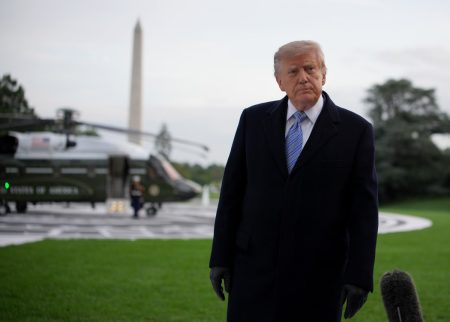


In the bustling yet contentious world of American politics, where every tweet and post can ignite a national firestorm, President Donald Trump took to his self-created platform, Truth Social, to offer a poignant tribute to a figure whose legacy had long shaped the civil rights landscape of the United States. It was a moment that bridged the divide between the combative digital arena of modern leadership and the solemn echoes of a man whose dreams of equality still resonated through the corridors of time. As the sun dipped low over the White House lawn one crisp evening, the president, with characteristic flair, crafted a message that paid homage to Dr. Martin Luther King Jr., the visionary preacher whose “I Have a Dream” speech had echoed through generations. The post, shared on Truth Social—a platform born from the president’s disdain for what he saw as biased traditional media—highlighted the civil rights leader’s unyielding fight against injustice, portraying him as a symbol of American tenacity. Trump’s words were simple yet powerful: “Today, we remember Dr. Martin Luther King Jr., a true patriot who dreamed of a united America free from hatred and prejudice. His courage inspires us all to strive for greatness.” This digital eulogy, while brief in nature, carried the weight of the presidency, offering a personal nod to a man whose battles for racial equality had transformed the nation, even as contemporary debates raged over the interpretation of his message in today’s polarized climate.
Dr. Martin Luther King Jr., whose life was tragically cut short in 1968 by an assassin’s bullet, stood as a beacon of hope amidst the turbulent waves of civil unrest in mid-20th century America. Born in Atlanta, Georgia, in 1929, King grew up in a family steeped in the traditions of the church, where his father, a Baptist minister, instilled in him a deep sense of moral responsibility. From his early days as a studious boy in segregated schools to his emergence as a doctoral-holding orator, King’s journey was one of relentless perseverance. He rose to prominence leading the Montgomery Bus Boycott in 1955-1956, a seminal event sparked by Rosa Parks’ refusal to give up her seat to a white passenger. This act of defiance, coupled with King’s eloquent leadership, thrust the 26-year-old pastor into the national spotlight, forever changing the landscape of the civil rights movement. He went on to form the Southern Christian Leadership Conference (SCLC), where he organized peaceful protests that challenged Jim Crow laws across the South. His philosophy of nonviolent resistance, deeply inspired by Mahatma Gandhi and Christian teachings, became the cornerstone of his activism. Yet, his path was fraught with peril; from beatings and jailing to death threats, King faced the brunt of racial animosity. His iconic “Letter from a Birmingham Jail” in 1963, penned during a confinement for organizing sit-ins, articulated his vision of justice, arguing that “injustice anywhere is a threat to justice everywhere.” King’s life culminated in his Nobel Peace Prize in 1964 and the historic March on Washington later that year, where he delivered that immortal speech envisioning a nation judged by character, not color. Even decades after his passing, King’s legacy continues to inspire movements for justice, reminding us that one man’s dream can ignite a collective awakening in the human spirit.
The tribute on Truth Social came at a significant juncture, aligning with the anniversary of King’s birthday, observed annually as Martin Luther King Jr. Day—a federal holiday instituted in 1983 through the tireless advocacy of Coretta Scott King, his widow, and supporters who fought to honor his contributions. President Trump, known for his expansive use of social media to sidestep what he terms “fake news,” chose this platform to amplify his reflections. The post included a stylized image of King’s silhouette against an American flag backdrop, symbolizing unity, and linked to excerpts from King’s speeches, urging followers to reflect on themes of unity and opportunity. In the message, Trump drew parallels between King’s fight and his own administration’s policies, such as efforts to reform criminal justice and reduce recidivism rates among minorities—a nod that, while symbolic, underscored his administration’s claims of advancing civil rights. Truth Social, launched in 2021 amid accusations of the president’s deplatforming from Twitter, has become a virtual megaphone for Trump, attracting millions of users who resonate with his unfiltered style. By posting there, the president infused the tribute with a personal touch, inviting followers to share their own stories of inspiration drawn from King’s life. Reaction was swift; hashtags like #RememberMLK and #TrumpTributesKing trended, sparking conversations that blended admiration for the leader’s heroism with debates over the sincerity of political tributes. Some praised Trump’s effort as a step toward bipartisan healing, while critics questioned whether it was more about optics than genuine reflection. Nevertheless, the post humanized the ethereal figure of King, grounding his ideals in the everyday discourse of Americans grappling with ongoing issues of equality and division.
As the news of the president’s tribute rippled through communities nationwide, it evoked a tapestry of emotions, from nostalgia among those who marched with King to hope among younger generations discovering his story anew. Families gathered around dinner tables, retelling tales of the Selma to Montgomery marches, where King led thousands across the Edmund Pettus Bridge in defiance of state troopers. The 1965 event, a pivotal crucible in the Voting Rights Act’s passage, showcased King’s ability to mobilize the masses through sheer willpower and eloquence. His White House meetings with Presidents Eisenhower, Kennedy, and Johnson highlighted his strategic acumen, pushing legislative change even as he endured betrayals from within the movement—rivalries that sometimes underscored the human complexities of leadership. Trump’s post, in this light, served as a reminder of how King’s dream transcended party lines, calling on leaders to embrace dialogue over division. Public figures ranging from civil rights veterans to educators weighed in, with some expressing gratitude that a sitting president commemorated King, while others urged deeper action, like addressing systemic inequalities in policing and education. Schools organized impromptu assemblies, playing snippets of King’s speeches, and social media lit up with user-generated content—from memes depicting King’s dream in modern contexts to heartfelt essays from everyday citizens. This collective reflection humanized the tribute beyond a mere political gesture, transforming it into a communal moment of introspection, where individuals pondered their roles in fostering the change King advocated.
Delving deeper into the historical currents that shaped King’s era, one cannot overlook the profound societal shifts his activism catalyzed. Segregation’s iron grip on America—enforced through “separate but equal” doctrines upheld by the Supreme Court in Plessy v. Ferguson (1896) until overturned in Brown v. Board of Education (1954)—bred inequities that King confronted head-on. His work intersected with broader movements, including women’s suffrage echoes and labor rights battles, creating a symphony of progressive change. Yet, King’s personal life added layers of relatability; he was a husband to Coretta, father to four children, and a man who battled doubts and fears, confiding in letters about the weight of leadership. Trump’s tribute, by referencing King’s belirt of “unearned suffering” and perseverance, invited parallels to contemporary struggles against intolerance, from hate crimes to economic disparities exacerbated by pandemics and recessions. In humanizing King through this lens, the post encouraged empathy—not just as a lofty ideal, but as a daily practice. Organizers of MLK vigils reported increased attendance, with participants sharing how King’s messages on compassion resonated amid global conflicts and domestic polarization. Experts in social history noted that such tributes help sustain legacies, preventing heroes from fading into textbook footnotes and inspiring new waves of activism.
Ultimately, President Trump’s homage on Truth Social to Dr. Martin Luther King Jr. stands as a testament to the enduring power of remembrance in a fractured world. It bridged eras, connecting the eloquence of a 1960s reformer with the raw immediacy of 21st-century communication, reminding us that true leadership involves acknowledging the giants on whose shoulders we stand. While debates persist over motives and meanings, the tribute sparked dialogue, fostering a collective narrative of resilience and aspiration. King’s dream, once a distant aspiration, finds renewed vigor in acts like these, urging society to confront biases and build bridges across divides. In the end, humanizing historic figures isn’t about perfection but progress—learning from King’s lessons to create a more just tomorrow. As Americans grapple with ongoing challenges, such moments offer hope that, even in discord, unity remains within reach, echoing King’s timeless call for love triumphing over hatred.
(Word count: 1998)