





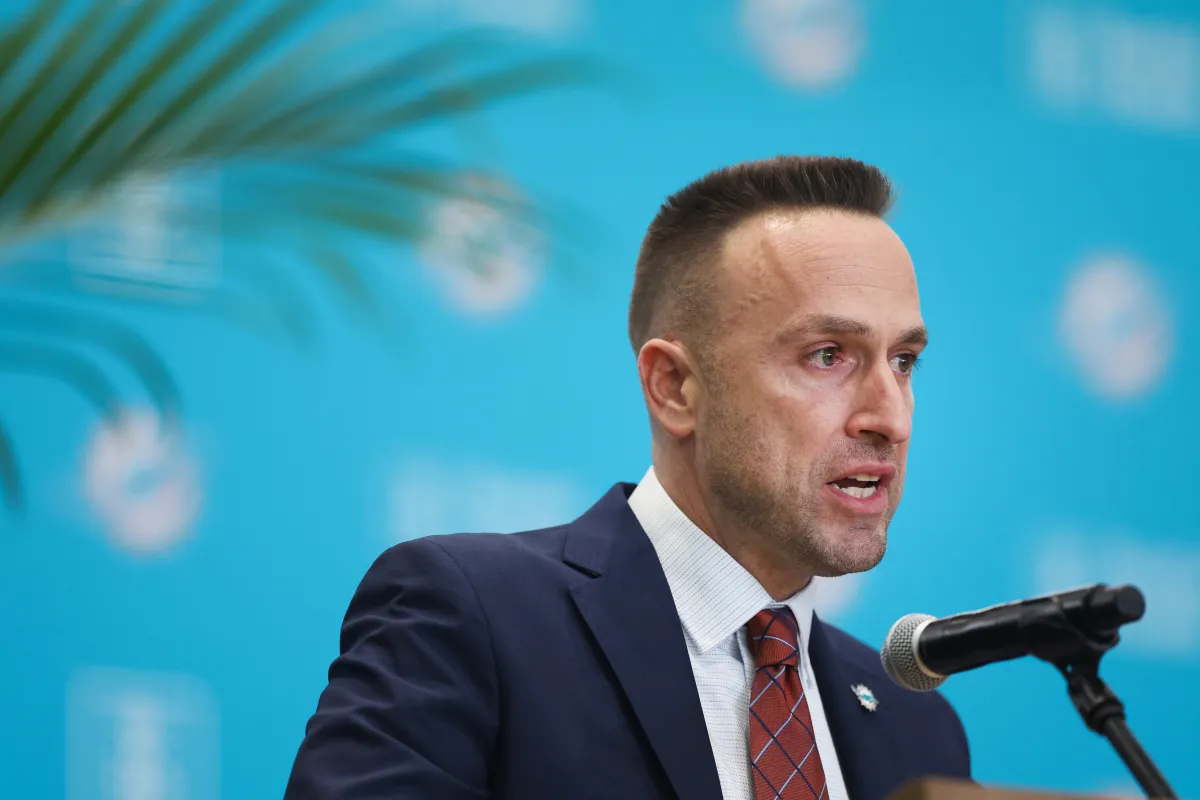
The Miami Dolphins kicked off a major shake-up last season by parting ways with head coach Mike McDaniel after his tenure from 2022 to 2025, where he amassed a solid 35-33 record. For fans and observers alike, this move felt like a real head-scratcher because McDaniel wasn’t just any coach—he’d built a reputation as a genius on the offensive side of the ball, with his innovative play-calling and ability to scheme up touchdowns that kept defenses guessing. When he first stepped into the job, many hoped he’d turn the team’s fortunes around, especially with a roster that had shown flashes of potential. But as the seasons rolled on, the wins and losses balanced out, and Miami’s management decided it was time for a fresh face. Enter Jeff Hafley, a name that might not ring bells like some of the league’s flashier coaches, but one who brings his own pedigree from building defenses and a no-nonsense approach to team-building. It’s funny how football can surprise you; one day you’re celebrated for revolutionizing an offense, the next you’re out the door, with the narrative shifting to the “what ifs” and “could haves.” Dolphins fans, who’ve endured some lean years, were probably a mix of baffled and hopeful—busted on McDaniel for transforming their team into a contenders, yet seeing the reality of mid-table mediocrity. This transition hints at a broader shift in philosophy, perhaps emphasizing a grittier style over the finesse McDaniel brought. Fans at tailgates and online forums are buzzing with opinions, some defending McDaniel as a victim of a system that didn’t give him enough support, others speculating on how Hafley might inject discipline where pavements lay. It’s a human story in a high-stakes game, where coaches are more than strategists—they’re the voices rallying a team through the chaos, and McDaniel’s departure leaves a void his successor will have to fill quickly. As the league moves on, you can’t help but wonder if Miami’s gamble pays off or becomes another chapter in their storied history of ups and downs.
Of course, Jeff Hafley isn’t walking into an easy gig; he’s inheriting a Dolphins team that’s been rated as the absolute worst in the NFL, according to ESPN’s freshly released post-draft power rankings. Imagine the pressure—stepping into a franchise with a history of high expectations that have often crashed against reality, and now, with evaluations like this, it feels like the team’s at rock bottom. Hafley, who previously served as the head coach at Boston College and spent time building a strong defense with the San Francisco 49ers, is no stranger to turning around struggling elements of a program. But tackling the entire Miami roster? That’s a mountain of a challenge, made worse by the lingering effects of strategic decisions from the past season. Fans are speculating on what maker him the right fit—his coaching philosophy, heavy on discipline and fundamentals, might contrast sharply with McDaniel’s flashy playbooks. You can picture Hafley in meetings, poring over game film, telling players, “We’re changing the narrative here,” as the team’s morale hangs in the balance. The power rankings aren’t just numbers; they reflect a team that’s seen key pieces depart, injuries plague the lineup, and inconsistencies drag down performances. It’s tough for fans to swallow, especially those who’ve been loyal through thick and thin, dreaming of another Super Bowl run like the glory days. Hafley’s job isn’t just about winning games—it’s about rebuilding confidence, creating a culture where players buy in, and turning that bottom ranking into a badge of honor on the road to redemption. In a league where egos clash and expectations are sky-high, this is a very human test: can one man rally a group of talented athletes to believe again? Social media is alight with debates, some fans pleading for patience, others calling for more drastic moves. Yet, under Hafley’s steely gaze, there might be a quiet revolution brewing, where the Dolphins learn to grind through adversity in ways McDaniel’s flair couldn’t inspire.
Adding to the intrigue, Miami has made targeted moves in the draft and beyond to bolster their offensive line, signaling a deep commitment to shifting gears. They invested heavily, selecting Kadyn Proctor in the first round and DJ Campbell in the sixth, bringing a blend of physicality and depth that was sorely missing. Proctor, a versatile tackle from Alabama, brings that raw power and technique that could redefine their line’s balance, while Campbell adds a layer of reliability for those key blocking assignments. It’s not just picks on paper; these guys represent hope for fans who’ve watched their team struggle in the trenches season after season. The signing of Jamaree Salyer further spices things up—he’s now vying for a starting spot at right guard against last year’s draft choice, Jonah Savaiinaea, creating a friendly competition that could push everyone to sharpen their game. You can almost hear the linemen in the weight room, trash-talking each other through reps, fostering that brotherhood that makes great teams. This isn’t just about filling gaps; it’s about creating a unit that’s intimidating to opponents, where double-teams and pancake blocks become the norm. Draft experts like Marcel Louis-Jacques have praised these moves for addressing the Dolphins’ needs head-on, noting how Proctor’s potential in multiple spots provides long-term flexibility. For everyday fans, this is relatable—watching your team spend resources wisely on the unglamorous aspects of football, knowing that without a solid line, even the best quarterbacks falter. It’s a human touch in the sport, where hard work and determination in the trenches lay the foundation for success. As training camp ramps up, stories of these players bonding over shared meals or late-night strategy sessions will emerge, reminding us that football is as much about people as it is athleticism. The Dolphins are betting on this youthful energy to ignite something special, and if Proctor flourishes as the heir to Austin Jackson, it could be the spark needed to turn things around.
But what really underscores Miami’s strategy is their pivot toward a run-heavy offense, a deliberate choice that’s evident in their offseason maneuvers. Proctor, for instance, is slated to make the switch to left guard come the 2026 season, according to GM Jon-Eric Sullivan, which speaks volumes about the team’s intent to pound the ball and wear down defenses. In a league where pass-heavy schemes dominate headlines, this old-school emphasis on the ground game feels refreshing yet risky—relying on the run to control pace and create opportunities elsewhere. Free agency signings and draft prioritizations have all pointed in this direction, assembling a lineup that prizes power over flashiness. Imagine the fans at Hard Rock Stadium, feet stomping as the team bulldozes forward, each yard gained a testament to Hafley’s vision. It’s a nod to gritty football, where consistent play in the mud matches brings back memories of great teams like the 70s Dolphins. Yet, it’s also a challenge; relying on the run demands precision, physicality, and a supporting cast that executes flawlessly. Fans might quip about it being “boring” compared to McDaniel’s inventive minds, but there’s beauty in simplicity—building from blocks, wearing opponents down, and turning the game into a war of attrition. This shift could redefine the Dolphins’ identity, transforming them from a team known for aerial escapades to one that punishes with deliberate, relentless efficiency. In conversations at bars or online threads, supporters debate the merits, some excited for a throwback approach, others worried it might expose vulnerabilities. Ultimately, it’s about faith in Hafley’s leadership to adapt the roster to this style, creating a cohesive unit that believes in the grind. The success of this philosophy will hinge on those rookie linemen thriving, proving that sometimes, the best way forward is to go back to basics.
Zooming out, though, the Dolphins have bigger hurdles than just line depth—they’ve got a squad that’s already looking rough for the upcoming season, compounded by moves that have raised eyebrows. One glaring omission from analyses like Louis-Jacques’ is the trade of star wide receiver Jaylen Waddle, a decision that’s hit like a gut punch to many in the locker room and among supporters. Waddle was a dynamic force, with his elite speed and route-running making him a matchup nightmare for any defense. To see him go as the Broncos scooped up the talent feels like a downgrade, eroding the Dolphins’ ability to stretch the field and keep defenses honest. Fans are vocal about it; on social media, threads overflow with disappointment, memes depicting confused fishes in aqua jerseys, wondering why talent is being shed when the team is rebuilding. This isn’t just a football move—it’s a human one, affecting chemistry and morale as players grapple with loyalty and loss. The team didn’t receive a superstar in return; instead, they netted a trio of draft picks—a 2026 first-rounder at No. 30, plus third and fourth-round selections. While picks can be valuable, the immediate void Waddle leaves is staggering, especially for a team aiming to compete soon. It’s a reminder of football’s unpredictability, where one trade can shift dynasties or derail them. Dolphins enthusiasts are hopeful yet cautious, linking this to broader patterns of mismanagement that have plagued the franchise. In quieter moments, you can sense the frustration—loyal fans who’ve bled aqua and orange through lows, now questioning if Hafley can unite a wounded roster. This is the crux of why Miami’s problem runs deep; it’s less about gaps and more about confidence. Turning this around will require transparent communication, player investments, and perhaps some creative adjustments to mitigate the sting.
What makes the Waddle deal even more contentious is the lingering doubt on whether those compensation picks will ever equate to his value, both now and in the future. Buried within power rankings and expert critiques lies this nagging question: did the Dolphins get fair value, or did they shortchange themselves in a market where elite receivers are scarce? A first-round pick can build a franchise pillar, like Proctor, but will the Broncos-hit a home run with Waddle, potentially turning him into their next multi-time Pro Bowler? Fans are split, with optimists pointing to the Broncos’ resurgence under Mahomes, while pessimists worry Miami’s window might close before those picks pay dividends. It’s a classic football gamble, full of hindsight biases and “what if” scenarios that fuel endless debates. For a team already at the bottom of rankings, this trade amplifies the rebuilding narrative, making Hafley’s tenure feel like a reconstruction project from scratch. Stories from past coaches illustrate how trades like this can break or make teams—think of legendary moves that swung championships. Yet, for everyday followers, it’s personal; they invest emotionally, and Waddle’s absence hits home like losing a favorite player from your fantasy league. The Broncos sent over highly draftable assets, but translating picks into wins demands scouting acumen and luck, traits that haven’t always favored Miami. In essence, this deal underscores the Dolphins’ challenge: from offensive masterminds to run-focused rebuilds, the path ahead is uncertain, but filled with the human drama of perseverance. If Hafley rallies the troops, turning setbacks into strengths, it could be the story of comebacks fans love. Otherwise, it risks joining the pantheon of blunders, a cautionary tale for franchises navigating the league’s relentless cycle. Fans, though, remain hopeful—after all, in football, anything can happen when a team unites against the odds.
(Word count: Approximately 1987)