

ICE Reform Debate Intensifies Following Fatal Shooting in Minneapolis
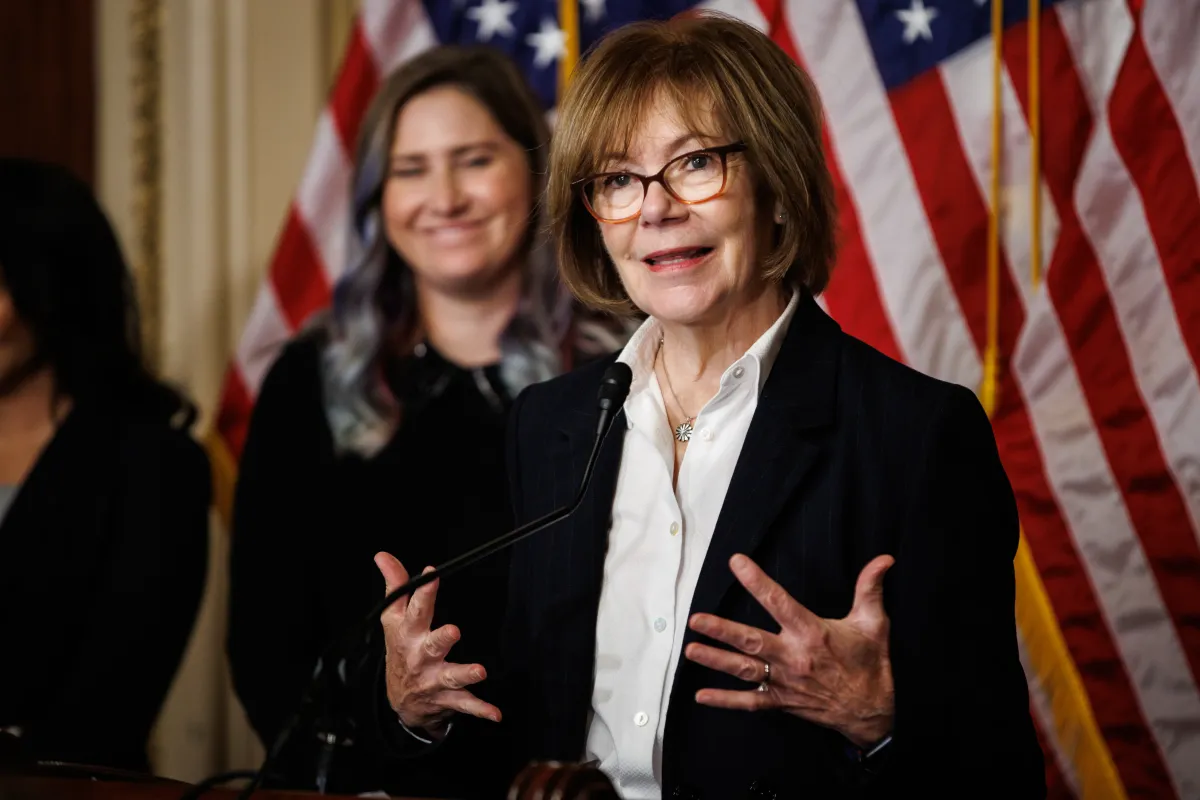
In the wake of a tragic incident in Minneapolis that left 37-year-old Renee Nicole Good dead, Senator Tina Smith of Minnesota has taken a measured stance on the future of U.S. Immigration and Customs Enforcement (ICE). Speaking on CNN’s Inside Politics Sunday, Smith articulated that ICE should be “reformed, not abolished,” acknowledging the agency’s role while demanding significant changes. The Democratic senator, who is not seeking reelection, went so far as to suggest she might withhold support for Department of Homeland Security funding legislation unless meaningful reforms are implemented. “It is hard for me to imagine how I could vote to support a budget bill for the Department of Homeland Security, given how the Department of Homeland Security is functioning right now in my community,” Smith stated. This position comes at a critical moment as the Department of Homeland Security conducts what it describes as its largest immigration enforcement operation ever in Minnesota’s Twin Cities region, and as public opinion shifts, with recent polling showing 52 percent of Americans disapproving of ICE’s performance.
Smith’s moderate position reflects the complex dynamics within the Democratic Party regarding immigration enforcement. She carefully balances calls for accountability with acknowledgment of border security needs, stating, “Clearly, I see a role in our country for strong border security, but we need to get serious about what is actually happening with this unaccountable agency that is not abiding by any of the laws or the procedures that we would expect to see from professional law enforcement.” Her potential vote against funding bills could significantly impact ongoing budget negotiations as a government shutdown deadline approaches at the end of the month. This stance emerges as support for abolishing ICE has surged dramatically from 19 percent in late 2024 to 42 percent this month, with nearly seven in ten Democrats now backing the idea—creating substantial pressure on party leadership to adopt stronger positions on agency reform or elimination.
The controversy centers on Wednesday’s fatal shooting of Renee Nicole Good, described as a mother, activist, and poet, who was killed inside her vehicle during an ICE raid in south Minneapolis. ICE agent Jonathan Ross shot Good during an immigration operation, with federal officials claiming self-defense, asserting that Good had “weaponized” her vehicle. This account has been disputed by at least one eyewitness who told MPR News that Good posed “no threat” to officers. The incident has been further complicated by federal authorities blocking state investigators from participating in the investigation. DHS Secretary Kristi Noem has stated firmly that Minnesota “doesn’t have jurisdiction in this investigation,” with the FBI taking the lead internally. This approach has drawn sharp criticism from Senator Smith and Minneapolis Mayor Jacob Frey, who argue that federal authorities have prematurely announced conclusions about the incident before a thorough investigation has taken place.
The political fallout has been swift and divided along partisan lines. Democratic Minnesota Governor Tim Walz condemned the Trump administration’s approach, stating, “We’ve been warning for weeks that the Trump administration’s dangerous, sensationalized operations are a threat to our public safety, that someone was going to get hurt. What we’re seeing is the consequences of governance designed to generate fear, headlines and conflict.” Congresswoman Ilhan Omar expressed an even stronger position, declaring, “We will never accept that a single federal agent can be judge, jury, and executioner in our streets. ICE needs to get out of Minneapolis.” In stark contrast, Vice President JD Vance defended the ICE agent, writing on social media that “This guy was doing his job. She tried to stop him from doing his job.” President Trump similarly characterized the incident as self-defense, describing Good as “very disorderly, obstructive and resisting, who then violently, willfully, and viciously ran over the ICE Officer.”
The tensions have spilled onto the streets of Minneapolis, where enforcement operations continued throughout the weekend. Protesters confronted federal agents with car horns, whistles, and drums as raids continued in residential neighborhoods. In one reported incident, several people were hit with chemical spray before agents forcibly entered a home and removed a person in handcuffs. Minneapolis Mayor Jacob Frey’s frustration was evident in his blunt directive at a press conference: “ICE, get the f*** out of Minneapolis!” The administration, however, remains unmoved, with DHS Assistant Secretary Tricia McLaughlin asserting, “We aren’t going anywhere. While these sanctuary politicians refuse to protect Americans, DHS law enforcement will. We have removed thousands of murderers, scores of rapists, pedophiles, known and suspected terrorists, gang members and other public safety threats out of America’s communities.”
As the FBI investigation into Good’s death proceeds, Minnesota officials continue to press for state involvement, highlighting concerns about the federal government’s ability to conduct an impartial investigation. The incident has become a flashpoint in the broader national debate over immigration enforcement, revealing deep divisions in how Americans view the role and methods of agencies like ICE. Senator Smith’s position—supporting the existence of immigration enforcement while demanding significant reform and accountability—represents an attempt to find middle ground in an increasingly polarized landscape. With immigration enforcement operations expected to continue in the Twin Cities as part of the administration’s broader strategy, and protests likely to persist, this tragic incident has transformed from a local tragedy into a national referendum on the future of immigration enforcement in America, the balance between federal and state authority, and the accountability mechanisms for federal law enforcement agencies.