


Paragraph 1: The Quiet Revolution in Higher Education’s Back Office
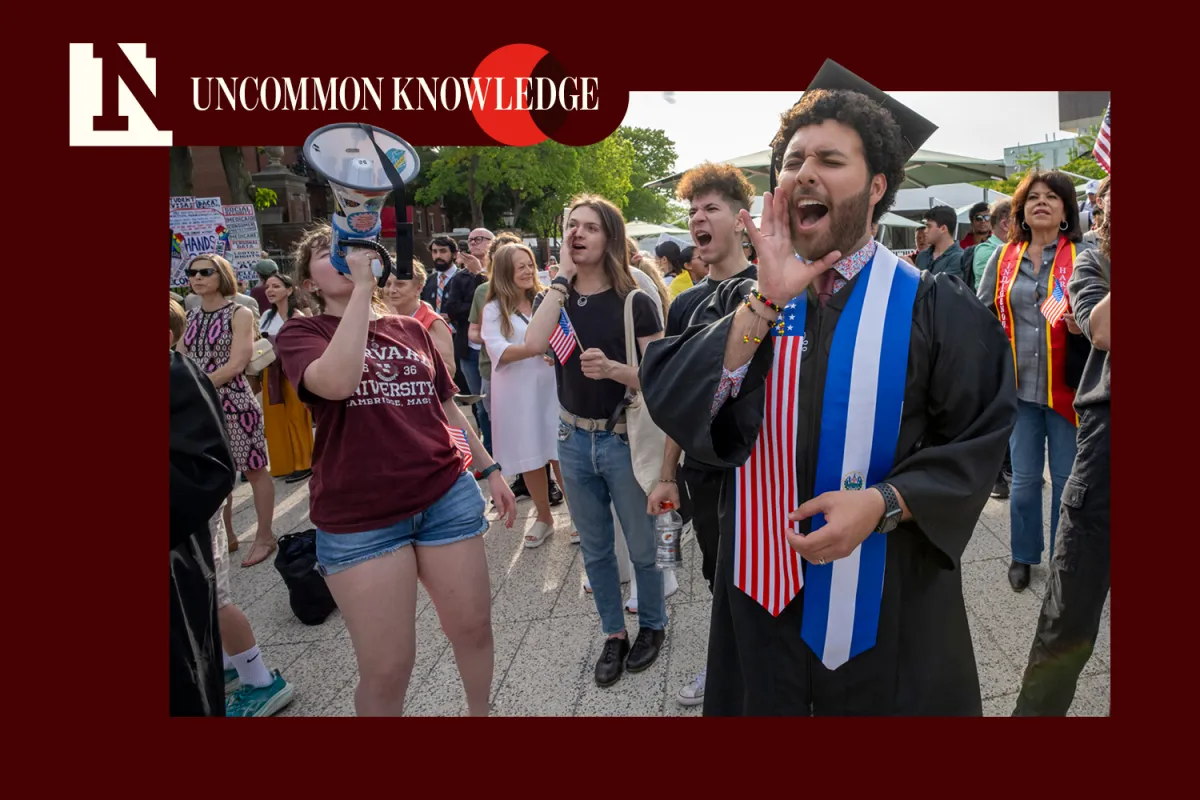
We are well accustomed to the cacophony of American campus warfare. We have seen the shouting matches over DEI initiatives, the tear gas and tent cities of pro-Palestinian protests, and the heated policy debates over transgender athletes. These are the battles that generate viral clips, cable news segments, and political fundraising emails. Yet, beneath this noisy surface, a far more consequential struggle is taking place—one that unfolds in bureaucratic language, legal proposals, and obscure federal registers. This quiet war is over the very plumbing of American higher education: the accreditation system. This is the mechanism that decides which colleges can access the roughly $130 billion in federal student aid that flows through the Department of Education each year. On August 20, the Department published a sweeping proposal designed to overhaul this system, a direct result of an executive order President Donald Trump signed last year, which he proudly called his “secret weapon” for reshaping higher education. While the culture wars attack the external symptoms of university life—the symbols, the flags, the locker rooms—this new initiative attacks the institutional foundation upon which the entire academic enterprise rests. It is a fight over who gets to define what a “good education” actually is, and it will affect the financial future of millions of students, often without them ever realizing the cogs turning behind the curtain.
Paragraph 2: Understanding the Gatekeeper—and the Proposed Shake-Up
To understand why this is such a seismic shift, one must first understand the peculiar structure of higher education oversight in the United States. The federal government does not directly certify that a university offers a valid education; instead, it relies on a network of private, non-governmental accrediting bodies to perform this gatekeeping function. Washington decides which accreditors to recognize, but only those that receive federal recognition can act as the gatekeepers that allow colleges to tap into Title IV student aid funds. Essentially, this creates a shadow bureaucracy where the survival of an institution is determined by a third-party review. The new rules proposed by the Trump administration aim to dismantle the current inertia of this system. They would radically lower the barriers to entry for new accrediting agencies, making it easier for innovative—or possibly predatory—organizations to enter the market. Simultaneously, they would give colleges much greater freedom to switch between accreditors, a practice currently hampered by strict regulations designed to prevent “accreditation shopping.” The proposal also touches on the everyday lives of students by altering how transfer credits are handled, pushing for a presumption that credits earned at one institution must be accepted by another unless there is a compelling reason to deny them. Furthermore, the rules force accreditors to put an unprecedented emphasis on student outcomes—like graduation rates, employment figures, and post-graduation earnings—while simultaneously mandating that they evaluate schools on their commitment to “academic freedom” and “intellectual diversity, ” a phrase that carries distinctly political overtones in the current climate.
Paragraph 3: Weird Bedfellows: A Shared Diagnosis, A Fractured Cure
The most fascinating aspect of this debate is that, for once, the two mainstream political poles are looking at the same broken machine and agreeing that it is broken. Education Undersecretary Nicholas Kent has openly referred to the “broken accreditation system,” arguing that it has become a cartel that protects incumbents, stifles innovation, and fails to hold colleges accountable for graduating students who cannot repay their loans. On the other side of the aisle, Senator Elizabeth Warren—a strident critic of the administration—has introduced her own bill, the Accreditation Reform and Enhanced Accountability Act, which begins with the identical premise: “This system is broken.” In her remarks, Warren didn’t mince words: “At a time when students are already struggling to get affordable and quality educations, Congress can’t let Donald Trump weaponize the accreditation system.” She argues that the overhaul must protect students from leaving college jobless and buried in debt. This convergence of opinion is remarkable, suggesting that the current status quo—where regional accreditors rarely fail an institution and where a “college” degree can range from a rigorous liberal arts education to a low-value, for-profit credential with a 5% graduation rate—is no longer acceptable to anyone. However, the agreement ends at the diagnosis. The two factions are proposing radically different cures. The administration views the problem as one of monopolistic market failure, believing that increased competition among accreditors will force them to be more responsive to student outcomes. Warren, by contrast, views the problem as a regulatory failure, arguing that we need a stronger, more muscular federal government to set strict outcome metrics and punish accreditors that fail to enforce them.
Paragraph 4: The Human Wallet: Transfer Credits and the Value Equation
For the average student, the most visceral impact of these proposed changes might have less to do with ideology and more to do with time and money, specifically the frustrating problem of transfer credits. A 2017 Government Accountability Office study revealed a shocking statistic: students who transferred between 2004 and 2009 lost an average of 43 percent of their earned credits. This means a student who completed a semester of Calculus at a community college could be forced to retake the same course at a four-year university, paying thousands of dollars for knowledge they already possessed. The new proposal would essentially ban this type of bureaucratic battery, requiring colleges to accept transfer credits from other schools or accreditors unless they provide a written, specific reason for denial and an appeal mechanism. The Department’s own regulatory analysis modeled a scenario where such a change would cut federal aid disbursements by roughly $3,600 per transfer student—money that would no longer be spent on redundant coursework. Beyond transfer credits, the rules dramatically shift how accreditors evaluate the worth of a degree. The focus moves away from inputs—like the number of PhDs on faculty or the size of the library—to outputs. Programs would face scrutiny on whether students actually graduate, whether they find employment in their field, and whether their salaries justify the debt they took on. This is an attempt to align the credential with its economic reality, a move that has raised the ire of humanities departments but has garnered surprising support from those who feel the system has long allowed colleges to devalue their own product.
Paragraph 5: The Intellectual Diversity Clause and the “Point” of Upheaval
But we cannot ignore the cultural element that the administration has deliberately woven into this regulatory tapestry. Buried within the proposal is a requirement that accreditors, when judging faculty standards, must weigh academic freedom, First Amendment policies at public institutions, and—most controversially—whether schools “support and appropriately prioritize intellectual diversity among faculty.” This is not a neutral request; it is an explicit invitation for accreditors to audit the political makeup of faculty departments, looking for a monoculture that conservative critics argue suffocates free thought on campuses. Undersecretary Kent has made it clear that this is not an accidental inclusion. When negotiating with the committee, he acknowledged the breadth of the changes, coining the phrase “accreditation is the central nervous system of higher education.” Pressed on whether this represents an attempt to flip the university through the back door rather than the front gate, Kent responded with startling candor: “To those who say the changes we are pursuing would upend higher education, I say plainly, yes. That is the point.” This marks a departure from the administrations’ earlier tactics—such as the mass revocation of international student visas for protesters or the directive to strip race from admissions. Those efforts were blunt instruments, often blocked by courts. This new approach is precision surgery, leveraging financial access to compel behavioral change. It is pure leverage: if you want the $130 billion, you must now prove to a private evaluator that your faculty represents a diversity of viewpoints, a metric that is notoriously difficult to measure without introducing a distinctly political lens.
Paragraph 6: The Stakes for the Silent Student
For a student at a stable, wealthy university, this may seem like a distant bureaucratic quibble. But for the transfer student trying to claw back lost credits, for the adult learner enrolled in an online program with shaky job placement rates, or for the undergraduate at a small college on the verge of financial instability, this could be the most significant intervention in their educational trajectory. The proposal is not law yet; it is open for public comment until September 21, and legal challenges are virtually guaranteed. Yet, even if this specific rule is invalidated, the conversation has shifted irreversibly. We have moved past the shouting about flags and pronouns and entered the era of regulatory warfare over ROI, default rates, and institutional survival. The old consensus—that a college was good simply because it said so—is dead. In its place, we are witnessing a struggle for the very definition of higher education’s purpose: is it a marketplace where competition and earnings dictate success, or a public good demanded security from predatory practices? Both sides agree the status quo was a cartel of complacency, but their visions for the future are diametrically opposed. As the fight moves from campus quads to federal administrative law judges, the outcome will determine not just the fate of institutions, but the actual value of a degree hanging on the wall of millions of graduates. The quiet fight has begun, and its resolution will echo through the hallways of American academia for decades.