





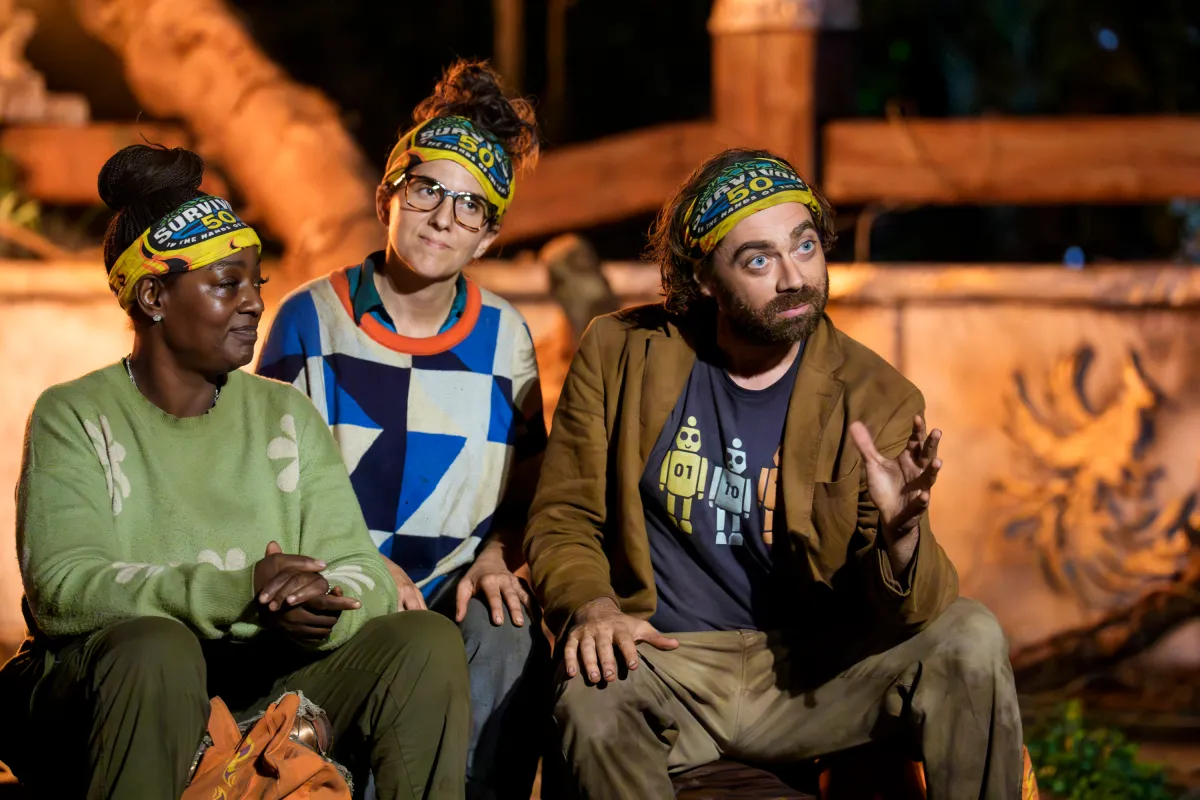
Christian Hubicki stepped onto the Survivor 50 set with a clear strategy in mind, ready to turn his comeback appearance into something memorable. As a robotics professor and a returning player from season 37, he knew the game’s rhythms and pitfalls better than most. From the start, he orchestrated one of the season’s biggest surprises, blindsiding the beloved Mike White before the merge. This move wasn’t just bold; it was calculated to protect his position. Hubicki reflected on it fondly, calling it “strategically and tactically the right move,” even if it felt counterintuitive. By taking out Mike—who was perceived as the glue holding together a threatening trio including Hubicki himself, Angelina Keeley, and Ozzy Lusth—he broke up potential alliances before they solidified. It meant avoiding becoming a merge target, just as he had been in his first season. Hubicki explained it like a scientific experiment: sometimes the unexpected solution is the perfect one. He admired Mike personally, but the game’s logic dictated breaking that bond to keep his own path clear. Angelina’s protection of Mike only reinforced the necessity. By framing Mike’s removal as a smart play, Hubicki sent a message—he was in control, shaping the tribe’s dynamics early on.
Yet, for all his successes, Hubicki admitted a pivotal error that unraveled his game. While confident in most of his maneuvers, he regretted pitching the idea of voting out Ozzy Lusth to Cirie Fields. Cirie, a formidable player known for her sharp instincts, was someone Hubicki deeply wanted as a long-term ally. He recognized her value: a woman of color in a game full of targets, likely to be safe until late, much like Hubicki himself, who expected merge heat and endgame pressures. Pitching Ozzy to her backfired spectacularly because Cirie and Ozzy were closer than Hubicki realized. Despite signs pointing to their bond, Hubicki missed it, and this slip turned Cirie against him. She positioned herself as his number three in her alliance, but the betrayal stung. Hubicki called it “far and away the clearest mistake,” leading to a chain reaction where he became a target for Ozzy’s allies. It forced him into a precarious spot at Tribal Council, making the game a lot tougher. This misstep stands as a reminder that even players with a playbook can falter when personal ambition clouds judgment— a human lesson in ego versus foresight.
Reflecting on his overall gameplay, Hubicki felt thrilled with his approach, especially compared to his first Survivor season. Back then, he attended fewer Tribals and spent much of his time as a survival target, scrambling to stay afloat without much influence. This time, playing faster and more aggressively from the jump gave him agency he hadn’t enjoyed before. He controlled votes and alliances, never drawing votes until his exit episode. His strategy was doctrine-driven: identifying “types” of players to eliminate early, mid-game, and late to shape a favorable endgame. Hubicki likable players who might challenge consensus or become threats. The beauty of Survivor, he noted, is how personal connections and perceptions matter. Even big moves against fan favorites like Mike White (with his Emmy-winning acting career) and icons like Ozzy amplified the spotlight. Hubicki embraced the attention, proud of playing boldly and shaping his narrative. Though he wished for a deeper run, he credited his proactive style to genuine pride. It wasn’t just about strategy; it was about living out the game’s lessons, showing his son to balance kindness and self-advocacy—to stand up and fight for earned opportunities.
The Jimmy Fallon challenge episode highlighted the chaos that can derail even the best plans. Hubicki lost the puzzle, which sent elements into the ocean, symbolizing how luck plays a role in Survivor. Forced to vote for himself at Tribal due to not finishing in time, he joked about never watching The Tonight Show again, imagining a comedic feud with Fallon. But he framed it philosophically: challenges and twists are part of the game, blending skill with fortune. Bad luck happens, and so do mistakes, but they’re integrated into life’s broader canvas. Hubicki felt grateful for the good breaks he caught early, balancing the disappoints. His resilience shone through—he didn’t blame the twist for his ouster, instead owning his missteps while celebrating the chance to play on such a milestone season. Despite going home, he acknowledged the honor of facing legends and asserting himself against odds. For a professor accustomed to controlled environments, Survivor taught humility: you control what you can, but luck’s relentless pull makes the game unpredictable and human.
Ultimately, Hubicki left the game with immense pride, viewing himself as a lucky man for playing twice on a show he adored. He spent most of his time in the driver’s seat, a far cry from his first outing’s constant survival mode. While the Ozzy pitch to Cirie cost him, it underscored Survivor’s interpersonal web—alliances are fragile, betrayals sharp. Yet, he expressed no bitterness; falling to Cirie, a mastermind, felt like a noble loss. Hubicki’s story was one of ambition tempered by reality: big moves against superstars draw fans and risks alike. He mused on life lessons imparted to his son—embrace giving naturesalve but advocate fiercely for your place. This ethos drove his gameplay, turning strategy into a personal crusade. Though out before the end, Hubicki’s legacy lingers in those blindsides, reminding viewers and players that Survivor rewards clever minds willing to disrupt the status quo.
Looking ahead, Hubicki rooted hard for friends he made along the way, seeing them as extensions of his strategic hopes. He championed Rick Devens, his “Captain Kirk to my Mr. Spock,” whose clever social gameplay mirrored Hubicki’s analytical style. Their partnership brought fun and foresight, with Hubicki wishing Rick would navigate to the trophy. He also praised Emily Flippen’s loyalty; she swung hard to save him, risking herself instead of flipping as others urged. That act of integrity warmed him, showing raw human elements beneath the competition. With potential for Rick or Emily to win, Hubicki hoped their journeys inspired future players to blend brains, heart, and courage. As he processed his exit, Hubicki underscored Survivor’s charm: it’s not just a game of survival, but a mirror for life’s gambles—where plans collide with people, and every decision echoes. His return proved evolutionary; from target to tactician, he exemplified growth, leaving fans cheered by his boldness and humbled by his honesty.
In broader reflection, Christian Hubicki’s Survivor 50 arc encapsulated the show’s magic: highs of masterful blindsides, lows of regretted gambles, all woven with personal growth. He entered with optimism, a meticulously honed plan, and an openness to adapt. Confronting merge pressures head-on by dismantling perceived threats early showcased his analytical prowess, much like solving complex robotics problems. Yet, the emotional current—betraying trust with Cirie—revealed Survivor’s heart: it’s people, not just strategy, that dictate fates. Hubicki’s pride in playing aggressively, while acknowledging luck’s role, painted a balanced portrait of his experience. The Fallon challenge’s slapstick misfortune added levity, highlighting unpredictability. For a second-timer adjusting his playbook, he controlled more than ever, crafting narratives that thrilled fans. Though his game ended prematurely due to alliance fractures, he modeled resilience, joking through disappointments and crediting collaborators like Rick and Emily. Ultimately, Hubicki emerged as a testament to second chances—lucky, proud, and infinitely grateful, reminding us Survivor isn’t conquered alone; it’s shared, debated, and lived. His journey, full of counterintuitive wins and heartfelt regrets, humanizes the game, showing even strategists bleed like anyone else in the island’s unforgiving crucible.